


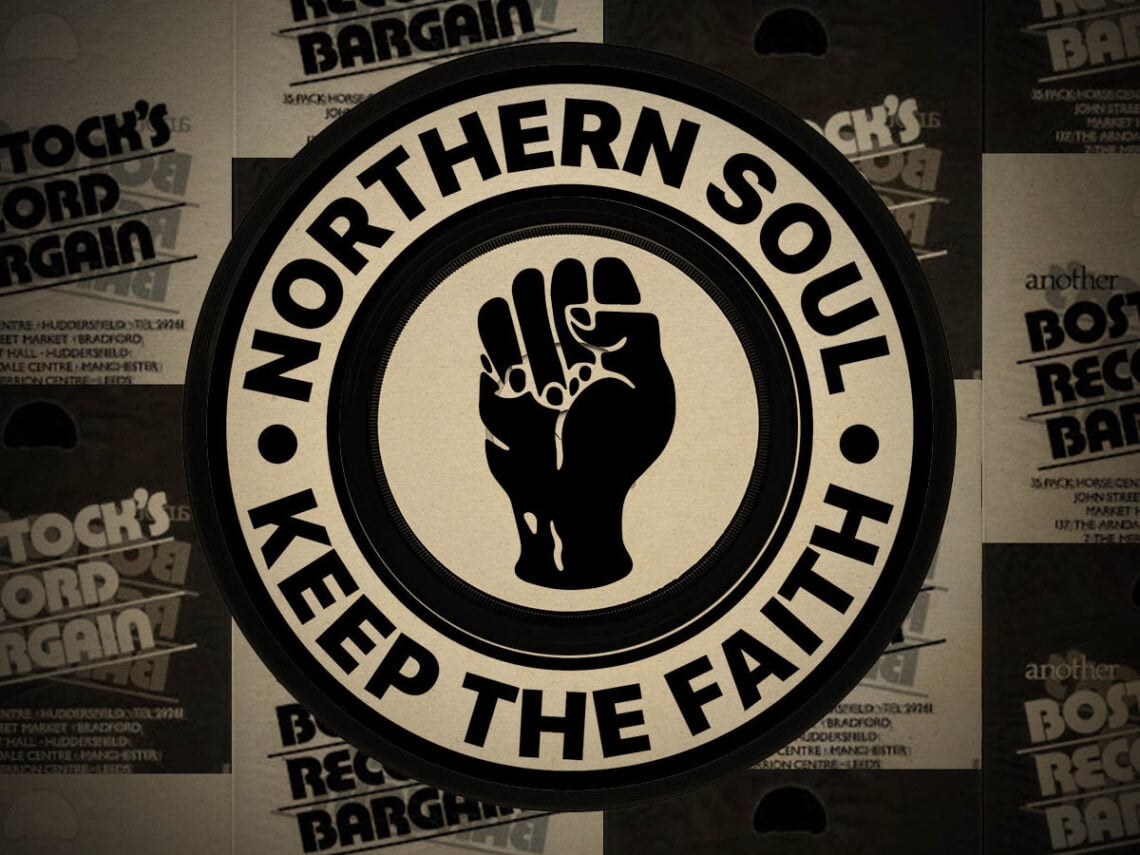
Bostock’s: How a Bradford market stall became a northern soul haven

For anyone who has never experienced the pulsing rhythms and sweat-soaked euphoria of a northern soul all-nighter, the scene that emerged in the late 1960s can raise plenty of questions. Some of them are easy to answer, while others are a little more complicated.
From an outside perspective, the northern soul scene has always been pretty miraculous. Sure, you can trace its adoration of obscure American soul records back to the early days of the mod subculture and its adoption of Motown’s soul-fueled rhythms, but even then, the idea of thousands of disenfranchised young people spending their weekends dancing to unknown Yankee soul artists in the shadow of northern English industrialism is pretty inexplicable.
One of the biggest questions surrounding northern soul is just how those enterprising young DJs first got their hands on this plethora of obscure American soul. Very little of it, after all, was ever officially released on the UK market, so most DJs during those early years had to rely on the handful of records that had miraculously made their way across the Atlantic.
As the scene grew, many of those key disc jockeys took it upon themselves to visit the States themselves, coming back with crates of unheard soul records. It was through these imports that the northern soul scene struck upon the majority of its defining anthems, including the likes of Frank Wilson’s ‘Do I Love You (Indeed I Do)’, which was rescued from the Motown vaults and distributed to DJs at Wigan Casino via acetates.

Given that the scene was so rooted in the working-class surroundings of the north of England, though, not every DJ or record collector could afford the Jetsave fare to get from England to Detroit, Chicago, or New York City. For those people, then, the market for northern soul records tended to settle on an unassuming market stall in Bradford.
Despite boasting a few notable contributions to the northern soul scene, particularly in terms of The Harold Club – a venue which continues to host northern nights on a monthly basis thanks to Soul Brew – Bradford is rarely credited with being a haven for the northern soul scene, particularly in comparison to neighbouring Leeds and Wakefield. However, so much of the early 1970s northern soul scene was indebted to Bostock’s in the now-defunct John Street Market in Bradford.
Exactly where Bostock’s got their stock of rare soul and US imports from is a fact that is still largely shrouded in mystery. While there has even been some suggestion that the stock came from the ports, where ships sailing to the UK from the US were filled with records as ballast, the likelihood seems to be that the stall had few contacts in the States who supplied much of their stock.
Either way, soulies from across the country flocked to that Bradford Market during the early 1970s to pick through the stock, discovering a lot of Verve and MGM label pressings that went on to form the basis of The Torch sound – the Stoke venue that took the mantle of being the premier northern soul hang-out following the demise of the Twisted Wheel.
Eventually, Bostock’s grew to open stalls in Huddersfield and Manchester, as well as their Bradfordian base, and there aren’t many original 1970s soulies who don’t have some stories of discoveries made in those boxes of obscure records – or in the famous mystery soul packs that they sold for bargain prices.
Today, northern soul is still thriving on dancefloors and in record collections up and down the nation, but it is thanks to places like Bostock’s that the scene found its soundtrack in the first place. Without that unsuspecting market stall, there is no telling how many iconic northern soul discoveries might never have been made.
