


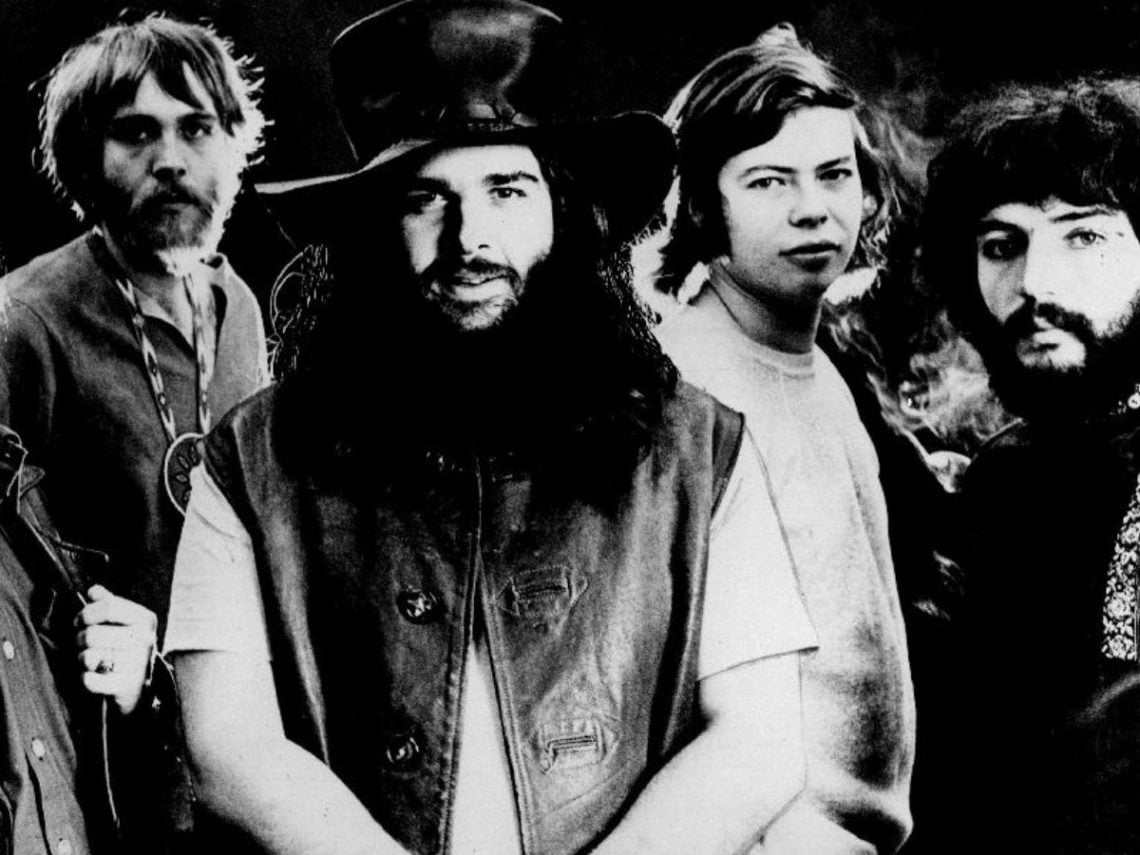
Canned Heat play the psychedelic blues on ‘Boogie with Canned Heat’

By 1968, most people had begun to move past the blues. Although the genre had a major revival in the mid-1960s, a new style was on the rise: psychedelia. Featuring a greater sonic scope than the rigid idiom of the blues, psychedelia had fully taken over rock music by the end of the 1960s, with pioneering blues rock acts like The Rolling Stones and Fleetwood Mac venturing beyond their roots.
Over in America, the counterculture embraced psychedelia with aplomb. Bands like The Grateful Dead and The Doors kept some of the blues in their DNA but found their true sound in the sprawling madness of the hippies. True believers like Janis Joplin and Paul Butterfield kept blues rock alive, but hardly anybody was playing straight blues music by the end of the 1960s.
Canned Heat weren’t going to be swayed that easily, however. The Los Angeles quartet founded by singer Bob Hite and guitarist Alan ‘Blind Owl’ Wilson were more stubborn than their peers, sticking closely to the traditional blues sounds as the rest of their peers started going down the acid rabbit hole.
After signing with Liberty Records and appearing at the Monterey Pop Festival, Canned Heat released their self-titled debut album in the July of 1967, just as the Summer of Love was hitting its apex. Filled with blues standards, Canned Heat stuck its thumb out at the LSD-fueled psychedelia of the day. But the group couldn’t go against the grain for long.
The band’s sophomore effort, 1968’s Boogie with Canned Heat, delivered on its title with ten songs of R&B-infused rock. What was lurking just beneath the surface was something more surprising: Indian instrumentation, fuzz guitars, horn arrangements from New Orleans voodoo god Dr. John, and far-out arrangements that blasted well beyond the twelve-bar blues.
It was impossible to ignore: Canned Heat had made their first forays into psychedelia. It never came at the expense of the blues, as songs like ‘Evil Woman’ and ‘Turpentine Moan’ still kept the band’s signature chug-a-lug going. But around the edges, tracks like ‘On the Road Again’ and ‘World in a Jug’ saw the band working with, not against, the sounds and styles of the day.
One notable result was that Canned Heat got looser and funnier on Boogie with Canned Heat. ‘Whisky Headed Woman No. 2’ begins with an intro from Hite (introducing himself under his nickname, ‘The Bear’) explaining how Tommy McClennan was responsible for the original ‘Whisky Headed Woman’. Wilson also gets to indulge his own animalistic persona on ‘The Owl Song’ as John’s horns and barrelhouse piano back him up. The group was so willing to have fun that they even collaborated with Alvin and the Chipmunks on a rendition of ‘The Chipmunk Song’ that appears on bonus editions of the album.
When they’re not being playful, Canned Heat were taking stock of their surroundings. ‘Amphetamine Annie’ was a commentary on the over-indulgence of the times, cutting through with the line, “I don’t mind you getting high but there’s one thing you should fear… speed kills”. ‘My Crime’ takes aim at overzealous police in Denver who shut down a show and arrested the band for drug possession. Canned Heat were reflecting their times like never before, but one track showed off their newfound freedom better than all the rest.
‘Fried Hockey Boogie’ was still a blues boogie in line with the rest of the band’s material. But instead of wrapping things up in a neat three-minute package, Canned Heat took a note from their peers like the Dead and Creedence Clearwater Revival by extending their blues vamp into an extended jam.
Hite once again steps up to the mic, narrating a tale of how each band member (under a different nickname) adds to the mix that makes up Canned Heat. ‘The Blind Owl’ gets the first solo, followed by ‘The Mole’ (bassist Larry Taylor), “The Sunflower” (guitarist Henry Vestine), and “Fito” (drummer Adolfo de la Parra). References to the Maharishi Mahesh Yogi and Jimi Hendrix get thrown out at different points as the song sprawls into an undetermined conclusion. The song only comes to a triumphant conclusion when Hite advises the listener: “Don’t forget to boogie.”
On Boogie with Canned Heat, Canned Heat proved that they could lay out as loosely as any jam act or reel it tighter than any R&B group. As the group continued to evolve, experimental jams became a bigger part of their sound, so much so that they renamed their space-heavy style on the 1970 LP Future Blues. Traditional blues was still a major part of their sound, as could be heard on their collaboration with John Lee Hooker, Hooker ‘n Heat, but Boogie with Canned Heat showed that there were new avenues that Canned Heat could explore.
