


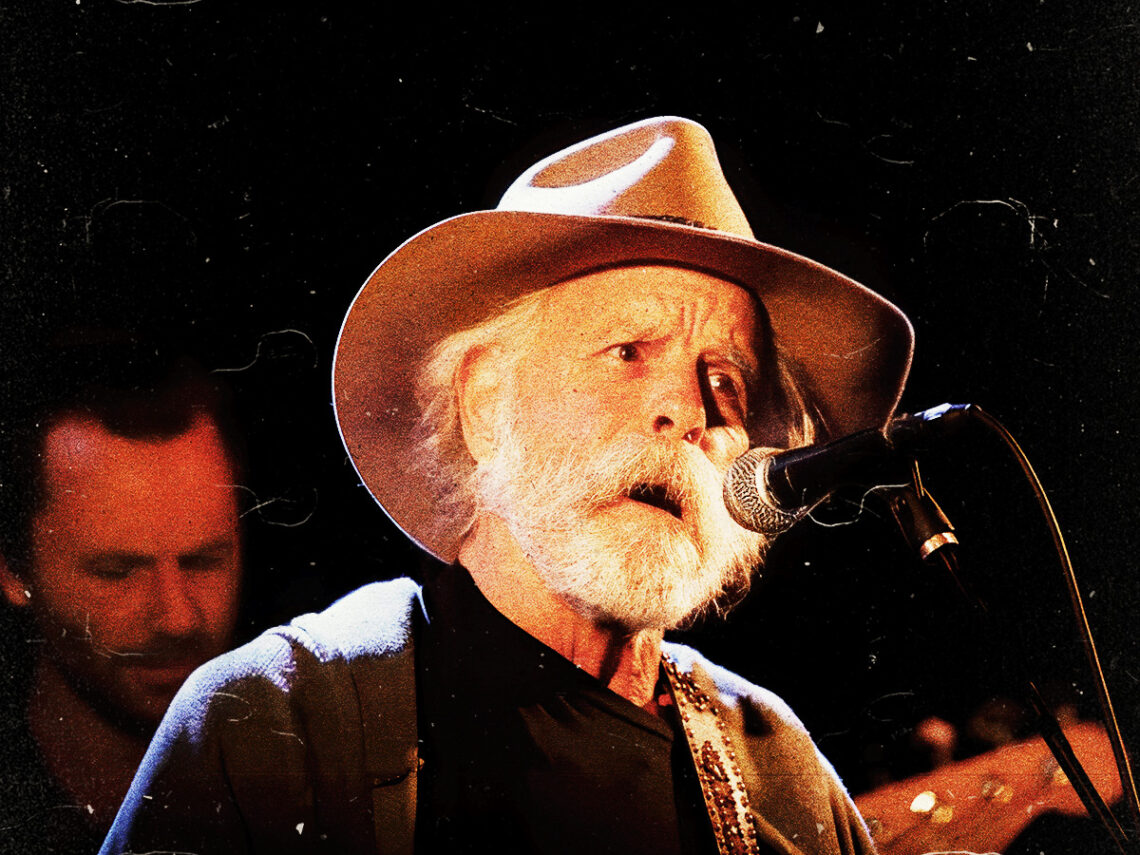
Bob Weir thinks most people missed the “psychedelic era” of the Grateful Dead

For a band that was so associated with the 1960s, the Grateful Dead really only came of age after that decade had ended. First formed in 1965, the Dead had been a jug band and a bluesy covers band before embracing the psychedelic explosion that came with the changing San Francisco cultural landscape. As the house band for Ken Kesey’s Acid Tests, the Dead became the go-to soundtrack for tripping through the LSD experience.
But by 1970, that had all changed. Burnt out by the dead ends of psychedelia, the Dead instead decided to embrace folk music, jazz, and more straightforward rock music in their later incarnations. The exploratory jams and commitment to improvisation that was born out of their psychedelic era remained, but the actual acid-soaked runs of songs like ‘The Eleven’ and ‘Alligator’ were retired by the time most audiences outside of the Bay Area knew who the Dead were.
“You know, by the time we got into recording a lot, I think we had sort of moved beyond our psychedelic era,” Bob Weir later observed to writer Jas Obrecht. “Our psychedelic era was 1965, ’66, early ’67. By the time we were in the studio and recording, we’d kind of moved past that. We had a new focus. We were rehearsing a lot and playing a lot. We had gotten to a point of diminishing returns with taking acid after a couple of years, and we didn’t get into the studio and start making records until a year or so after that.”
The studio became the great equaliser for the band, a place where dropping acid, getting wild, and seeing what happened didn’t fly. The Dead needed to be precise, cohesive, and consistent in the studio, three things that didn’t exactly mesh with the style of the band’s playing. For Weir, the studio remained a frustrating space during his tenure in the band.
“I don’t think we ever overcame that – the Grateful Dead, at least,” he claimed. “We were primarily a dance band. We were there to swing. And in the studio, it was too sterile of an environment for us because there was nobody there to swing with us – just a bunch of microphones.”
That’s not to say that there weren’t examples of heady psychedelia captured on tape. Albums like Anthem of the Sun and Aoxomoxoa were dense trips of the highest order, containing classic excursions like ‘The Other One’, ‘St. Stephen’, and ‘Caution (Do Not Step on Tracks)’. The latter song was perhaps the first real Grateful Dead original, one that survived in one form or another all the way until 1981.
“Well, like I say, there was ‘Caution (Do Not Stop on Tracks)’ earlier on,” Weir acknowledged. “And, to be fair, none of that stuff was done – we never did drop acid in the studio back in those early days. And I’m not entirely sure why not. It probably would have been unproductive, and it didn’t seem like a business-like thing to do.”
“Back then, when you went into the studio, you had – I mean, our first Warner Brothers record, we recorded in two or three days,” Weir also said. “And to blow a whole day on dropping LSD and then the next day be sort of down for the count anyway, which is pretty much what happened – we didn’t feel we could afford that.”
LSD would remain a key component to the Dead scene for their entire existence, but for Weir, the thrill of playing on acid was gone after a few years. “We started going back to the same places, and so it seemed, ‘Okay, well, we got what we could out of that.’ We didn’t turn our backs on it so much as started looking in other directions. We weren’t about to hang our hat on anything – LSD or anything else.”
Check out ‘Caution’ down below.
