


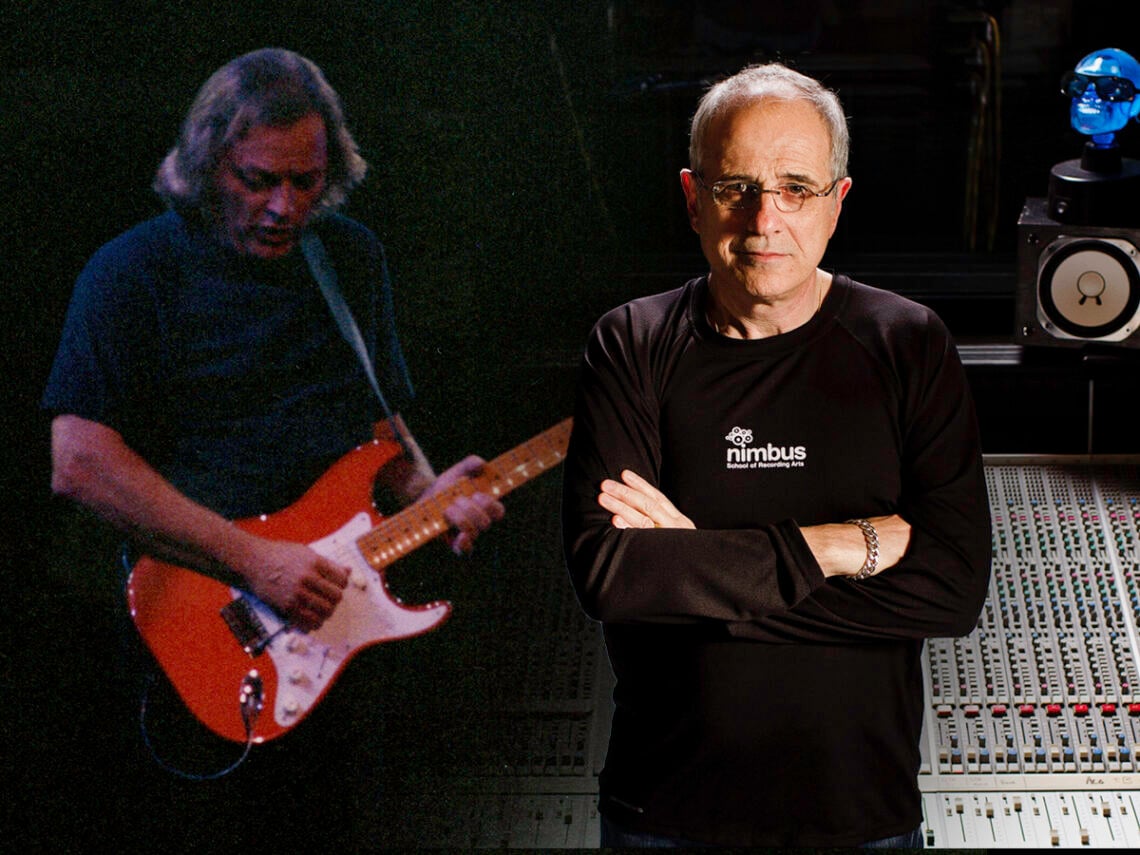
“An absolute disaster”: the moment Bob Ezrin walked out on a Pink Floyd album in disgust

While some artists have enough talent to be able to go solo, others simply aren’t the same without the accompaniment of their bandmates. Pink Floyd were never quite the same without Roger Waters, but it’s also pretty fair to say that Waters was not the same without Pink Floyd.
It’s interesting to note how they were able to survive and evolve after the departure of Syd Barrett, and despite his own personal struggles and limited amount of output, his solo career still had something of an identity. The same, however, could not be said of the rest of Pink Floyd when their interpersonal relationships began to show signs of deterioration, and a creative partnership that had been so prolific and fruitful for a decade and a half had all but dissolved in the space of a few years.
Splitting up Waters and the other key songwriter in David Gilmour led to disastrous results, with the identity of the band entering a crisis period from which they would never truly recover. Many consider The Final Cut to be the true final album by Pink Floyd on account of it being the last one that both Waters and Gilmour were present for, and even though many fans would prefer to forget it exists and imagine a world where it all stopped after The Wall, they’re left to rue what could have been had they chosen to quit while ahead.
It would have been reasonable to assume that this downward trend would not be the case, and that The Final Cut was a one-off dud due to the fact that the band were going through plenty of turmoil, but despite a slight uptick in quality on The Division Bell, it’s the only one of the three post-Waters albums that fans tend to look favourably upon.
Producer Bob Ezrin, who had worked with Pink Floyd on The Wall, was asked by Waters to work on his first solo record, The Pros and Cons of Hitchhiking. Despite there not being as much fanfare for the record compared to anything the band had done, it was a relatively smooth process, proving that Waters was able to somewhat salvage his reputation in the years immediately following his departure.
However, Ezrin was also asked to return to the Pink Floyd camp to assist with their 1987 album, A Momentary Lapse of Reason, their first without Waters, and reuniting with the rest of the group wasn’t as fruitful, especially if you’re to believe the second-hand report that Waters relayed to Penthouse in 1988.
“After four to five months of constant work with Gilmour and company, Bob spoke to Michael Kamen, who did orchestral arrangements on The Wall and also co-produced my first solo album,” Waters explained of what he’d heard about the sessions for A Momentary Lapse of Reason. “Bob told him the tracks were ‘an absolute disaster, with no words, no heart, no continuity,’” which Kamen would later confirm to be true.
“Ezrin was so depressed,” Waters added, “He took a cassette copy of the tapes home to his house in Encino, where his teenage son Josh discovered it and played it with his friend. Both of the kids got angry, and Josh told Ezrin, ‘Dad, it’s *not* Pink Floyd!’”
While Waters may have something of a reputation for proverbial shit-stirring and punching down on his former bandmates, it’s clear that he took plenty of glee from welcoming the downfall of his old colleagues. That said, it’s not like his album from the same year, Radio KAOS, was particularly well-received either.
