


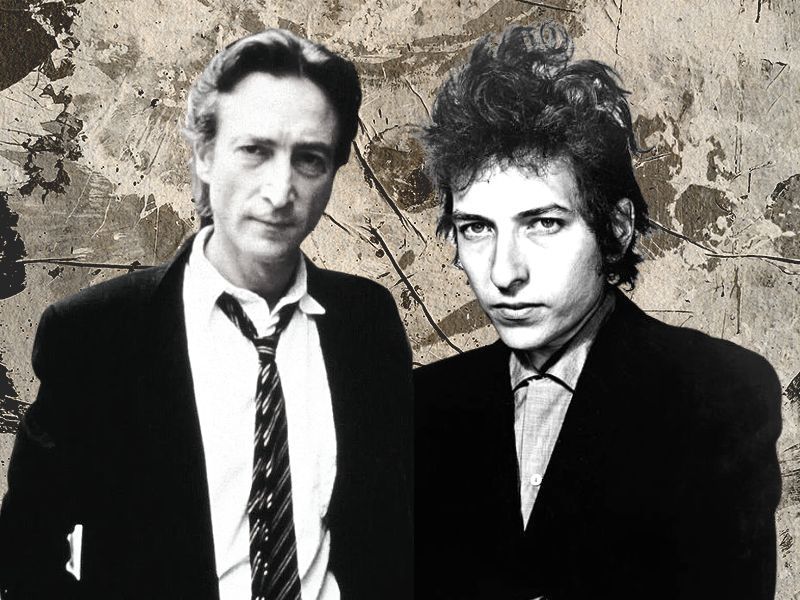
The Bob Dylan songs John Lennon called “just poetic politics”

Having spent most of his young life at the centre of the music industry, John Lennon knew how easily musicians could be mythologised. By the 1970s, the former Beatle possessed a fairly cynical (or perhaps realistic) view of the music industry and recognised its ability to transform artists into finely-honed, marketable symbols. Perhaps that’s why he approached Bob Dylan’s music with such suspicion. Indeed, by the time he took part in the 1980 interview later compiled in All We Are Saying: The Last Major Interview with John Lennon and Yoko Ono, Lennon was willing to dismiss Dylan’s legacy as little more than a media fabrication.
It was partly Yoko’s influence. During that final major interview, Lennon revealed that his wife had never been particularly taken with Dylan, even when the whole world was singing his praises. Yoko was never under any “Dylan mystique,” John said. “She never thought much of him either way.” That word, ‘mystique’, would suggest that Lennon viewed Dylan’s fame as a sort of incantation, a spell that fell over the world and left people stumbling in a fog of poetic and revolutionary romance.
That’s not to say that Lennon wasn’t equally bewitched. “For a period, I was very impressed with him,” he confessed. “But I stopped listening to Dylan with both ears after [Highway 61 Revisited] and Blonde on Blonde, and even then it was because George [Harrison] would sit down and make me listen.”
Opening up about Dylan’s legacy as a social commentator and crafter of political anthems, Lennon said: “[He] wasn’t ever that political, really. He wrote ‘Blowin’ in the Wind’ and ‘Soldier Song,’ but they’re just poetic politics, folk music of the day. He’s commenting on what’s going on, like a journalist. He never stood in the corner and shouted anything.”
One wonders if Dylan would have agreed with Lennon. Though he identified with the leftist political messaging of Woody Guthrie, Bob was keen to spurn the idea that his songs were crafted for the set purpose of inciting revolution. Dylan’s most revered protest anthem, ‘Blowin In the Wind’, is more a reaction to a grander conversation going on at the time than a cry for structural change. As Lennon observes, Dylan isn’t yelling about a specific issue; he’s not calling for law reform or affordable housing. His lyrics simply reflect a desire for liberty and an end to humanity’s continual struggle for that liberty.
The fact that Dylan doesn’t specify the nature of this struggle allowed people to, as Lennon put it, “read into what he did”. Lennon argued that Dylan was a symptom of the media’s desire to “identify and label people” for public consumption. The more time that passes, the greater the assumption is that Bob Dylan set out to be the Robespierre of post-war America. It’s important to remember, however, that this enduring idea was greatly influenced what people wrote and said about him.

Never Miss A Tale
The Far Out Bob Dylan Newsletter
All the latest stories about Bob Dylan from the independent voice of culture.
Straight to your inbox.