


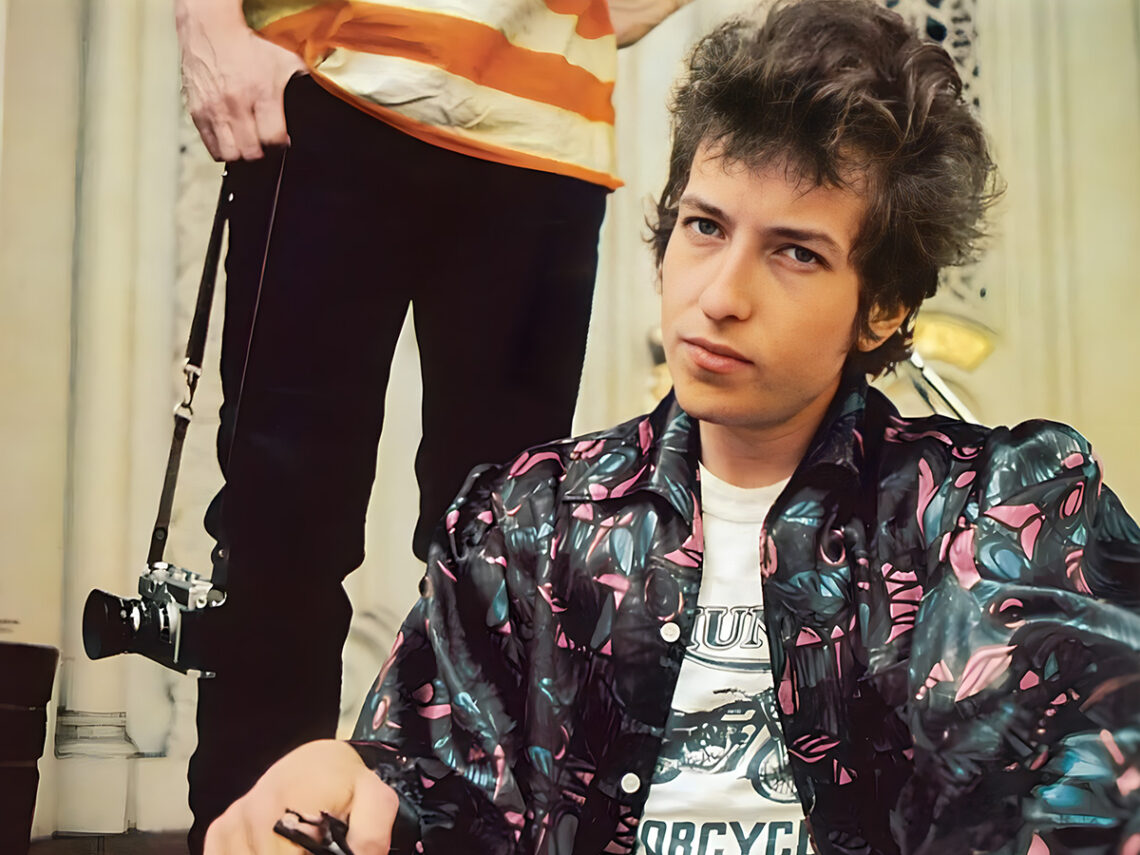
The 1965 song Bob Dylan has always disliked: “Extremely one-dimensional”

As a songwriter, Bob Dylan can take on any subject and use it as the muse for a masterpiece. While these topics have varied in importance, Dylan almost always approaches everything he creates with a strong level of nuance, urging the listener to think and feel about his message.
Following the release of Highway 61 Revisited in 1965, Dylan was operating at a higher artistic level than any other solo artist. Each and every song he crafted was a revelation, but not all his peers appreciated the success that followed. While Greenwich Village was the breeding ground for many other stars, Dylan was undoubtedly the most successful, and this led to many people resenting him – even those he once considered friends.
While he should have been on cloud nine and celebrating his prosperous position, Dylan was overcome with bitterness after feeling betrayed by those he once played shows alongside. Filled with rage, Dylan took to his notepad to express his anger at his former allies and used it to fuel ‘Positively 4th Street’.
In the track, Dylan spitefully sings: “I know the reason that you talked behind my back, I used to be among the crowd you’re in with, Do you take me for such a fool, to think I’d make contact, With the one who tries to hide what he don’t know to begin with?”
Rather than tell both sides of the story on the track, Dylan solely gave one perspective of the argument on ‘Positively 4th Street’. While this technique emphasised his desired message and was a necessary decision, Dylan later admitted it was an “extremely one-dimensional” creation.

In a conversation with Rolling Stone in 1985, Dylan explained why he used this method sparingly. He commented: “Outside of a song like ‘Positively 4th Street,’ which is extremely one-dimensional, which I like, I don’t usually purge myself by writing anything about any type of quote, so-called, relationships. I don’t have the kinds of relationships that are built on any kind of false pretence, not to say that I haven’t”.
Dylan added, “I’ve had just as many as anybody else, but I haven’t had them in a long time. Usually, everything with me and anybody is up front. My life is an open book sort of thing. And I choose to be involved with the people I’m involved with. They don’t choose me.”
The release of ‘Positively 4th Street’ was revelatory in 1965 as it ignored the traditional norms of songwriting and showed that music could exist in different shapes or sizes. Notably, the track doesn’t feature a repeated chorus, but it became a hit anyway.
For Joni Mitchell, the song was an eye-opening experience that inspired her immensely. The Canadian singer-songwriter later said: “There came a point when I heard a Dylan song called ‘Positively 4th Street’ and I thought ‘Oh my God, you can write about anything in songs’. It was like a revelation to me.”
Is ‘Positively 4th Street’ one of Dylan’s best songs?
If there is a better break-up middle finger in music than the lambasting that Dylan offers up in ‘Positively 4th Street’, then it needs to make itself known.
For the last verse Dylan penned the absolute searing dirge of, “I wish that for just one time you could stand inside my shoes / And just for that one moment I could be you / Yes, I wish that for just one time you could stand inside my shoes / You’d know what a drag it is to see you,” and it crowned this folk-rock perfection king, and who’s asking?
The song itself is the twin brother of ‘Like A Rolling Stone’. It packs all the same punch and caustic acerbic wit, riding along on a slightly sweeter organ tone. It jangles in along on a soaring syncopated melody and beneath it all is a wondrous vivified indifference.

Never Miss A Tale
The Far Out Bob Dylan Newsletter
All the latest stories about Bob Dylan from the independent voice of culture.
Straight to your inbox.