


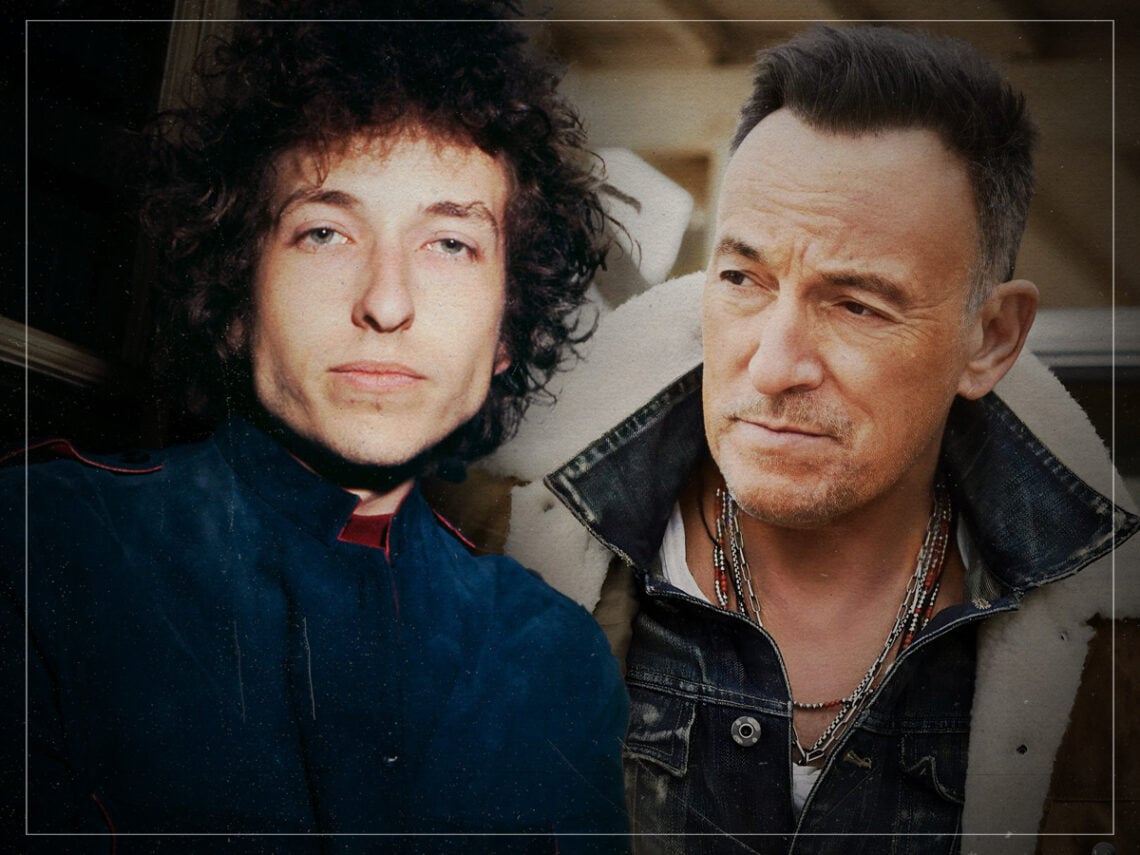
The Bob Dylan album that helped Bruce Springsteen understand America

Education, despite what Pink Floyd might have you believe, is essential, and you can gain a pretty adept understanding of the world around you from the world of songwriters, particularly if they are as life-affirming and rooted in social realism as Bruce Springsteen.
Throughout his many decades on the upper echelon of heartland rock, ‘The Boss’ has always kept his writing rooted in the lives and stories of ordinary people, particularly in his home state of New Jersey.
Everything from the acoustic melancholy of tracks like ‘State Trooper’ to the pop-rock-smash of ‘Born In The USA’ is, when stripped down to its core elements, odes to the common man. So, when viewed altogether, Springsteen’s repertoire paints a very distinct image of working-class society in the United States, and he’s managed to retain that quality even when immersed in the throes of musical stardom.
Born and bred in New Jersey – not that he bangs on about it – Springsteen has had a front-row seat for the stories and subcultures inherent in his writing since his younger years. As is often the case, however, the young musician required a kind of mentor to guide him in unlocking an ability to translate those everyday stories into universal anthems. In the case of ‘The Boss’, those vital teachings were delivered by Bob Dylan.
Particularly during his earlier years, Springsteen often fielded comparisons to Dylan, and in many ways, it is easy to see why. Both seemed to have a knack for crafting eye-opening, socially reflective songs ahead of their years, and both shared certain musical sensibilities when it came to their common adoration for traditional folk and the original wave of rock ‘n’ roll rebellion. Although Springsteen was quick to distance himself from those comparisons, fearing the lack of individuality, he certainly owes a lot to the pioneering sounds of the Minnesota-born songwriter.
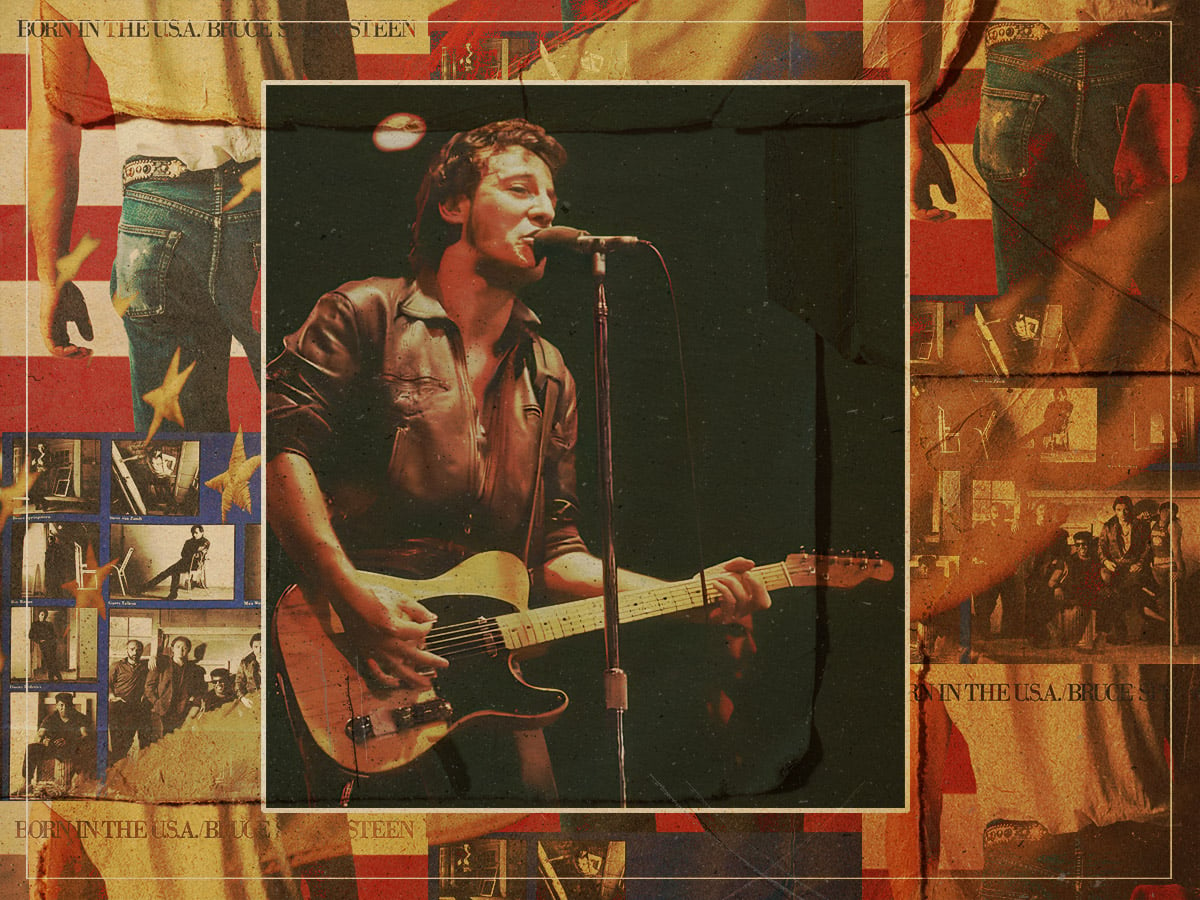
Now, there’s scarcely a songwriter out there who does not owe something to Bob Dylan; he changed the game entirely, and his revolutionary writing seemed to spawn a countless array of songwriters in his wake, even if few could match his genius. For Springsteen, though, Dylan acted as a kind of spiritual guide, opening his eyes to the realities of American life.
“Obviously, Dylan had come when I was 15, and obviously I listened to his music first, and his music contained a lot,” he told Ed Norton during a 2010 interview. “I used to say when I heard Highway 61, I was hearing the first true picture of how I felt and how my country felt. And that was exhilarating. Because I think 1960s small-town America was very Lynchian.”
“Everything was there, but underneath, everything was rumbling,” he continued. “I think what Dylan did was he took all that dark stuff that was rumbling underneath, and I think he pushed it to the surface with irony and humor, but also tremendous courage to go places where people hadn’t gone previously.”
In doing so, Dylan also inspired a new generation of songwriters, including Springsteen, to do the same, confronting the Lynchian realities of American society in musical form.
It was that songwriting manifesto, passed down to a teenage Bruce Springsteen, that set ‘The Boss’ on a path to creating some of the most important and iconic tracks in American history, saying more about the society of his homeland than any politician or textbook.

Never Miss A Tale
The Far Out Bob Dylan Newsletter
All the latest stories about Bob Dylan from the independent voice of culture.
Straight to your inbox.