


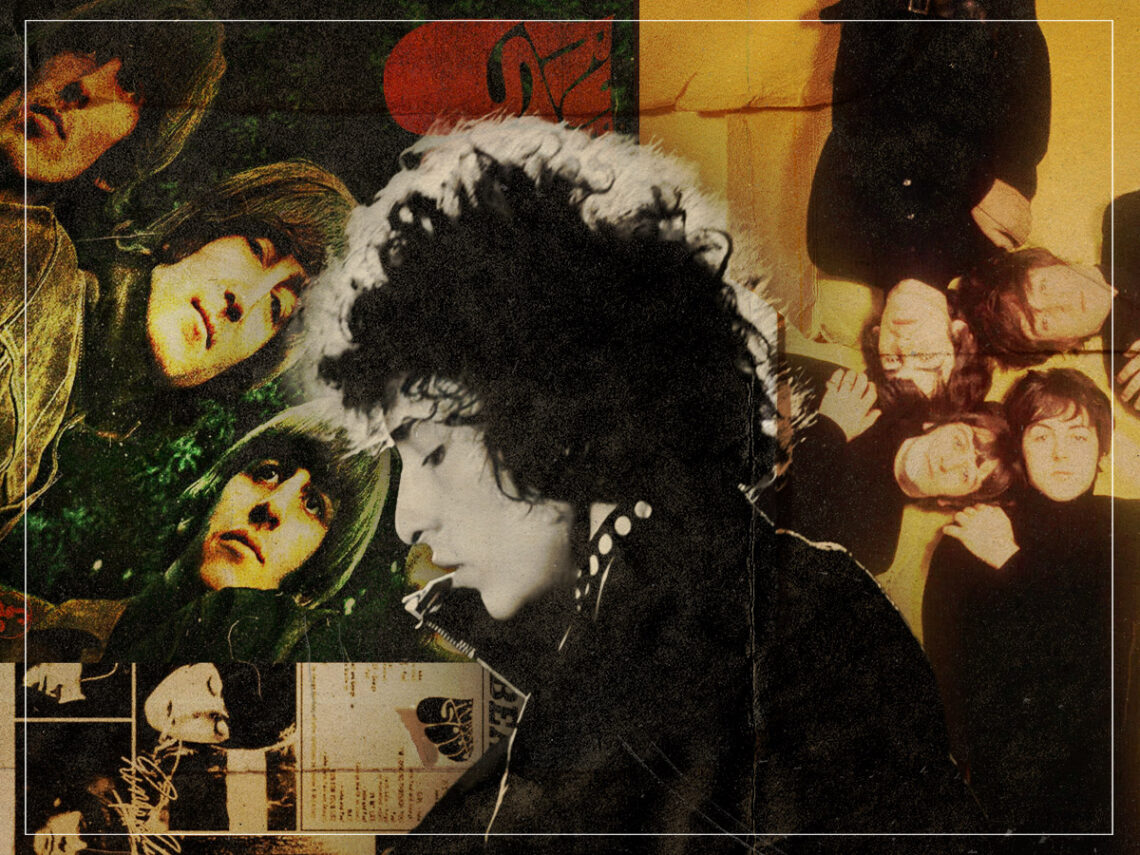
The two songs by The Beatles that Bob Dylan couldn’t stand: “Such a cop-out”

To look back at a fruitful relationship between two of the 1960s’ biggest icons, The Beatles and Bob Dylan, is to see the undulating romance one might expect in a telenovela.
Despite flowering across the decade with perfumed pop songs that seemed to borrow from one another with the utmost delicacy, it still had a few thorny issues. Of course, the duo were largely friends and appreciated one another. However, it didn’t stop Dylan from throwing the odd barb at the Liverpool lads.
That push and pull between admiration and criticism is what made their relationship so compelling. Both Dylan and The Beatles were redefining what popular music could be in real time, but they were doing so from very different angles. Where The Beatles embraced melody and mass appeal, Dylan leaned into lyrical depth and a more outsider perspective, creating a natural tension between accessibility and artistic credibility.
It’s also worth noting that this kind of rivalry was rarely malicious. Instead, it functioned as a form of creative friction, with each side indirectly challenging the other to evolve. The Beatles would grow more introspective and experimental, while Dylan would occasionally dip into more polished, melodic territory, proving that even the sharpest critiques could have a lasting influence.
Dylan and The Beatles were comrades in the whirlwind of fame that accompanied their rise in the 1960s rock scene. The Fab Four, who met Dylan early in their career, undoubtedly drew inspiration from his introspective lyrical style—something John Lennon, in particular, admired. Lennon often cited Dylan as one of his ultimate musical heroes. However, this admiration didn’t prevent Dylan from offering his candid critiques of their work, especially when he felt it fell short of the band’s own high standards.
Dylan has never been one to bite his tongue when asked for his opinion, and he has always said what’s on his mind—whether this be in interviews or his lyrics. He’s even thrown a few insults at The Beatles via song. This approach has landed him in trouble with the press and his contemporaries on numerous occasions. But it has also been an integral part of what makes him the enigma that he is. In fact, his comments about The Beatles in 1966 may have earned him even more respect from the group for not holding back or feathering their nest with needless superlatives. After all, The Beatles were certainly some of their own harshest critics.

In one particular interview, the freewheeling troubadour offered a revealing glimpse into his mindset at the time, highlighting how he felt distanced from the mainstream acceptance that The Beatles had achieved. While The Beatles enjoyed worldwide success and near-complete domination with their catchy pop tunes, Dylan saw their tracks as inferior to his own. Despite being celebrated by the hip folk scene on America’s coasts, Dylan’s more lyrically complex works were largely confined to the record collections of dedicated music enthusiasts, leaving broader recognition still somewhat elusive.

It’s a fact that has been true throughout his career despite being one of the most acclaimed and revered artists of all time. Dylan has always been looking in from outside the establishment, which is strangely part of his charm.
Dylan starts off his tirade against the Liverpool band by remarking: “I’m not gonna be accepted, but I would like to be accepted by the Hogtown Dispatch literary crowd who wear violets in their crotch and make sure they get all the movie and TV reviews and also write about all the ladies’ auxiliary meetings and the PTA gatherings, you know all in the same column. I would like to be accepted by them people. But I don’t think I’m ever going to be, whereas The Beatles have been.”
The interviewer, seizing his opportunity to put two of the decade’s biggest stars in the same story, then probed Dylan on his comments about The Beatles, to which he replied: “I’m just saying The Beatles have arrived, right? In all music forms, whether Stravinsky or Leopold Jake the Second, who plays in the Five Spot, the Black Muslim Twins, or whatever.”
“The Beatles are accepted, and you’ve got to accept them for what they do. They play songs like ‘Michelle’ and ‘Yesterday’, a lot of smoothness there,” sneers Dylan with a glint in his eye. Perhaps he knew the potential the band had, or maybe he was just eating sour grapes, but Dylan didn’t hold back.
Dylan was then asked for his thoughts about Joan Baez’s plans to record a version of ‘Yesterday’ for her next record, which set the singer-songwriter off into a classic rant about why this track was a ‘cop-out’, venting: “Yeah it’s the thing to do, to tell all the teeny boppers ‘I dig The Beatles’, and you sing a song like ‘Yesterday’ or ‘Michelle’. Hey God knows, it’s such a cop-out, man, both of those songs.”
The singer continued, metaphorically gesturing to the plethora of American music of the past and their perennially overlooked status: “If you go into the library of Congress, you can find a lot better than that.” He then concluded his attack with this vicious line: “There are millions of songs like ‘Yesterday’ and ‘Michelle’ written in Tin Pan Alley.”
The two tracks may not be of the grandest social importance, but to deny them as pop songs is to deny pop music at large. ‘Michelle’ with its nonsense French and undeniably catchy hooks, is certainly enjoyable fodder, while ‘Yesterday’ may be the most widely covered song of all time.
It seemed that years later, Dylan’s position on this matter would soften somewhat as he would record a version of ‘Yesterday’ alongside George Harrison during a recording session the two had in 1970 before the two would go on to form The Travelling Wilburys in the late-80s alongside Tom Petty and Roy Orbison.
Whether or not you agree that the two songs are “cop-outs” or that Dylan was maybe just a little jealous, you can rest assured that The Beatles would have only ever welcomed the help from an artist they had huge respect for.

Never Miss A Beat
The Far Out Beatles Newsletter
All the latest stories about The Beatles from the independent voice of culture.
Straight to your inbox.