


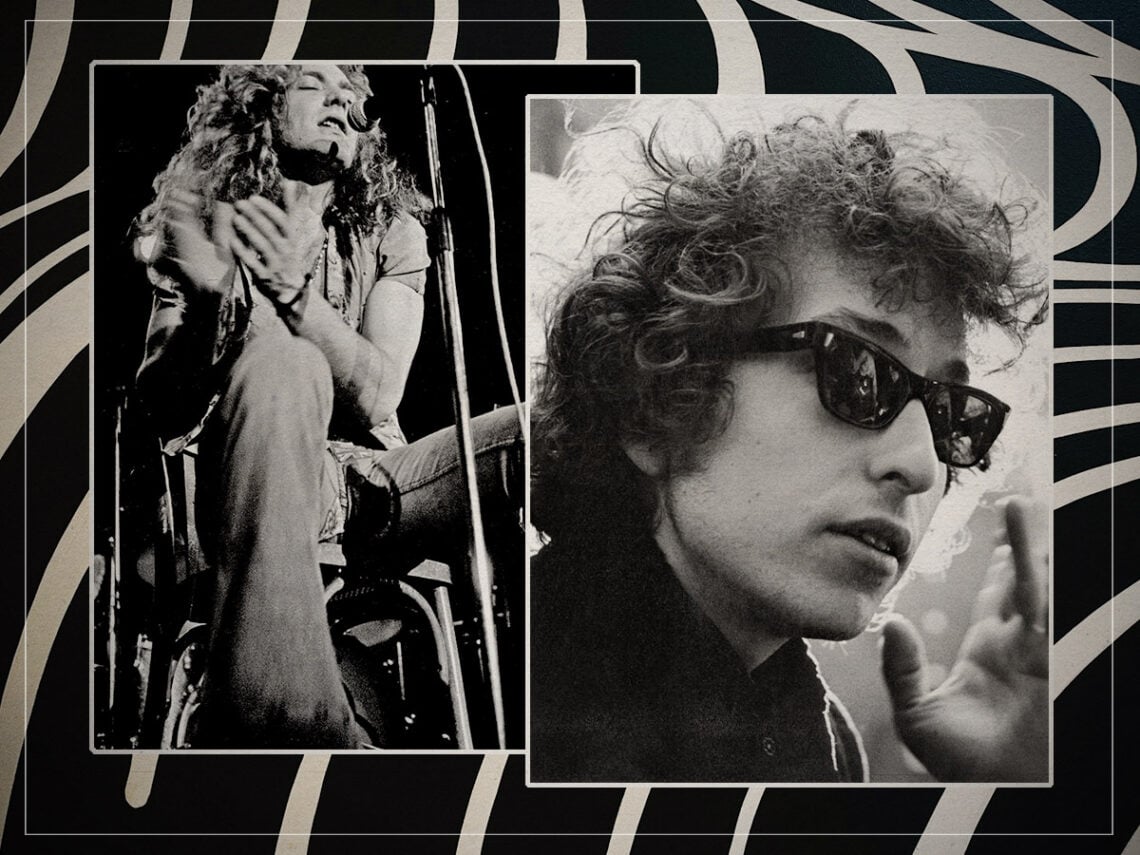
The Bob Dylan album Robert Plant thought couldn’t be made anymore: “The abandon on the record is sensational”

To a lot of people, the 1960s and ‘70s are considered the golden age of music.
Robert Plant was there and witnessed it first-hand. Even before Led Zeppelin took off and positioned him as one of the key players of the moment in time, the singer was fully engaged with counterculture. He was living the life so many music fans can only dream of – getting to hear these bands live, getting to listen to the albums as they were released and, mostly, getting to witness the evolution of artists in real time.
Plant got to witness The Beatles go from their early twee rock and roll to the psychedelic magic of their later eras. He got to watch bands like The Rolling Stones go from strength to strength. He got to look on as Bob Dylan went electric.
It was amazing, but to him, it was a one-time-only thing that could perhaps never be replicated. While Plant is still engaged with music and remains a vocal fan of artists around him, including modern acts like Low and Nathaniel Rateliff, there is definitely a sense that Plant has witness first-hand the way the music world has changed.
It’s left him with a pretty big goddamn question – can it ever be the same again? When reflecting on one of his favourite Dylan albums, the answer seems to be no.
“The abandon on the record is sensational. One cannot do that anymore, and one cannot do so much,” Plant said, talking about Dylan’s 1976 album Desire. While many fans don’t rate the album too highly, the Led Zeppelin singer has always had a soft spot for it, stating, “I don’t see it as a least-loved album because I think it’s a fantastic record.”
To him, it’s an album of complete freedom. It landed at a strange time in Dylan’s career as he was hitting the road with the Rolling Thunder Revue, reconnecting with playing music live in a more organic, audience-connected way. It also came after a confusing period when records like 1970’s Self Portrait were actively attempting to kill his career off.
It was clearly a moment when Dylan was trying to reignite his own creative spark and passion, and the result is an artwork touched by infinite influences. There is a return to more folk sounds, but more global, bringing in instruments like the bouzouki, mandolins and a lot of violin, thanks to the input of Scarlet Rivera. Dylan clearly was experimenting with a lot of new things, and to Plant, that’s exactly what the music world won’t afford anymore.
“There’s so much now that’s gone in the fruit-free, ramshackle troubadourean motif of music,” he said, as the more rigid, industrialised music world of today can’t really account for the life of a troubadour. No musician could really afford that sort of life, and surely if they could, if they had money to back them up, they wouldn’t really be a troubadour in spirit.
To Plant, Dylan was the last of them, and Desire represents that, capturing an artist free to wander through his creativity and take risks simply for the sake of art.

Never Miss A Tale
The Far Out Bob Dylan Newsletter
All the latest stories about Bob Dylan from the independent voice of culture.
Straight to your inbox.