


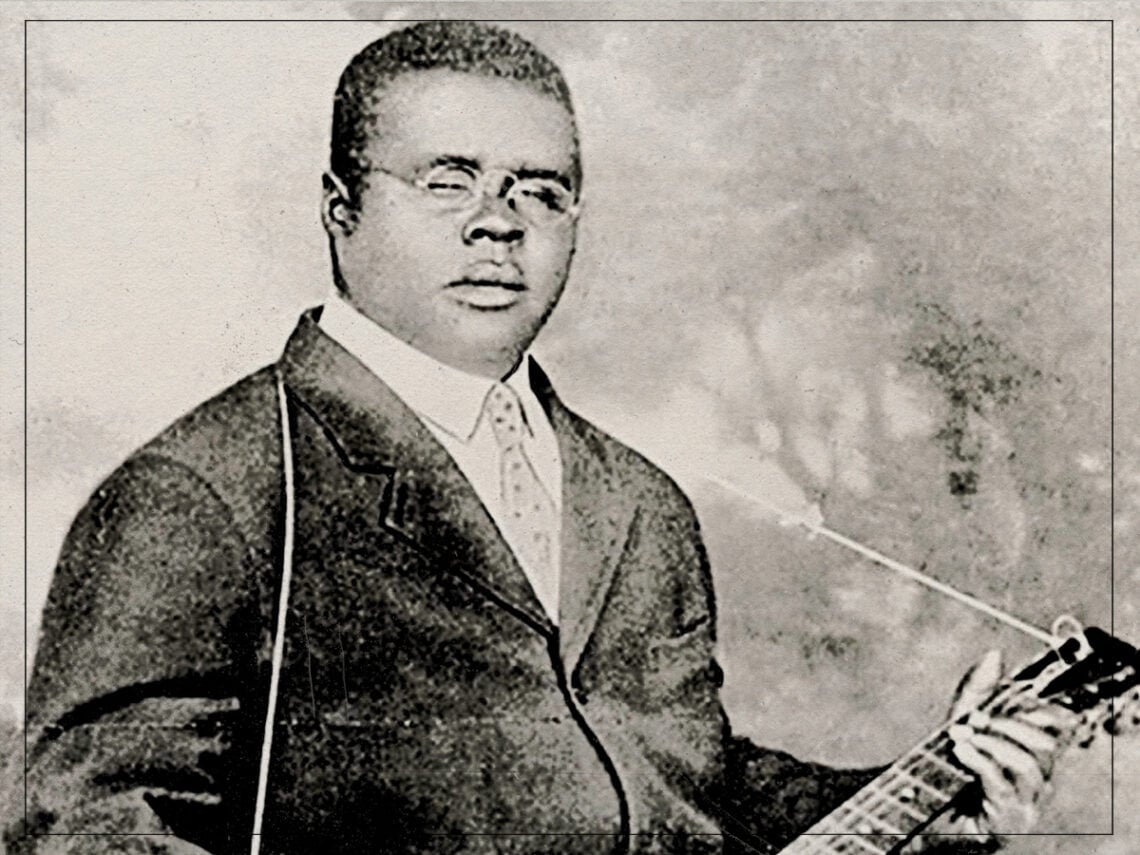
Did Blind Lemon Jefferson really die waiting for a chauffeur that never showed up?

It’s one of the enduring myths of American blues as to how Blind Lemon Jefferson actually met his end.
One of the original country bluesmen of the 1920s’ recording boom, the blind Black guitar player from Texas had been performing on the streets since his teens, reportedly playing from the evening til well into the early hours of the morning. Before long, Jefferson would cut his teeth further in Dallas’ Deep Ellum neighbourhood, an African-American sanctuary amid the era’s Jim Crow segregation and a hotbed of blues that drew in the likes of Lead Belly and T-Bone Walker, who all hung out and gigged the local club circuit together.
Jefferson’s reputation for an extensive repertoire stretching across gospel and country folk saw him head to a recording studio in Chicago in 1925 for his first of his 100-odd sessions that wound up as hits with the Paramount and Okeh label, including Texan blues staples like ‘See That My Grave Is Kept Clean’, ‘Match Box Blues’, and ‘That Black Snake Moan’. Four years later, continued success with his blues records seemed to set the blind singer up for a steady music career along with his Deep Ellum peers.
It didn’t turn out that way. Unfortunately, Jefferson died around 10.00 am in Chicago on a bitterly cold December 19th, 1929 and was found lifeless on a street a short while later. To this day, rumours persist as to what actually happened, from poisoned coffee by a jealous lover, being attacked by a dog in the night, to a fatal robbery of his royalty cheque from a guide escorting him to the Chicago Union Station.
Will we ever know? New York folk revival figure Dave Van Ronk seemed to have an idea. A stalwart of the 1960s Greenwich Village scene with such SoHo affection he was dubbed the ‘Mayor of MacDougal Street’, Van Ronk stood as a central pillar of the coffeehouse folk community as both performer and promoter, mining old English balladry as well as the Americana songbook with authority, and lending a hand to the day’s acoustic up-and-comers, everybody from Joni Mitchell, Phil Ochs, Jim and Jean, and Bob Dylan, plus a committed socialist in the best Almanac Singers tradition.
He was also something of a folk historian. Armed with an extensive knowledge of the old blues masters, Van Ronk suggested one other take on Jefferson’s untimely demise. “Like a lot of the more prosperous musicians, he had a car and a chauffeur,” he told The New Yorker in 2016. “He died in the streets of Chicago, they say, as he was waiting for his chauffeur to pick him up after he played a red party, and he wandered off in the snow, and they say he froze to death.”
“He was probably drunk, probably passed out, and his chauffeur didn’t show up,” he added. “So, I figure, it’s always a good thing to keep in mind that Blind Lemon Jefferson died waiting for his chauffeur.”


It’s plausible. With the official death certificate put down to “probably acute myocarditis,” a drunken stagger from the club in the snowstorm may well have spelt his fatal error, either collapsing or foolishly lying down to sleep in the biting temperatures and incurring a heart attack. It would be particularly callous for a driver to abandon a blind man in such conditions, or perhaps an innocent but disastrous error of assuming he’d been taken care of? We’ll never know.
Paramount paid for his body to be returned to Texas, where he was buried in the Woertham Black Cemetery in Freestone County in an unmarked grave, his precise location unknown to this day. In 2007, the cemetery’s name was changed to the Blind Lemon Memorial Cemetery in honour of the blues pioneer’s foundational legacy on the state’s century-old songbook.
