


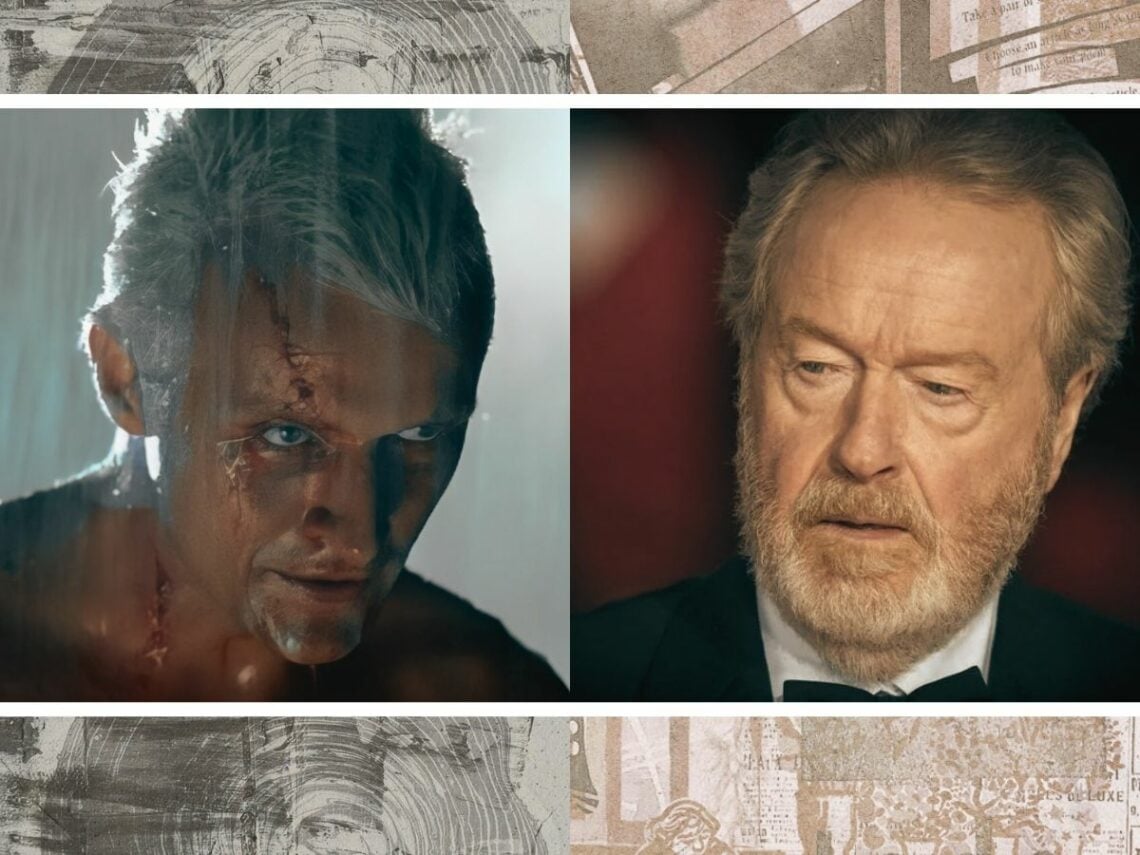
“More tits!”: Read the outrageous studio notes for Ridley Scott masterpiece ‘Blade Runner’

Few films have etched themselves into the annals of cinematic history quite like Ridley Scott’s Blade Runner. Since its release in 1982, this dark, neon-soaked vision of the future has not only captivated audiences but also set the gold standard for sci-fi storytelling we know today.
Imagine a Los Angeles drenched in perpetual rain, its skyline dominated by colossal skyscrapers and glowing advertisements. It’s 2019, but not the one we remember. This is the future, according to Ridley Scott—an urban sprawl where flying cars zoom past, and society is a melting pot of cultures and languages. The attention to detail in the set design is nothing short of breathtaking. Every scene is meticulously crafted, from the crowded, bustling streets to the eerie, empty corridors of corporate towers.
However, “breathtaking” wasn’t the opinion of those who first saw the film in 1982. Following its initial release, Blade Runner failed to capture mainstream acclaim. Director Scott continued to tweak, delete, and fine-tune the movie until it reached its current form—much to his dissatisfaction. While I hesitate to place blame for the underwhelming reaction to the initial release compared to the version we admire today, it’s hard to overlook the role of studio executives in the film’s early shortcomings.
Behind the scenes of Blade Runner, a small but unrelenting battle was brewing. The studio executives had their own ideas about which direction the dystopian masterpiece should take, and they weren’t shy about making changes. As a result, as many fans know well today, Scott’s original ended on a rather bleak, ambiguous note, leaving audiences to ponder the fate of Deckard and Rachael. However, the studio was concerned that such an ending would be too depressing for mainstream audiences. Instead, they opted for a more upbeat conclusion, where Deckard and Rachael escape to a serene, idyllic countryside. This new ending was jarringly incongruent with the film’s otherwise dark and dystopian tone. To achieve this, the studio used leftover footage from Stanley Kubrick’s The Shining for the scenic aerial shots—but the issues didn’t end there.
The studio notes handed down to Ridley Scott clearly illustrate the challenges he faced before the film’s eventual release. The extensive list of demands, particularly regarding the voiceovers, contributed to numerous stilted scenes, making it seem as if Harrison Ford had been confined to a recording studio for 48 hours straight. It’s hard to ignore that this added something of a lethargic dreariness to the overall feel, detracting from its general impact.

In fact, depressingly reflective of the Hollywood culture at that time, one particularly notable and crude request from ‘A.L.’ read: “They have to put more tits into the Zhora dressing room scene”.
Once the voiceover track was removed and a few pieces of editing magic were applied by Scott and his team, Blade Runner transformed into the near-perfect film we see today. Despite the numerous cuts and extended edits over the years, the grandeur of the finished product ensures it will never again experience the lows of its opening weekend in 1982.
Philip K. Dick, the author of Do Androids Dream of Electric Sheep?, which served as the source material for Scott’s vision, recognised the film’s impact after only watching a preview. “This indeed is not science fiction,” Dick wrote in a letter available on his official site. “It is not fantasy; it is exactly what [star] Harrison [Ford] said: futurism. The impact of Blade Runner is simply going to be overwhelming, both on the public and on creative people — and, I believe, on science fiction as a field.”
The studio’s alterations to Blade Runner remain a contentious topic among fans and scholars. While some argue that the changes made the film more accessible to a broader audience, others believe they compromised the artistic integrity of Scott’s vision. What is undeniable is that Blade Runner has endured and evolved, with each version adding layers to its legacy.
In the end, the studio’s interference may have diluted Scott’s original masterpiece, but it also sparked a broader conversation about artistic control and the nature of storytelling in Hollywood. The various cuts of Blade Runner offer a fascinating glimpse into the complexities of filmmaking, reminding us that even the most iconic movies are often the product of both visionary creativity and pragmatic compromise.
Read below the extensive studio notes given to Ridley Scott for 1982’s Blade Runner and be grateful he no longer has to adhere to them.

