


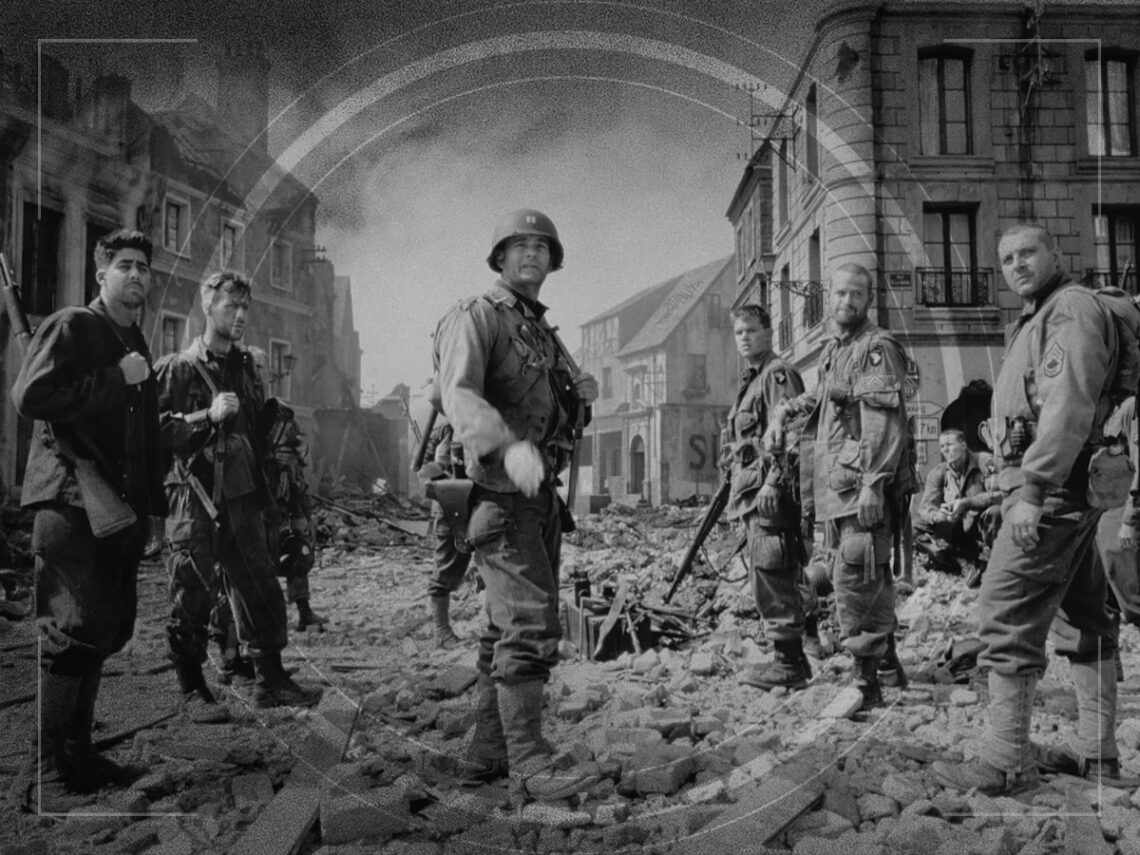
The black-and-white version of ‘Saving Private Ryan’ that almost was: “It would have been a little pretentious”

Having recently steered a black-and-white masterpiece that unfolds during World War II to awards season glory, you can understand why Steven Spielberg seriously considered doing it again with Saving Private Ryan.
Schindler’s List, released six months after Jurassic Park, capped off the definitive year of the filmmaker’s career, giving him the unique distinction of directing the highest-grossing release in cinema history and the movie that won ‘Best Picture’, ‘Best Director’, and five other Academy Awards back-to-back.
Personally, professionally, and emotionally burned out, Spielberg took a four-year sabbatical from behind the camera, and when he returned with another period piece/dinosaur blockbuster combo in 1997 with Amistad and The Lost World: Jurassic Park, saying that lightning didn’t strike twice would be an understatement.
It’s an equally massive understatement to say that the following year was a return to form, with Saving Private Ryan winning him a second ‘Best Director’ Oscar, even if it was egregiously snubbed in the ‘Best Picture’ race. An intentionally sloppy, improvised, and tactile World War II epic, cinematographer Janusz Kaminski revealed that Spielberg’s first thought was to go monochrome.
“However, there is a tremendous amount of documentary footage from World War II that was photographed in colour,” he explained. “Steven and I didn’t really want to shoot Private Ryan in black-and-white, and I think it would have been a little pretentious to do another World War II film that way.”
The DP reasoned that it had worked so well on Schindler’s List because “most of the real footage of Nazi atrocities was photographed in black-and-white.” It was only natural that they’d have the same conversation about Saving Private Ryan, but beyond the possible pretension, there was another key reason.
“We also wanted to shoot this picture in colour because there is some blood in the film and we wanted to play with the reds,” Kaminski explained, although “some blood” is selling the movie short when the D-Day scene alone sprays the screen in claret, wasting no time in immersing audiences into the harrowing realities of boots-on-the-ground combat.
To aid the realism, the cinematographer and director “wanted to know how the blood would look on the uniforms, and how it would look after they wore those uniforms for a couple of days,” a subtle aspect of Saving Private Ryan that would have gone unnoticed had they followed through on the black-and-white idea.
It’s easy to envision a version of Saving Private Ryan that’s completely robbed of colour, but on the other side of the coin, it’s just as easy to envision a black-and-white cut of the film that loses its impact and immediacy by doing so, which would also run the risk of coming across as not only pretentious, as Kaminski alluded to, but gimmicky and unnecessary.
