


‘Black Sabbath – The Ballet’ live review: one of metal’s most ambitious crossovers

Part of the charm of the Birmingham Royal Ballet’s latest show, Black Sabbath – The Ballet, is that, on the face of it, heavy metal and ballet shouldn’t mix. Director Carlos Acosta said he was “drawn to the idea of a collaboration between what most people might think are the most unlikely of partners”, and this tact creates a lot of intrigue, pulling together two of Birmingham’s most disparate cultural staples. But beneath the glaring differences, there are a lot of common threads.
Black Sabbath’s sound was directly shaped by their Aston roots, and it has never been a coincidence that the advent of heavy metal took place as they struggled to escape Birmingham’s industrial structure and the associated manual work. I also don’t think it’s a coincidence that Tony Iommi, the musical consultant for the ballet, had the biggest involvement in the show.
Having severed two fingers in a factory guillotine accident, the makeshift nubs he made for his fingertips allowed him to continue playing, the factory landscape forever changing his guitar tone. The biggest parallel you can draw is that ballet dancers routinely do the same. Their bodies are forced to change for their art every time they go en pointe. The brute physicality of the sheet metal work that inadvertently shaped Sabbath’s sound manifests in a totally different sense – it’s in the calloused and bleeding feet, aching bones, and endless repetition of the skilled dancers on stage.
But the rigidity of ballet is also why certain elements of the show don’t work. There is a beautiful pas de deux where two dancers are locked in an endless kiss, and they travel across the stage like water, and in another, there are fouettés so well timed to the orchestral Sabbath tracks you almost forget the sheer technicality they require. But as the strings fall away and the riffs come in at full force, in the moments, I imagine the choreographer told them something along the lines of: “Let loose! Just go crazy!”, it doesn’t land.
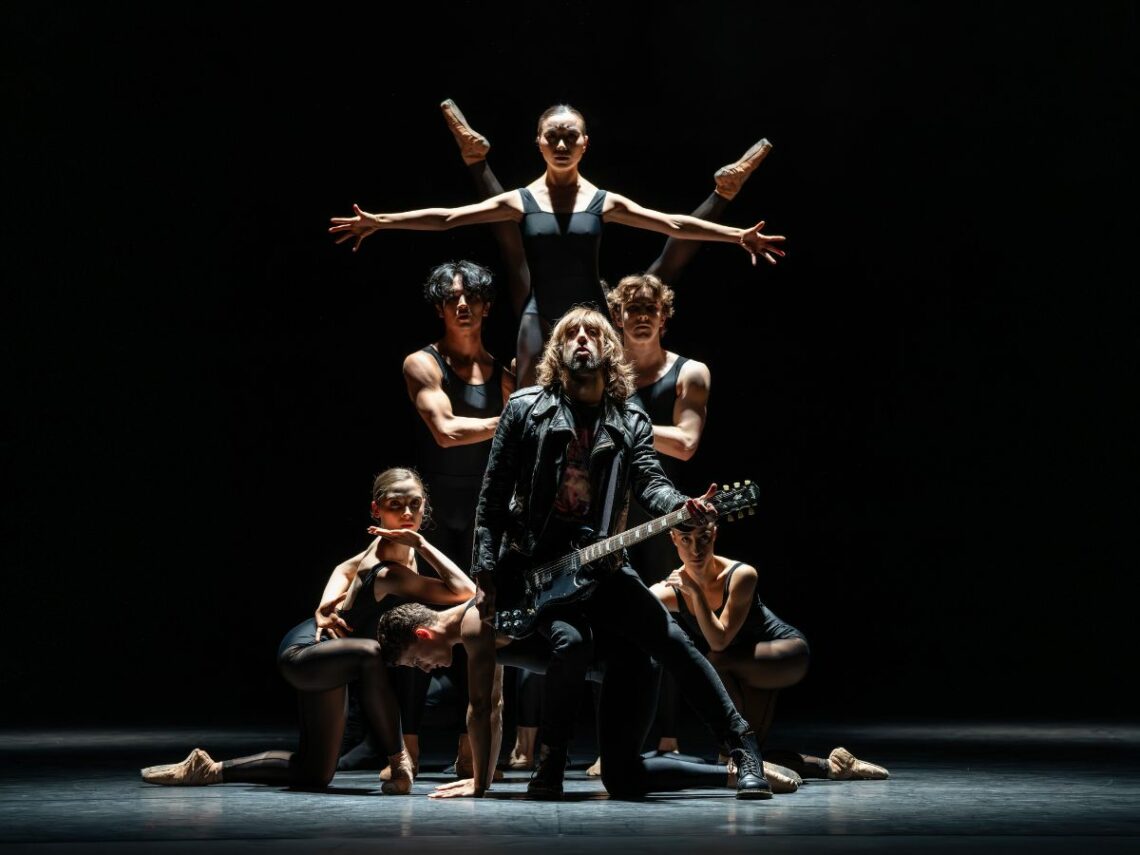
To say the biggest drawback of a ballet show is some unconvincing headbanging is absolutely intended as a compliment. These dancers have been trained all their lives not to sickle their feet or cheat a line, so the most challenging element would be not throwing up the horns too delicately. Guitarist Marc Hayward often joins them on stage, looking more like a Ramone than a convincing Sabbath member, but he’s got the floppy hair that suggests he’s one of them, and guides the dancers through the virtues of a chunky riff.
The three-act show was an ambitious attempt at marrying two different worlds that both metal and ballet fans will love, whether that be for the voiceovers from the band (naturally talking about racking up a cocaine bill of over £80,000) or the sweeping orchestral take on the likes of ‘Iron Man’ and ‘War Pigs’. Ultimately, it would have benefitted from embracing the confines of ballet slightly more – instead of the flared denim and band t-shirt dancers wore, why not lean into the supernatural drama of ‘Sabbath Bloody Sabbath’ with some Black Swan-esque makeup?
Black Sabbath may never have been created with the view for a long-term future and a perfectly poised ballet, but this performance does enough to suggest it was worthy of one.
