


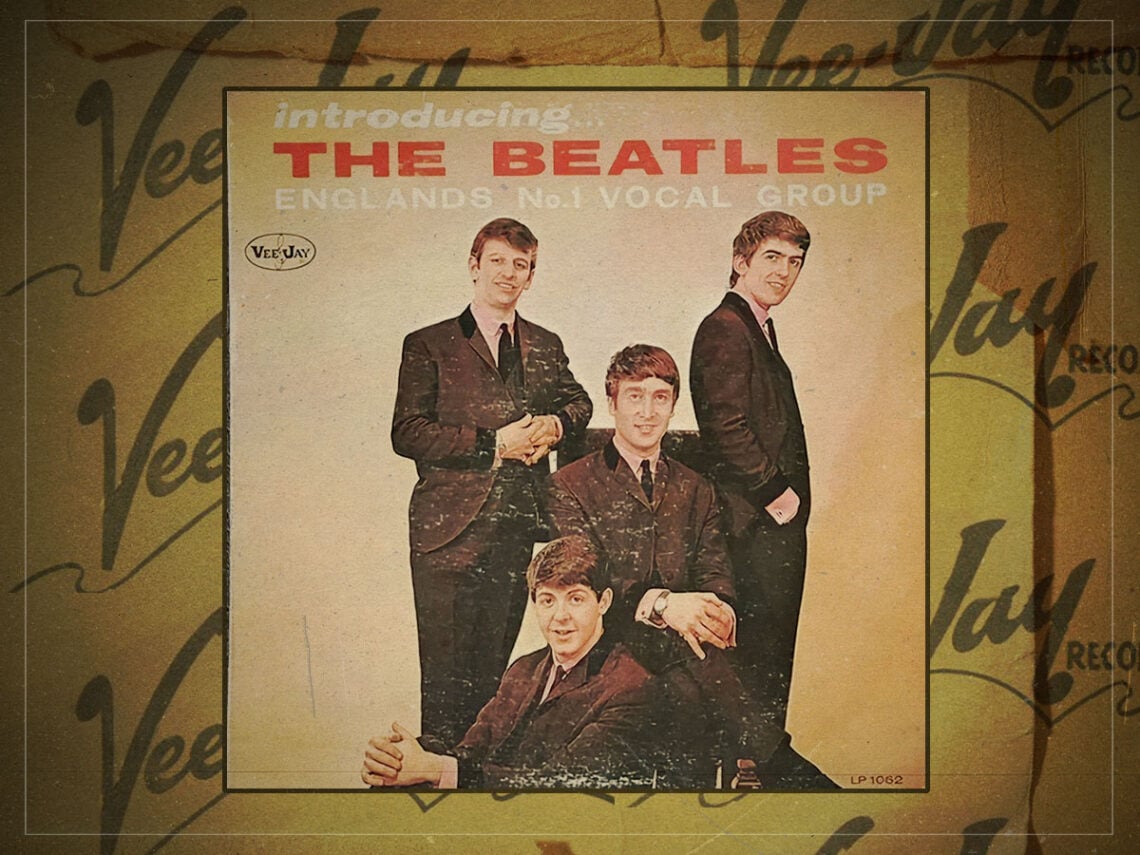
Vee-Jay: The Black-owned record label that brought The Beatles to America

There is no shortage of things that, after crossing paths with Beatlemania, were permanently reduced to footnotes in that endlessly analysed, undying pop cultural tome. The Ed Sullivan Show, for example, ran for 23 years and was an American institution, but 99 out of 100 internet comments about that TV program now refer to just one episode from February 9th, 1964, when the Beatles made their first appearance. And then there’s Billy Preston, whose 40-year career and 20 adventurous studio albums are little-known compared to his brief sit-ins with the Fab Four during the ‘Get Back’ sessions.
One of the more egregious examples of a Beatle gristmill victim, though, is the Vee-Jay Record Company, a groundbreaking and highly successful Chicago indie label owned and operated by Vivian Carter and her husband Jimmy Bracken. Founded in 1953, Vee-Jay pre-dated Motown by six years, becoming one of the first African-American-owned record labels putting out mainstream pop and R&B records. The fact that it was also established by a woman – Vivian Carter was a record shop owner and radio disc jockey before deciding to start recording artists herself – makes Vee-Jay an even more unique story.
“Among America’s top record manufacturers—the men who know recordings best—Chicago’s hit-making Vee-Jay Record Co is fast becoming the biggest little giant in the industry,” Ebony magazine reported in 1961. “In a business known for its get-rich-quick luck and disappointing heartbreak, the Windy City firm now ranks tops among the 500 independent companies and has begun competing against the mighty chains who once controlled the market.”
Unfortunately, their story has also been routinely overlooked, even in Chicago, where the exploits of another local label, Chess Records, tends to get all the attention from visiting documentarians.
When Vee-Jay does get a moment in the national or international spotlight nowadays, the focus is usually on that same brief moment that Ed Sullivan is best remembered for. That’s because Vee-Jay was the first label to release a Beatles album in America, getting Introducing the Beatles onto record store shelves on January 10th, 1964. This was a mere and crucial ten days before the powerful major label Capitol responded with Meet the Beatles, featuring a (mostly) different set of tracks (the band’s UK debut, Please Please Me, had come out a year prior). Much to Capitol’s displeasure, both of these new Beatles albums topped the US charts, side-by-side, for the next two months, eventually leading to a knock-down, drag-em-out legal battle, as Capitol looked to squeeze out this small-time Chicago firm from their rightful Beatle riches.
“We put the album out, and EMI, through Capitol, sued us to cease and desist,” Vee-Jay manager and producer Calvin Carter (Vivian’s brother) told Goldmine magazine in 1981. “They got an injunction against us seemingly every week. They would get an injunction against us on Monday, and we would get it off on Friday, then we’d press [more Beatle records] over the weekend and ship on Monday; we were smooth, we had everybody alerted, and we were pressing records all the time on the weekends.”
Vee-Jay was no fly-by-night operation putting out some sort of Beatles bootleg. The label, which had already enjoyed great success with Black and white artists alike, including Jimmy Reed, The Impressions, The Staple Singers, and The Four Seasons, had done its due diligence, sending its chief international rep Barbara Gardner to London to sign The Beatles to a licensing deal way back in January 1963. Then, a year later, they were rightfully reaping the benefits of their foresight.
Sadly, for Vivian Carter and the rest of the Vee-Jay team, the financial windfall of Introducing the Beatles was relatively short-lived and might have been more of a curse than a blessing.
“We got The Beatles, and went from 15 or 20 employees to like 200 overnight,” Calvin Carter recalled. “The growth was just too fast. There was a lot of pressure on us. We sold in one month’s time about 2.6million Beatles singles on Vee-Jay and Tollie [a subsidiary]… And right in the middle of this, we moved from Chicago to California. What a mess, what a mess.”
Forced to bring in management help from Los Angeles, a creative split soon formed between Vee-Jay’s Chicago roots and its new pop-focused LA. stockholders. By the time Vivian Carter and Jimmy Bracken managed to buy back the label and return it to Chicago in 1965, they’d tapped out most of their resources and lost their biggest cash cows, The Beatles and The Four Seasons. The label went bankrupt in 1966, but left a legacy worth far more than a footnote.

Never Miss A Beat
The Far Out Beatles Newsletter
All the latest stories about The Beatles from the independent voice of culture.
Straight to your inbox.