


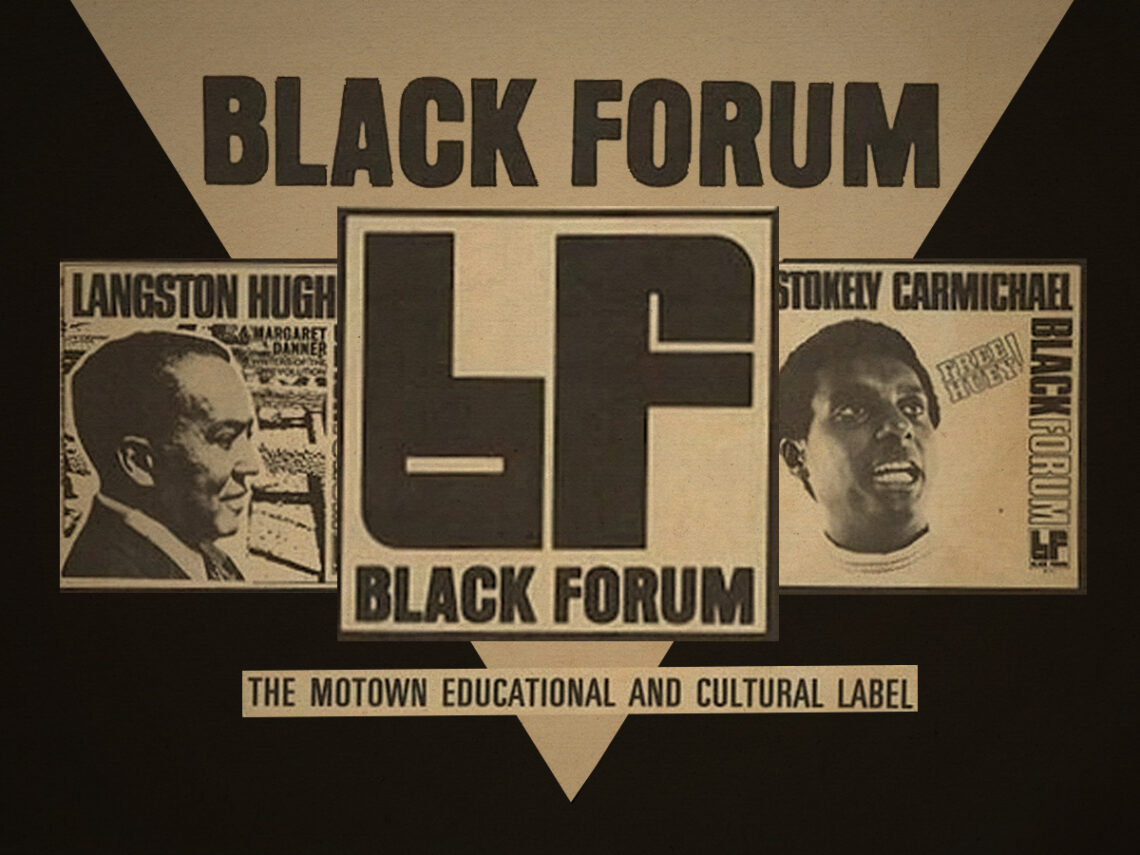
Black Forum: Motown’s forgotten entry into radical politics

Politics doesn’t sell records – or, at least, that was the view of Motown head honcho Berry Gordy back in the 1960s.
At the peak of the civil rights movement, the Detroit label stuck rigidly to its pop manifesto, refusing to even dabble in the realm of political resistance. By the time the 1970s rolled around, though, the label’s outlook changed entirely, and thus, Black Forum was born.
Motown, according to the ideals of Gordy, was “music for all people”. In his endless pursuit of hit records, the music mogul didn’t want to risk alienating any audiences with even the most vanilla of political standpoints. Hence, when artists like Aretha Franklin or Nina Simone began using their platform to call widespread attention to the fight for civil rights or the daily horrors incurred by America’s Black population, Motown focused solely on pop perfectionism.
Even when the label’s greatest voice, Marvin Gaye, presented plans for his magnum opus, What’s Going On, Gordy immediately panned the idea, calling Gaye’s protest album “ridiculous” and “too far”. Yet, that album quickly became one of Motown’s biggest sellers, perfectly capturing the spirit of the era and, in doing so, opening the eyes of Berry Gordy to the importance of political protest music.
Enter Black Forum, Motown’s short-lived yet nonetheless radical imprint that focused solely on a politicised output. First formed in 1970 – around the same time that Gaye recorded ‘What’s Going On’ as a single – the imprint initially focused on pressing LPs of civil rights speeches, predominantly by Martin Luther King Jr and the then-president of the Black Panther Party, Stokely Carmichael.
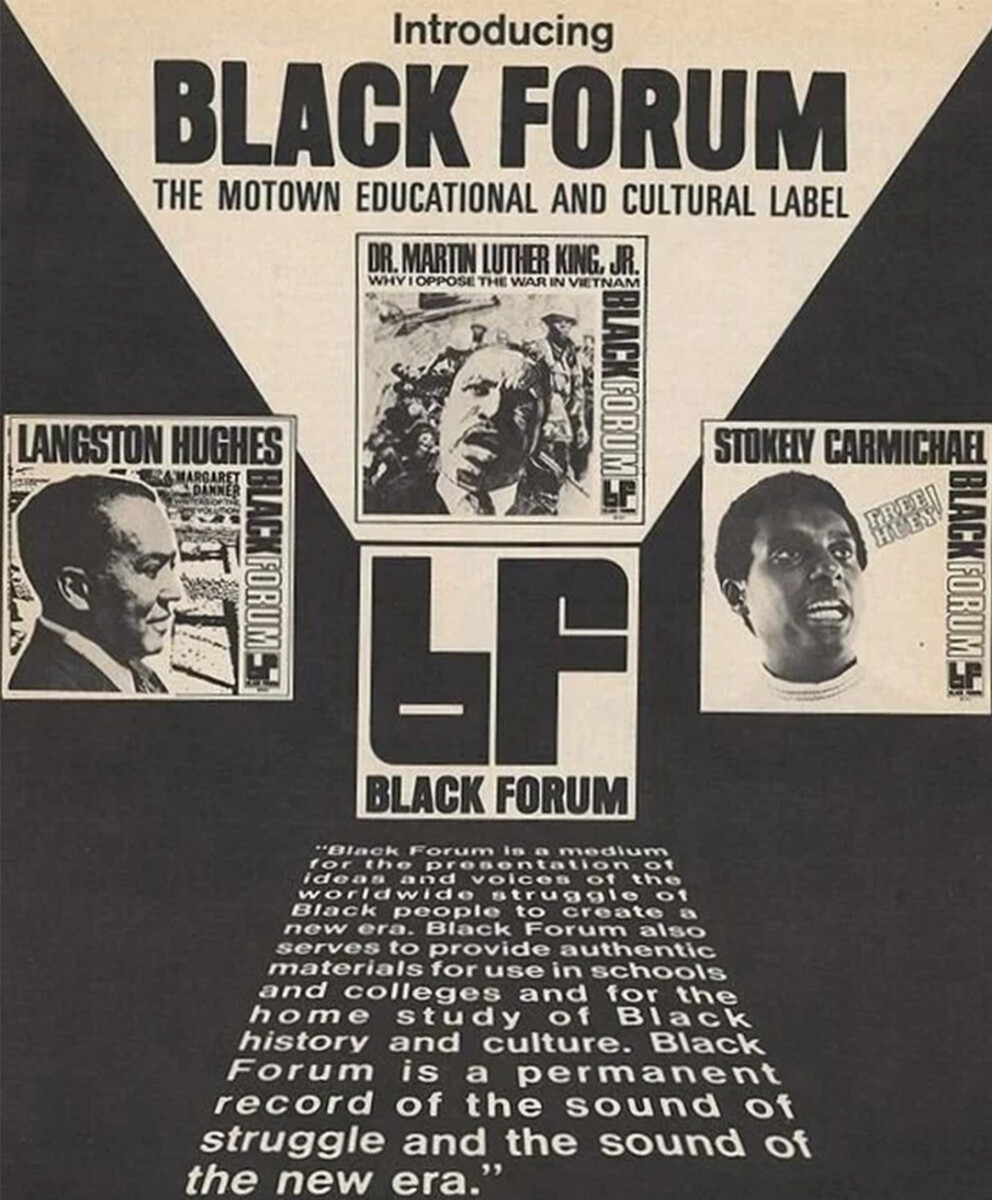
When Motown first announced its plans for Black Forum, the imprint was envisioned as “a medium for the presentation of ideas and voices of the worldwide struggle of Black people to create a new era”, and was headed up by Hitsville back-room staff Ewart Abner and George Schiffer.
In defiance of Berry Gordy’s claims that political content was bound to alienate audiences and detract from Motown’s hit power, the very first Black Forum release – Why I Oppose The War In Vietnam, a recording of a 1967 speech by MLK – won a Grammy Award, and helped to make the imprint a vital cultural space for the Black Power movement.
Although that Grammy, along with the rest of Black Forum’s short-lived discography, never particularly translated into commercial success on the level of The Supremes, Black Forum nevertheless boasted some of the label’s most radical, defiant, and experimental releases.
Alongside that selection of King’s speeches and Carmichael’s called to ‘Free Huey [Newton, the imprisoned co-founder of the Black Panther Party], the label also released harrowing, eye-opening field recordings of Black troops fighting in Vietnam on the 1972 LP Guess Who’s Coming Home, in addition to a plethora of incredible spoken-word and avant-garde poetry.
One of the label’s finest hours came in the form of It’s Nation Time, an otherworldly collection of free jazz and spoken word poems inspired by traditional African folk rhythms, recorded by
Imamu Amiri Baraka. Aside from being a searing political comment on Black identity and cultural history, the album remains one of the most underrated efforts ever released by Motown, perhaps because its content doesn’t quite fit in with their typical pop-R&B output.

Another highlight of Black Forum’s relatively short tenure came from activist Elaine Brown, whose self-titled album was one of the imprint’s final releases before it disappeared into the ether in 1973. A slice of heavy soul, accompanied by the radical politics of the former Black Panther chairwoman, the record would stand among the greatest albums of the civil rights era, if only it had been heard by more people.
Yet, commercial success was the be-all, end-all for Motown; Black Forum folded after three years of operation, and Motown returned its sole focus to chart domination. That was until 2021, of course, when the modern incarnation of Motown, now owned by Universal Music Group, resurrected the imprint and reissued some of its classic recordings from the early 1970s, connecting the two distinct eras of political activism.
Looking back upon the original tenure of Black Forum, though, it remains both one of the most unexpected and essential chapters in the illustrious history of the Motown empire. Not only did it provide an essential distribution point for defiant political commentary and Black Power liberation, but it also presented a whole new side of Gordy’s label, one that celebrated the spoken word, avant-garde, and jazz poetry, rather than exclusively churning out chart successes.
So, despite Berry Gordy’s apprehension at releasing What’s Going On in 1971, it cannot be argued that Motown Records was an apolitical record label during the civil rights era – you just had to know where to look.
