


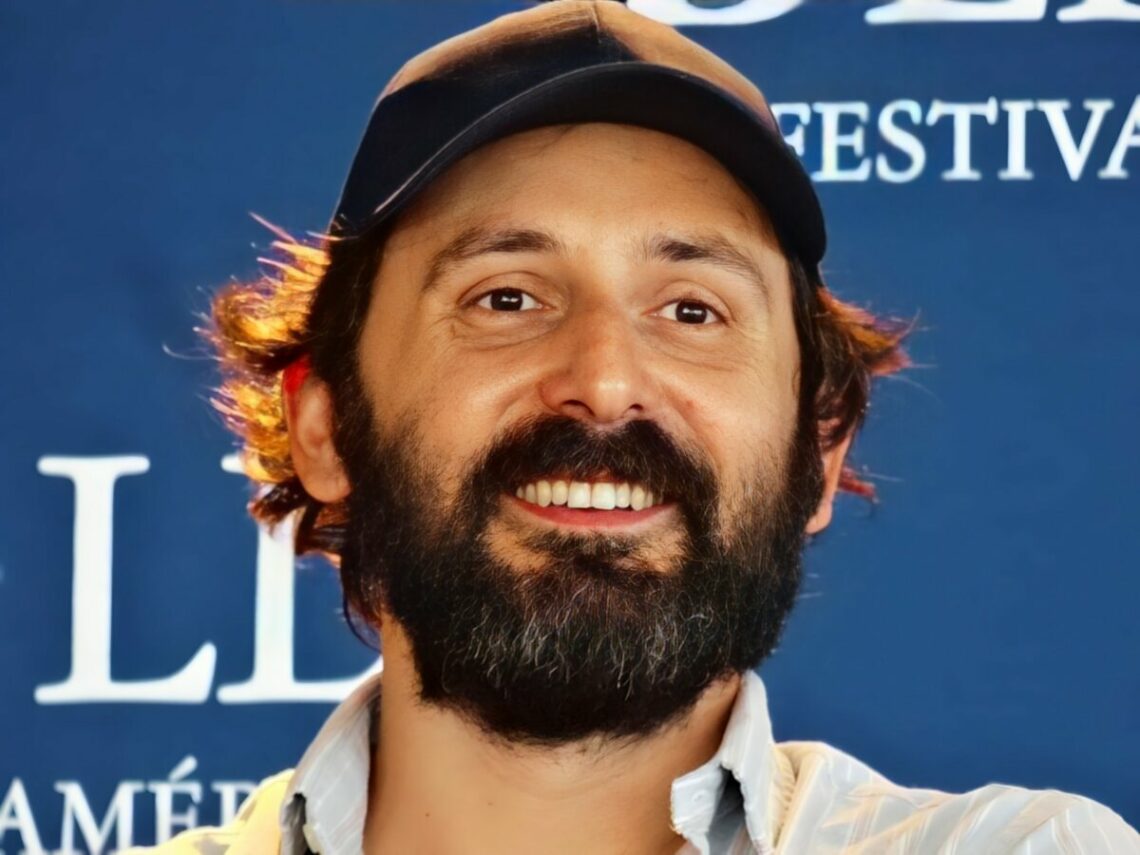
The bizarre surrealism of French filmmaker Quentin Dupieux

Absurdism isn’t for everyone, but for those who enjoy its entirely unique idiosyncrasies, there aren’t many better than Quentin Dupieux. The French filmmaker has his own signature set of motifs, but each time he returns to them, the results have been markedly different.
As a general rule of thumb, Dupieux’s filmography will feature ruminations on the art of cinema, voyeurism, audience manipulation, and the inimitable and overwhelming power of dreams. In certain cases, he’ll focus on one above the others, but there’s regularly been an inclination to indulge them all.
His debut feature is literally called Nonfilm and runs for either 44 or 75 minutes, depending on which version anybody chooses to watch, with the story focusing on a young actor who wakes up in the middle of shooting a movie he doesn’t understand in the slightest.
Rubber instantly became a cult classic based solely on its ludicrous premise of a sentient tyre coming to life and murdering people with psychokinetic abilities. Wrong revolves around a menial office worker in such levels of denial that he refuses to accept he’s lost his job and turns up every day before embarking on the search for his missing dog, while Reality features Napoleon Dynamite star Jon Heder dressed in a rat costume in the midst of a French director’s desperation to find the best groan in all of cinema so that his project will be financed.
Dupieux clearly has a mind like no other, which makes it perfectly fitting that so many of his inspirations come directly from his dreaming subconscious. “When you’re dreaming, you make some very strange connections between some random stuff and random people,” he explained of his process. “Sometimes you dream about someone you met 15 years ago, and you don’t know why that person comes into your dream so many years later.”
As for how that applies to his own work, Dupieux admits he’s “just trying to find some secret places in the human brain because I think movies tend to be too rational sometimes.” From his perspective, in a world where “everything is supposed to make sense” and “everything is supposed to be logical”, his goal is “trying to create some new logic that feels like dreams”.
That’s about as good an explanation as any for why Deerskin casts its gaze over a man obsessed with one very particular type of fringed leather jacket, a giant fly is trained as the subject of a potential get-rich-quick scheme in Mandibles, or Smoking Causes Coughing apes superheroes as five costumed crimefighters collectively known as Tobacco Force embark on a week-long retreat following a battle with a turtle demon.
It’s easy to compare Dupieux to an even more left-of-centre David Lynch, but as the writer, director, cinematographer, producer, and editor explained to IndieWire, he doesn’t care for being mentioned in the same breath. “It might be sort of helpful for people who don’t actually know my stuff, but I don’t really see my movies being connected to other movies, even if they’re thematically connected.”
That’s the polite way of putting it because he actively resents the comparison. “I really respect David Lynch, I enjoy some of his work, but I don’t see myself as a baby David Lynch and actually I hate when we compare to him because it’s usually, I think, a bad way to present my work,” he said. “David Lynch is David Lynch and he has his own stuff and his own way of filmmaking, and I think at the end, when you compare, there’s not really a connection. Of course, I like to talk about dreams, but I don’t see a real connection.”
14 features into his career, and Dupieux has stuck to his guns, with 2023’s double whammy of Yannick and Daaaaaalí! telling the stories of a heckler who holds a theatre hostage and has the play he’s watching be rewritten to his satisfaction and the self-proclaimed ‘real fake biopic’ of Salvador Dalí, respectively. There’s nobody else making films like these, and it’s debatable anybody even could if they tried.
