


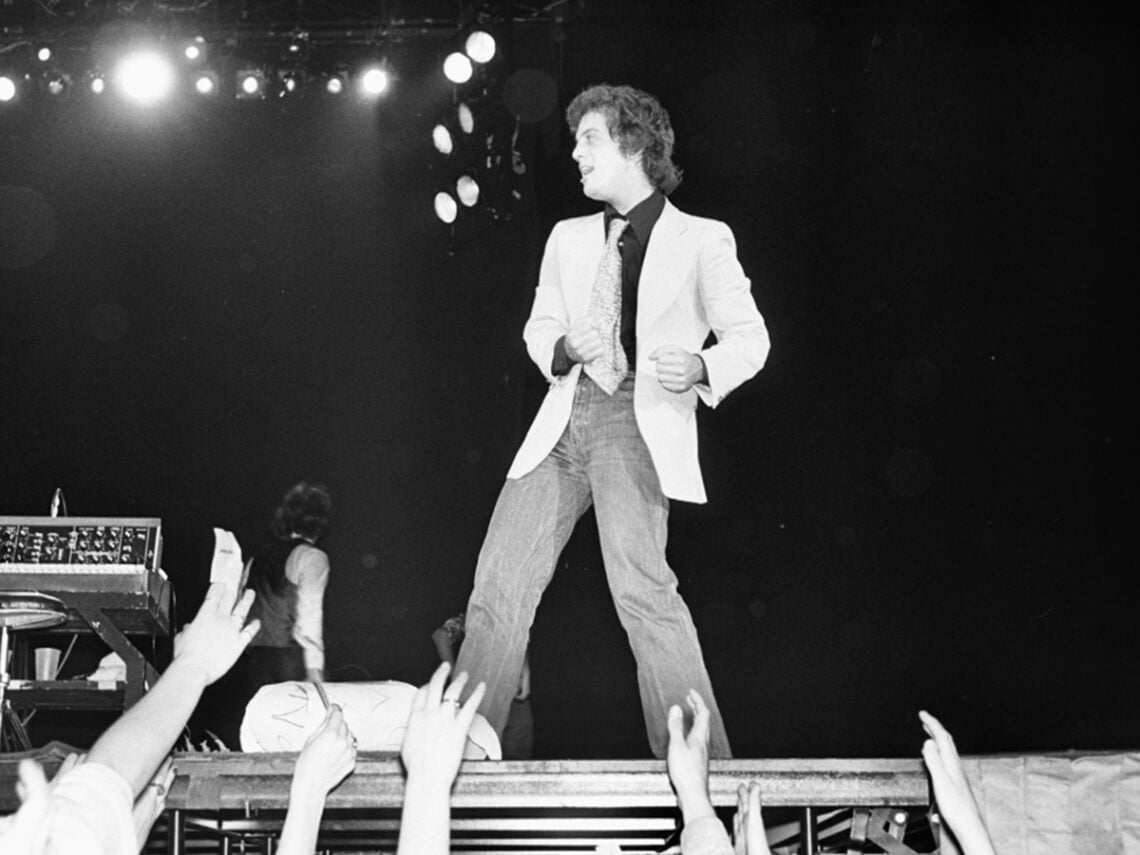
One Billy Joel song is guaranteed to make you happier this winter, according to science

Music taste is subjective, but if there’s something we can all agree on, it’s that it also has the power to incite change, or as Billy Joel once said, “Music in itself is healing”.
We’ve long debated whether music does actually have an impact on societal or cultural issues, movements and developments, but there’s no denying how much of it, at the very least, serves as a mirror to the spirit of any given time. Nina Simone once said it was an artist’s duty to make sure their music reflects the society they’re living in, but can it actually spark cultural change?
In the past, Billy Joel has been pretty sceptical about music’s impact on cultural issues, once saying it’s tricky to separate the fads from the mass movements, but that doesn’t mean he’s cynical when it comes to its impact on the mind, though. In fact, he knows how powerful music can be, which is precisely why he’s often unconvinced when something comes along and captures mass attention.
As he once told Rolling Stone, “I tend to question any sort of mass movement. I tend to question any sort of fad, trend. I’m a real believer in individual thinking, and I always look at both sides of things. When something is immensely unpopular, I’m always trying to figure out, well, what’s on the other side of that?”
On its ability to positively impact the individual, he added, “I think music in itself is healing. It’s an explosive expression of humanity. It’s something we are all touched by. No matter what culture you’re from, everyone loves music.”
Joel isn’t the first to comment on music as a tool for unity, but there’s more beneath the surface of that claim that also captures its impact on the mind. For instance, music can unite us, motivate us, boost our moods, and make us feel better, so long as it adheres to a subset of specific features. These are all fairly obvious and ones that multiple researchers have revealed as the most likely to have a positive impact on our moods.
When British band Alba reached out to neuroscientist Dr Jacob Jolij to find out about tastes and boosters, he clarified that the main aspects of ‘happy’ music are notes in a major key, a BPM between 140 and 150, and positive lyrics and themes. He also compiled a list to demonstrate which songs are the happiest, with Queen’s ‘Don’t Stop Me Now’ sitting right at the top at number one.
Following Abba and The Beach Boys sits Joel’s ‘Uptown Girl’, a piece initially intended to sound more classical than pop, which eventually morphed into its own beast the longer that Joel worked on it, capturing his own self-referential awe at being a working-class guy who’s able to attract glamorous women like Elle Macpherson and Christie Brinkley. Structurally, it fits the bill of a ‘happy’ song and does so thematically as well, giving hope to, as the singer once said, “every ugly guy in the world!”
‘Uptown Girl’ might be his happiest tune, but it’s nowhere near his best, a strange theme that covers many of the songs in the list, including Queen’s ‘Don’t Stop Me Now’ and The Beach Boys’ ‘Good Vibrations’. Sometimes, mood-boosting in music is about simplicity and not substance, about feeling, quite literally, the vibrations as they wash over you. Familiar features and formats are like a lifeline for our brains, even if the songs themselves don’t boast of any real importance.
