


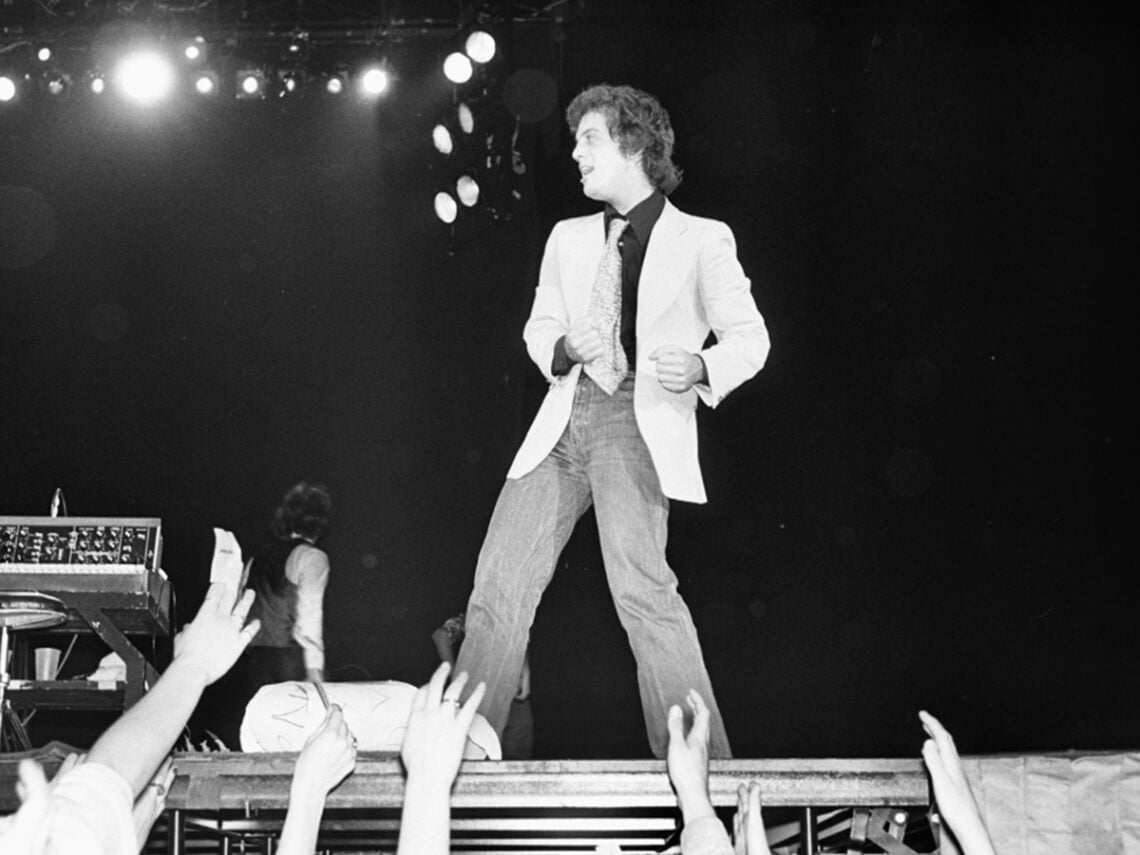
The 1977 Billy Joel song banned by radio stations: “Nothing sells a record like a boycott”

Few things have boosted record sales quite like controversy. Throughout the history of popular music, songs deemed offensive, provocative or dangerous have often attracted far more attention than their creators could ever have generated through conventional promotion. Attempts to suppress music frequently have the opposite effect, transforming relatively modest releases into cultural talking points.
Billy Joel experienced this phenomenon firsthand in the late 1970s. Although he was already enjoying growing success, one particular song became embroiled in a public backlash that revealed just how powerful censorship could be as an accidental marketing tool.
Anyone familiar with the wild story of XTC’s 1986 single ‘Dear God’ will know that the Christian community in the United States doesn’t take too kindly to blasphemous pop songs. Sadly, we live in a world where individuals and groups like to impose their belief systems upon others, contrary to the ideological “live and let live” dictum.
Therefore, when musicians like Andy Partridge or Billy Joel voice their thoughts without rhetoric, they must be prepared for censorship imposed by those who cannot accept the ideas of those who deny a pearly gate in the clouds. Perhaps Joel should have known what he was in for when he wrote the verse, “And they say there’s a heaven for those who will wait / Some say it’s better, but I say it ain’t / I’d rather laugh with the sinners than cry with the saints / The sinners are much more fun” in ‘Only the Good Die Young’.
The song arrived in May 1978 as a previewing single for Joel’s fifth studio album, The Stranger. The first person to voice concern over the song’s blasphemous lyrics was Robert Conley, the president of Seton Hall College at the time. It was soon banned by the Archdiocese of St. Louis, as Joel recalled in a 2012 interview with Performing Songwriter. “Then it got banned in Boston,” he added. “All these archdiocese areas started putting pressure on radio stations to ban it.”
Counterintuitively, the controversy surrounding the single drove its record sales through word of mouth, meaning radio airtime wasn’t such a necessary means of promotion. “The single had been out a short amount of time and wasn’t doing well,” Joel recalled. “The minute they banned it, it started shooting up the charts because nothing sells a record like a ban or a boycott.”
Joel claimed that the ban was crucial to the single’s enduring popularity and that otherwise it would “have died out”. Chuckling at the irony, he concluded, “As soon as the kids found out there was some authority that didn’t want them to hear it, they bought it in droves, and it became this big hit.”
The same could be said for XTC’s ‘Dear God’. Following its arrival in 1986, songwriter Andy Partridge received violent threats, and some stores were forced to remove the record from their shelves. On the flip side, a student at Binghamton High School, New York, held a staff member at knifepoint, forcing them to play the song over the public address system. Read more about the controversial XTC single here.
For Billy Joel, the furore surrounding ‘Only the Good Die Young’ ultimately proved beneficial, even if it was frustrating at the time. What began as criticism from religious groups became an unexpected catalyst for the song’s success, ensuring its place among the most recognisable tracks in his catalogue. In the process, Joel learned a lesson that countless artists before and after him would discover: nothing attracts attention quite like being told not to listen.
Listen to Billy Joel’s ‘Only the Good Die Young’ below.
