


The one musician that influenced Billy Gibbons most

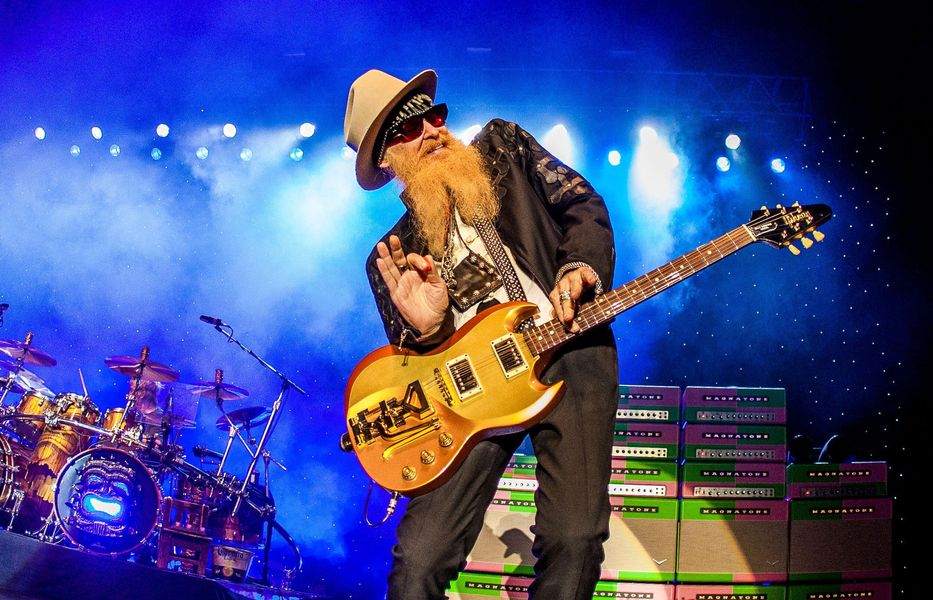
As the lead vocalist and guitarist for ZZ Top, Billy Gibbons is just about as rock ‘n’ roll as they come. With his vast Aristotelian beard and the kind of riffs that make your knees quake, he’s got everything you want in a guitar virtuoso. Here, Gibbons opens up about his biggest influence as a child.
Billy Gibbons grew up addicted to country music. He was, you might say, something of a purist. That changed when he saw Elvis Presley strutting his stuff on the Ed Sullivan Show. The snake-hipped hysteria-inducer convinced Gibbons that his future was in rock ‘n’ roll. With that, he started consuming everything he could get his hands on. Chicago blues, rock ‘n’ roll, psychedelia – all if it was out there just waiting to be savoured.
After forming his first band, The Moving Sidewalks, Gibbons decided to team up with the bassist Dusty Hill and Frank Lee Beard, who, ironically, was the only member of the trio without facial hair (Take that, nominative determinism). The newly-christened ZZ Top released their third studio album Tres Hombres in 1973, which boasted hits like ‘Jesus Just Left Chicago’ and the immortal ‘La Grange’. Two years later, they landed another hit with Fandango!, which included the lead single ‘Tush’. The band would also cement itself as a beloved television presence on MTV, largely thanks o the pioneering synth-driven album, Eliminator, which ended up being perfectly suited to television.
Decades later, Gibbons sat down for an interview in which he revealed one of his biggest influences growing up: “Jimmy Reed,” he began. “Upon listen after listen after listen, one may come across the realization that, though the forms seem simplistic, Jimmy Reed recordings are very complex.”
He’s not wrong, although Reed seems to have had a lot of help developing his compositions. He kicked off his recording career in 1953, bagging a string of hits with the likes of ‘Honest I Do, ‘Baby’, and ‘Bright Lights, Big City’. With his distinct boogie-shuffle rhythms and thick “mush mouth” drawl, Reed became famous for an accessible brand of blues, the apparent simplicity of which belies a deeper complexity. It’s said that much of his music was composed by his wife, Mary Lee Reed, who would occasionally sing duets with him. When it comes to the intricate guitar work so beloved by the likes of Gibbons, we have Reed’s childhood friend Eddie Taylor to thank. Of course, it was Reed’s energetic performance style that made him an icon. Today he is regarded as a leading influence in the world of rock and southern rock. For Gibbons, he was an absolute hero.
