


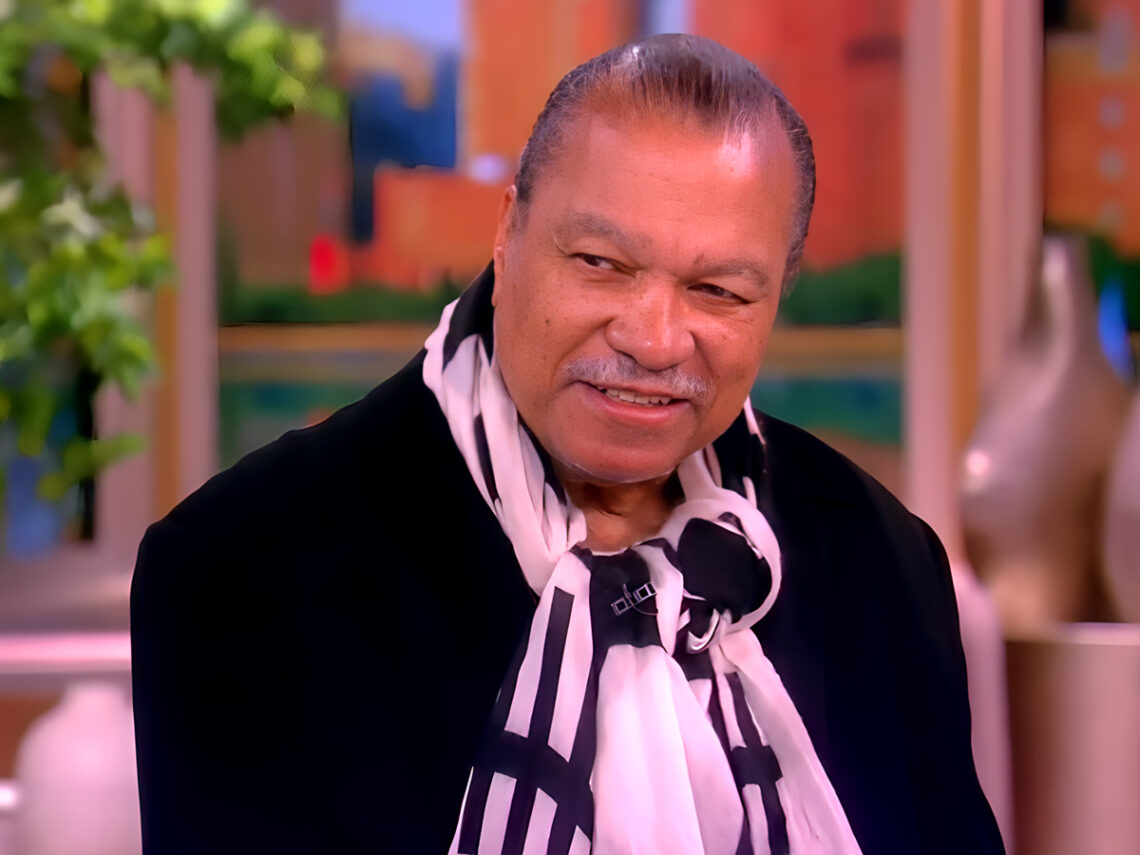
Billy Dee Williams believes blackface should be allowed

Billy Dee Williams, the actor famed for his role as Lando Calrissian in the Star Wars franchise, has said that white actors should be allowed to perform in blackface. He believes that performers should be able to do “anything” they want to do.
Williams feels that actors need to have full freedom to portray any character. He also claims that he has always managed to see the comical side of such portrayals.
Speaking to Bill Maher on his Club Random podcast, Williams remembered watching Laurence Olivier wearing blackface to portray Othello in the like-titled Shakespeare play in 1965.
Williams recalling a heady evening of belly laughs. “I fell out laughing,” he noted. “He stuck his ass out and walked around with his ass,” he added, laughing, “because Black people are supposed to have big asses.”
Of course, some people might find such portrayals and stereotypes offensive, especially in the modern climate, but Williams “thought it was hysterical.” Adding, “I loved it… I love that kind of stuff.”
Maher claimed “they would never let you” get away with that sort of thing these days, to which, Williams questioned, “Why?”
“Blackface?” Maher replied, shocked that Williams didn’t understand his inference as a Black man.
Williams fully understood the inference but followed up with his views on the matter. “Why not?” he questioned, continuing, “You should do it. If you’re an actor, you should do anything you want to do.”
Maher suggested that, beyond the accentuated stereotypes, such roles should be reserved for Black actors for a fair job-seeking environment. The host noted how the actor, now 87, lived through a period where some actors “couldn’t play the parts you should’ve played.”
Williams understood this position but suggested that it was more important to navigate a career in which one doesn’t feel like a “victim”. “I refuse to go through life saying to the world, ‘I’m pissed off,’” he added. “I’m not gonna be pissed off 24 hours a day.”
Elsewhere in the conversation, Williams addressed the topic of race from an “individualist” perspective, outlining the self-confidence that helped him achieve success in his own career.
“If I’m going to be creative, let me be creative as an individualist,” he said. “I don’t want to do anything based on this whole idea that, ‘You’re a Black person, you’re a white person’ and things of that nature. I’m an artist. I’m a creative entity in this life.”
Williams is currently on a promotional trail for his newly published memoir, What Have We Here? Portraits of a Life. The book traces his success story from humble beginnings in Harlem to global fame in Hollywood.

Never Miss A Scene
The Far Out Film Newsletter
All the latest film news from the independent voice of culture.
Straight to your inbox.