


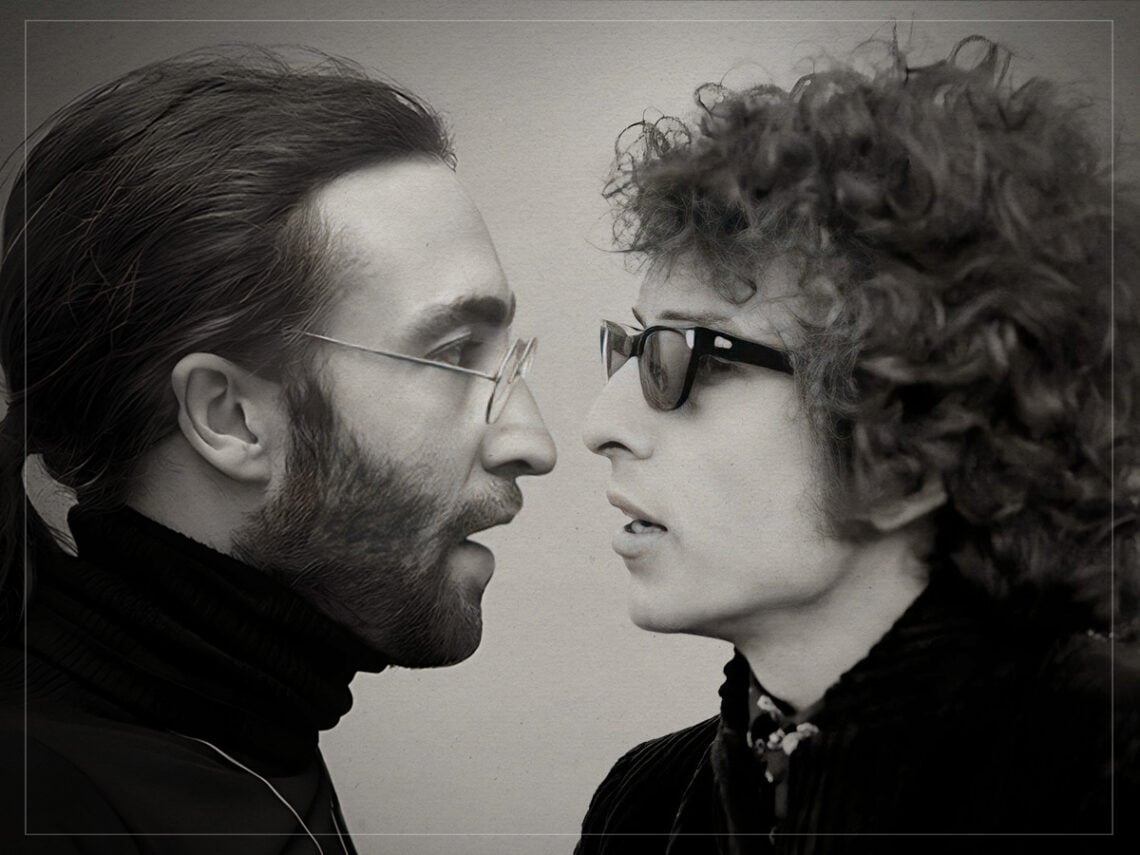
The best lyric that Bob Dylan has ever written, according to John Lennon

With great pride, John Lennon proclaimed that “he was a far better writer than Dylan” in private circles throughout his life. Considering that Dylan was his favourite songwriter, that says something about the esteem in which he held himself.
Does that make him cockey? Absolutely. Yet, he was also notoriously self-critical and diffident about his artistic output. For detractors of the Merseyside Maharishi, this paradox is proof that he was a phoney, solely concerned with fabricating his own myth as the Bed-In Bard. But for the millions who hail him as a hero of the highest order, the inverse is true: he wasn’t disingenuously faking John Lennon the myth, he was ingeniously inventing John Lennon the man.
In many ways, this made the equally mythological Bob Dylan not only his favourite fellow songsmith, but also his closest contemporary in the field. As Sam Shepard wrote of the unwashed messiah, after touring with him for the Rolling Thunder Revue: “Dylan has invented himself.”
Mirror Lennon’s own godhead ways, Shepard continues, “He’s made himself up from scratch. That is, from the things he had around him and inside him. Dylan is an invention of his own mind. The point isn’t to figure him out but to take him in. He gets into you anyway, so why not just take him in? He’s not the first one to have invented himself, but he’s the first one to have invented Dylan.”
This uncanny knack of imbuing their work with a welter of enigmatic charm elevated their writing. Yet, in another of Lennon’s perpetual paradoxes, he also thought their writing was at its best when it was at its most simple and punchy.
“He loved Bob’s earlier work, but he liked the simpler, direct stuff,” his firm friend Elliot Mintz told Spin.
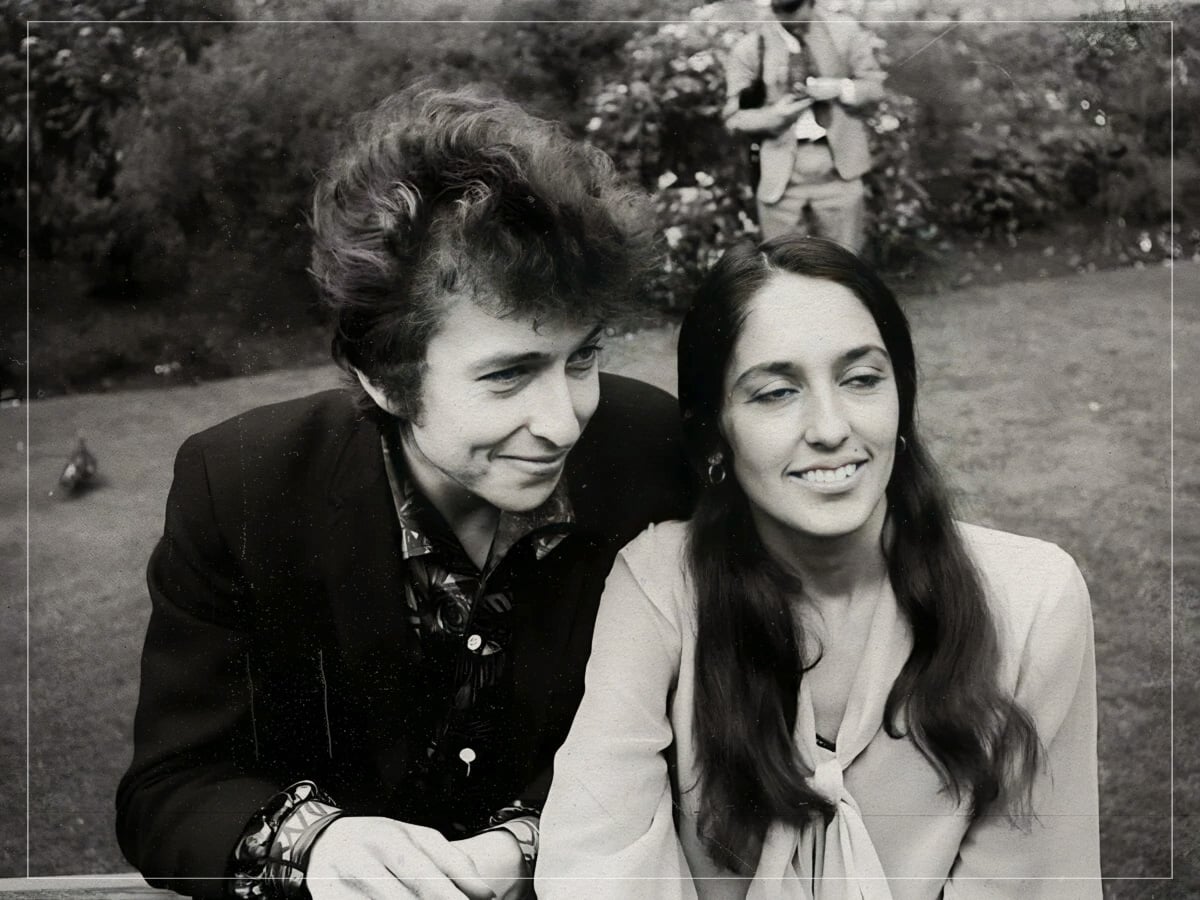
Lennon would even go so far as to pick out a stinging couplet from ‘Subterranean Homesick Blues’ as the best Dylan ever wrote, “He said his favourite was, ‘don’t follow leaders / watch your parking meters.’”
It’s a curious line that contains both a wealth of ambiguity, but also the simplicity and rhythmic right hook that adheres to the songwriting advice Lennon dished out two days before his death: “Just say what it is, simple English, make it rhyme and put a back-beat on it and express yourself as simply, straightforwardly as possible.”
However, as is always the case with Lennon, it doesn’t take long before you can find a contradiction. Speaking about the rather un-straightforward notion of the wind inside of a letterbox and Indian incantations in ‘Across the Universe’, the bespectacled Beatle held a rather differing view, “It’s one of the best lyrics I’ve written,” he asserted. “In fact, it could be the best, I don’t know. It’s good poetry or whatever you call it. Without tunes it will stand.”
Even Mintz seemed to contradict Lennon’s championing of simplicity with his very next sentence, as he explained, “We would have these conversations where John would insist that ‘I Am the Walrus’ was superior to anything that Bob had ever penned.” While it might be straightforward in its decidedly nonsensical spirit, you really have to squint your eyes to see that as on the nose.
All that said, it’s easy to see why Lennon adored ‘Subterranean Homesick Blues’. He loved newness, and this rambling blunderbuss just about invented rap almost two decades before the event. It had a searing affrontery to it, coupled with a definite sense of artistry, and Lennon’s rock ‘n’ roll avant-gardary would carry a similar torch.
As for what the line means? Well, was Dylan hinting at creeping disenchantment with his dismissal of “leaders”, but how we’re still bound to follow them within the capitalism system, given our need to adhere to authoritative commands like “parking meters” where time, money, and space are literally surveilled? Or was he saying something closer to, ‘Mind your own life and pay attention to the mundane rather than chasing stars’?
Whatever it was, it gave food for thought to Lennon, and in its own way, conveying the mysterious mass of information that it does in only 11 syllables is simplicity and depth defined in unison. So maybe, above all, that’s why Lennon loved it: it was a reflection of the same multitudes he contained – as memorable as a jingle, as unknowable as a tumbling tree in an empty forest. The Beatle was like Schrödinger’s singer, and the Dylan line he loved will be equally unanswerable and timeless through the ages.

Never Miss A Tale
The Far Out Bob Dylan Newsletter
All the latest stories about Bob Dylan from the independent voice of culture.
Straight to your inbox.