


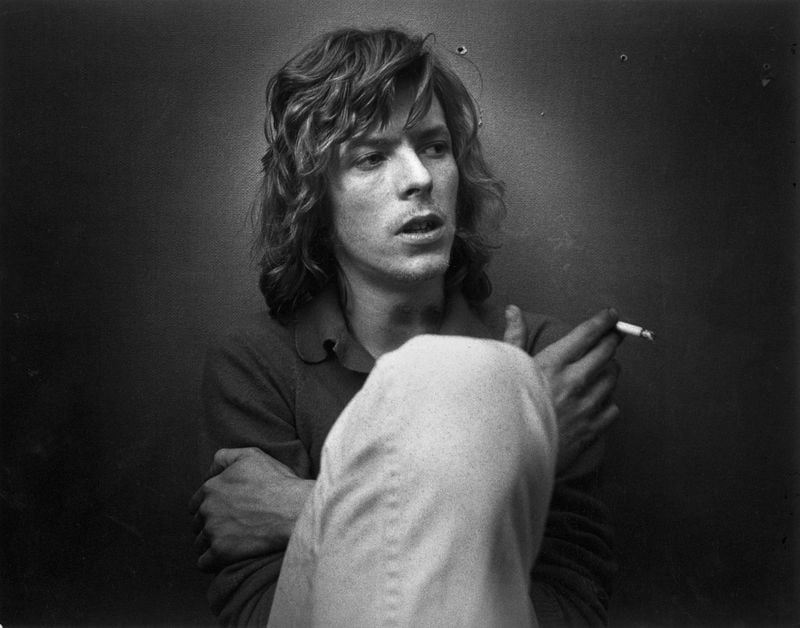
The “best band in the world,” according to David Bowie

When David Bowie died in January 2016, he left behind a legacy that has gone entirely unparalleled in popular music, thanks to his unique eye for creative metamorphosis. Long before his experimental spell in Berlin, or his humbly-admitted “Phil Collins years” of the mid-1980s, Bowie was a whippersnapper circling the streets of London that practically oozed with the creative energy of the 1960s.
Throughout the 1960s, the flamboyantly fashion-conscious Bowie – or Jones, as he was then known – made near-constant attempts to coax public recognition. In 1962, he formed his first band, the Konrads, from which he quickly moved to form the King Bees after becoming increasingly solitary in his ambitions amongst the other members’ comparatively limited aspirations. After leaving school in his late teens, Bowie told his parents of his ambition to become a world-renowned rockstar.
The King Bees performed with a heavy leaning toward the blues, with sets covering the likes of Howlin’ Wolf and Willie Dixon. After recording his debut single ‘Liza Jane’ with King Bees in 1964, Bowie once again left the past in his footprints to join the Manish Boys, another Blues-based group that incorporated folk and soul into proceedings.
By 1966, Bowie once again found himself shuffling the deck as he took a new dive fronting the Lower Third, a band who identified as mods and followed The Who and The Kinks devoutly. With this setup, Bowie released his first single credited to his adoptive ‘Bowie’ alias, ‘Can’t Help Thinking About Me’.
Having released a series of critically and commercially ignored singles with various backing bands, the tenacious nomad moved to front his next group, The Buzz. While Bowie would have to soldier through the disappointment of his tanking 1967 debut album, this period marked the dawning of a new musical influence that would stay with him for the rest of his career.
Towards the end of 1966, The Velvet Underground entered Bowie’s life before they had even released their debut album or raised a single eyebrow on America’s East Coast.
“[The Velvet Underground & Nico was] brought back from New York by a former manager of mine, Ken Pitt,” Bowie told Vanity Fair in 2003. “Pitt had done some kind of work as a PR man that had brought him into contact with The Factory. [Andy] Warhol had given him this coverless test pressing – I still have it, no label, just a small sticker with Warhol’s name on it – and said, ‘You like weird stuff—see what you think of this.’”
“What I ‘thought of this’ was that here was the best band in the world,” he asserted. “In December of that year, my band Buzz broke up. But not without my demanding, we play ‘I’m Waiting for the Man’ as one of the encore songs at our last gig. Amusingly, not only was I to cover Velvet’s song before anyone else in the world, I actually did it before the album came out. Now that’s the essence of Mod.”
Bowie continued to develop his style toward the world-wielding success of 1972’s The Rise and Fall of Ziggy Stardust and The Spiders From Mars. All the while, The Velvet Underground and their early mentor Andy Warhol, whom he wrote a song for on 1971’s Hunky Dory, became an integral part of the Starman’s creative outlook.
As if repaying a debt, Bowie and his loyal guitarist Mick Ronson agreed to help Lou Reed produce his second solo album, Transformer, in 1972. The album would finally grant Reed the mainstream success he sought following his initially-underappreciated tenure fronting The Velvet Underground.
