


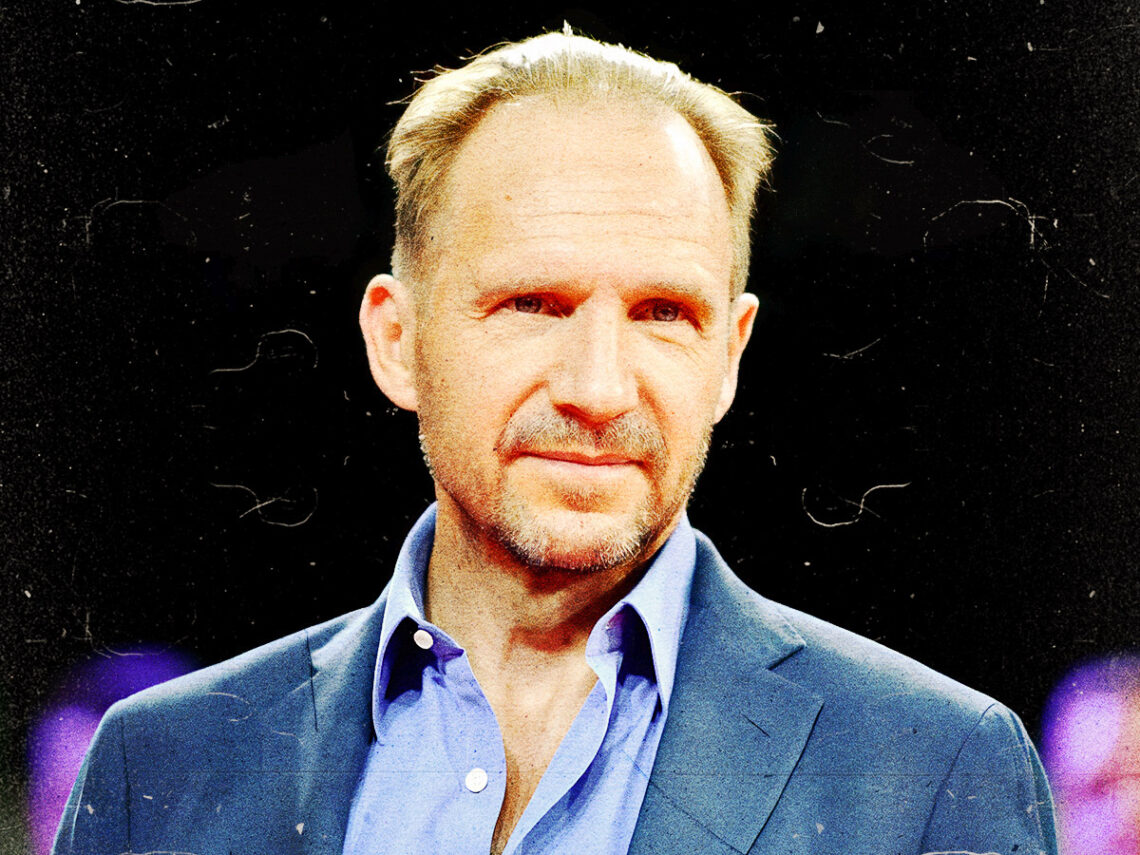
The best advice a director ever gave Ralph Fiennes

Between countless appearances in Shakespearean stage adaptations, his recurring role as the head of MI6 in the James Bond franchise, and his depiction of antagonist Voldemort in the Harry Potter series, Ralph Fiennes is well on his way to being considered a national treasure.
The quintessential yet underrated British actor began his acting career by studying at the Royal Academy of Dramatic Art before venturing into theatre with the National Theatre and the Royal Shakespeare Company. Later, his feature film debut came in 1992 when he took on the role of Heathcliff in Peter Kominsky’s novel adaptation, Emily Brontë’s Wuthering Heights.
Fiennes’ international success, however, arrived just one year later when he appeared alongside Liam Neeson in Steven Spielberg’s Schindler’s List. The film has come to be acknowledged as one of the greatest of all time, with Fiennes, in particular, gaining praise for his performance as Amon Göth, an SS officer during World War II. Fiennes won a Bafta for his role, but he also gained the opportunity to learn from the legendary director who helmed the film.
During an interview with The Talks, Fiennes was asked about the best advice he’s ever received from a director and immediately recalled his collaboration with Spielberg. He shared: “Well, I remember Steven Spielberg was incredibly informed about lenses and technical things, and that made him very instinctive in terms of how he directed: ‘Do it quicker, faster, something’s not right.’”
Fiennes admired this adeptness with the camera and the thrill it brought to set, adding, “He is totally spontaneous, he doesn’t try to measure his direction, but it’s very true, it’s very direct and for that reason, very exciting.”
The actor also acknowledged the gentle, nurturing approach of Anthony Mingella, who directed the 1996 film The English Patient, before stating, “But something I’ll always remember is working with the Hungarian filmmaker István Szábo.”
Szábo helmed the 1999 drama Sunshine, which Fiennes starred in. The actor dubbed Szábo’s approach to directing as “classical”, putting particular emphasis on the close-up. While Fiennes observed Spielberg as being an instinctive director, it seems that Szábo was intentional, looking to use this type of shot to ensure the authentic, vulnerable depiction of emotion.
Fiennes explained: “I remember him saying to me that he felt that the close-up was the key element, that cinema is about the close-up on the human face, that thoughts and feelings are born on the face for the first time. And that always stuck with me how he looked for that when he was directing, for the virgin moment.”
The advice of his previous directors has influenced not only his acting career but also his ventures further into filmmaking. Since his collaborations with Spielberg and Szábo, Fiennes has taken on producing and directing roles. While combining his interests in screen and Shakespeare, he adapted Coriolanus to screen in 2011.
The common factor in Fiennes’ most treasured directorial advice is technical skill and vision. Between the instinctual, flexible camera work of Spielberg and Szábo’s reliance on the close-up, Fiennes demonstrates his appreciation for directorial skill and eagerness to learn about the processes of filmmaking outside of his sphere of acting.
