


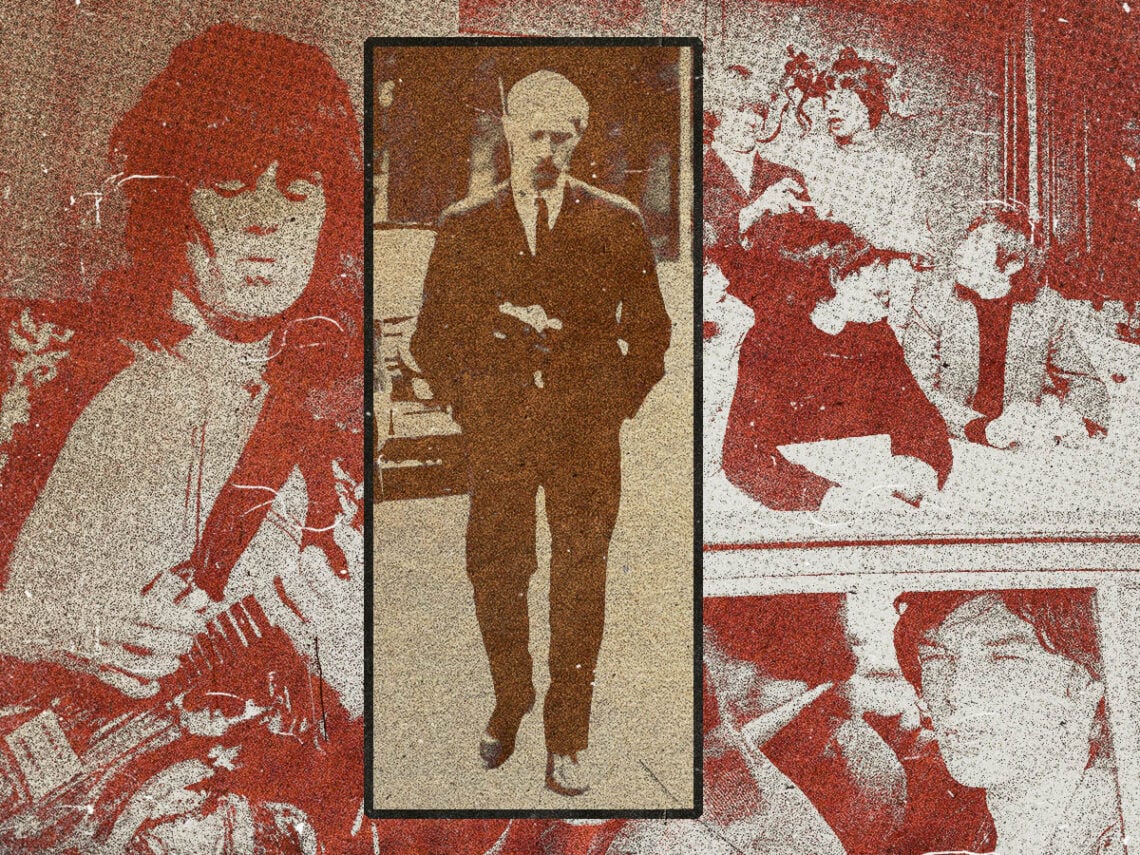
Bent Rej’s intimate photographs while on tour with The Rolling Stones

In the 1960s, photography, like music, became increasingly refined as an art – innovative approaches cultivated new possibilities alongside the era’s staggering rate of technological evolution. The symbiotic artistic and technical aspects of photography drew Bent Rej to a career behind the camera; divine providence saw him join The Rolling Stones on tour in 1965.
In a recent interview, Ny, one of Bent Rej’s two daughters, told Far Out how her father broke into his profession. “He grew up in a farm area, a remote area [of Denmark], and all of his family were selling fruit and vegetables,” she said. “So it was conceived that he would do the same – like having a store in the countryside. But for some reason, he didn’t want to do that. So he started training with a photographer in the area, mainly taking photos of families and school photos.”
“He started there, and then he went to Copenhagen to start work at a newspaper. I don’t know why, but I think he wanted to break out.” If breaking out of the rural bubble was Rej’s goal, he achieved this with distinction in his mid-20s after being assigned to document the German leg of The Rolling Stones European Tour of 1965.
Ny explained that her father, who sadly passed away in 2016, “was very fashionable at the time. He was bold, and if he wanted something, he would get it. I think he was also [roughly] the same age as [The Rolling Stones], and they were very reachable at the time. So, I think he was just the at the right time, at the right place.”
Rej became well-acquainted with the band during the tour, forming a particularly close bond with the original band leader, Brian Jones. It was through The Rolling Stones that Rej was able to meet and photograph so many prominent stars of rock music’s most thriving decade. Between 1965 and ’69, Rej took some of the most iconic shots of Jimi Hendrix, Bob Dylan, The Who, The Beatles, Tom Jones and The Kinks, among many others.
Rej’s brush with the late-’60s rock scene produced his most memorable work, but this period in his life was surprisingly brief. While he enjoyed the company of the rockstars, Rej found it difficult to conform to the rock and roll lifestyle. According to Ny, her father wasn’t as interested in the music so much as the artists themselves. Hence, the lifestyle became less attractive when the inevitable signs of hedonism transpired.
“They were very good friends,” Ny continued, discussing Rej’s friendship with Jones. “Brian Jones came to live with my parents a few times when he was visiting Copenhagen. So they were buddies, but within a very few years, Brian got into drugs a lot.”
Ny explained that her father’s relationship with Jones deteriorated when the late Stone laced his wine with LSD during a private dinner. “He got LSD without knowing it, and then he felt that he couldn’t stay around. I think he wasn’t that into rock and roll music like that. He was just curious, but it wasn’t the music or that life that attracted him. So when he got drugged that time, he withdrew. So it was a very short period, and he had very few jobs photographing musicians after that.”
During his short stint as a rock photographer, Rej contributed to various publications, most prolifically to the British magazine Fabulous. Following his disaffection with the rock scene, Rej channelled his experience into the realms of fashion and advertising. His notable material thereafter included a commercial assignment for Fiat in the late 1970s and stunning photography for Carlsberg’s famous “Probably the best lager in the world” advertising campaign.
Below, we present a collection of Rej’s iconic Rolling Stones shots featuring the original lineup: Brian Jones, Mick Jagger, Keith Richards, Charlie Watts and Bill Wyman.


