


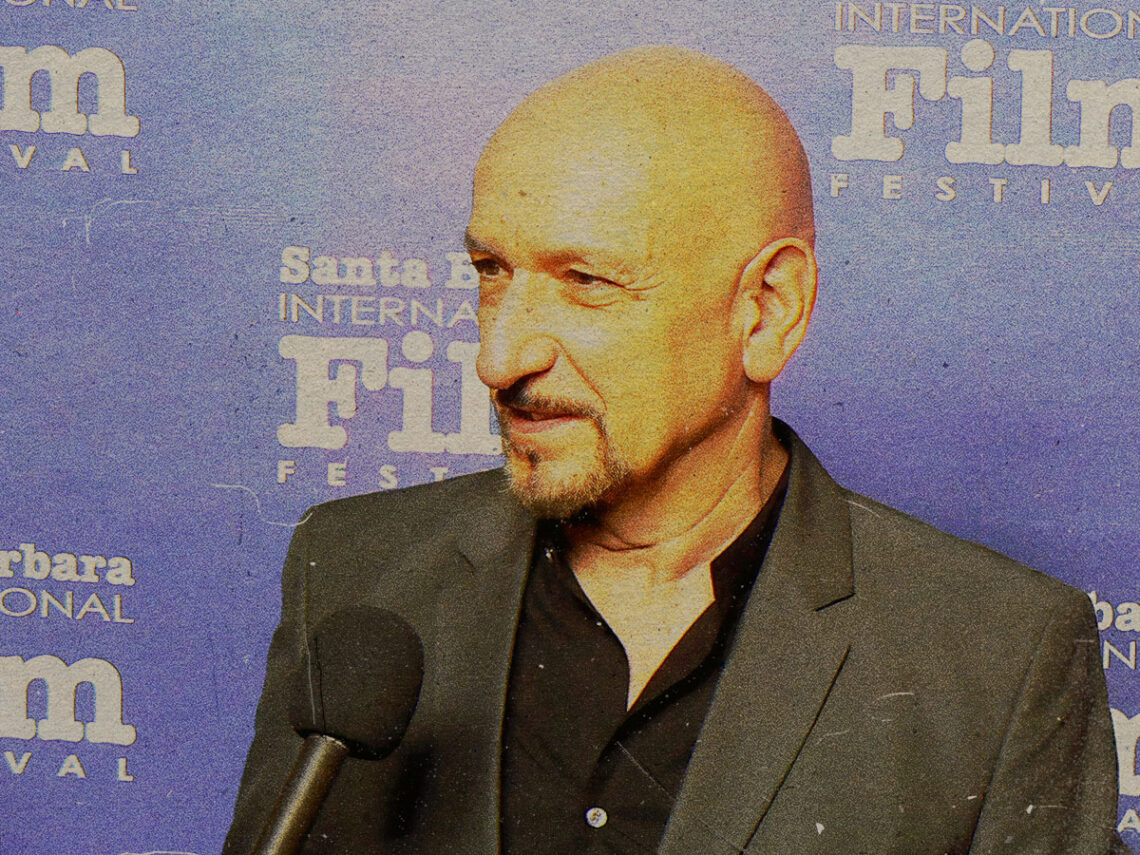
Ben Kingsley on the movie experience that “defies translation” and avoids “terrible loss”

If there were ever a star to epitomise the craft of “real acting”, then one could do much worse than have the legendary Sir Ben Kingsley as the sole representative. After all, Kingsley knows what it takes to command an audience and deliver a rousing performance, whether on stage or in front of the camera.
Beginning his acting career with the Royal Shakespeare Company in 1967 at the age of 17, Kingsley spent the next decade and a half bringing the great works of the Bard to a contemporary audience, but before long, the big screen came calling, and those without an interest in theatre were finally introduced to one of England’s greatest ever actors.
Over the following years, Kingsley delivered countless stunning efforts in feature-length movies. He played Mahatma Gandhi in Richard Attenborough’s 1982 eponymous movie, for which he won the Academy Award for ‘Best Actor’, Itzhak Stern in Steven Spielberg’s Schindler’s List, and the fearsome Don Logan in Jonathan Glazer’s Sexy Beast, proving his remarkable versatility as an actor.
With that in mind, it’s clear that Kingsley ought to be considered an authority on the film industry. He once spoke damningly about the rise in cinematic technology and how it diminishes the proper acting experience. Speaking with Roger Ebert, Kingsley expressed his disavowal of CGI in films.
“CGI has removed thousands of people from the screen,” the actor noted. “There was no CGI in my film. They were there. And for the actor to react to the presence of thousands of people coming to their feet, and shouting my character’s name, is an experience that defies translation sitting here now.”
Kingsley had been referring to his effort in Richard Attenborough’s Gandhi, which featured a monolithic amount of extras, so many, in fact, that it actually set the world record. However, with the rise of CGI, producers and directors don’t need to hire acting extras; they can save some cash by filling them into a scene with CGI.
This kind of technology, though, is diametrically opposed to the kind of experience that Kingsley wants to have while he is performing. “The body chemistry, the extent to which the body chemistry changes and therefore governs your performance,” he explained. “Because at any given time, a performance is a translation or an expression of the body chemistry of that moment.”
According to the iconic actor, the kind of acting required with CGI and green screen is not even akin to proper acting, and considering the kind of reputation Kingsley has as a master of his craft, learned in one of the most notorious and respected theatre companies in the world, the RSC, he would certainly know.
Kingsley signed off on the matter, “Somebody with a ping-pong ball at the end of a stick, running in front of a green screen saying, ‘Crowd over here! Crowd over here!’ Sorry, it doesn’t work. It invites terrible over-acting, and also your opposite player – for me it was India – won’t be there. CGI is not fool-proof, you can tell. So, it was a terrible loss.”
Evidently, Kingsley feels that much has been lost in the technological age of cinema. Looking back on his Oscar-winning performance in Gandhi, it’s easy to see why Kingsley would feel such lamentation, and thankfully, he’s largely avoided having to appear in CGI-based movies for much of his career.
