


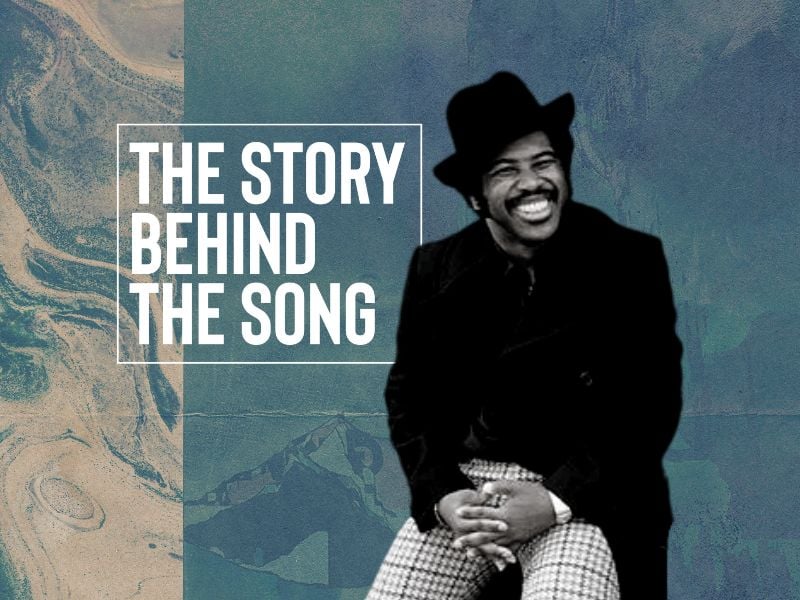
The Story Behind The Song: Ben E. King and the timeless classic ‘Stand By Me’

Once named “the fourth most performed song of the 20th century” by IBM, few tracks boast the same cultural cache as ‘Stand By Me’. The mother of all standards, the 1961 hit remains one of the most beloved songs of all time. For some, the story of ‘Stand By Me’ begins with Ben E. King. Of course, that would be to ignore an essential chapter in the track’s pre-history. It didn’t come to King in a flash of inspiration; it was originally a ‘spiritual’, religious song popular among Black Americans in the first decades of the 20th century.
‘Stand By Me’ was first registered in the American copyright office by Charles Albert Tindley, a Philadelphia minister and songwriter, in 1905. However, many believe that the song goes back even further than that, 1905 being the first year it appeared in print. Since spirituals were part of an oral musical tradition, it’s plausible that ‘Stand By Me’ has roots in the 19th century.
Tindley’s composition, however, became popular with the gospel singers of the 1950s. One of the earliest recorded versions comes from The Soul Stirrers, a close-harmony quartet of which Sam Cooke was a member. ‘Stand By Me Lord’, an undulating gospel ballad in 6/8 time, is, like so many gospel songs of the 1950s, as much about imagining a world beyond racist America as it is about God. The track was also covered by The Staple Singers, who released their version shortly after the Soul Stirrers in 1955, but it was Cooke’s version that made a lasting impression on Ben E. King.
“I wasn’t a big fan of the song [‘Stand By Me Lord’] itself, but I was a big fan of Cooke,” King told the BBC. “I was listening to the way he was singing and I got a feel for the words ‘stand by, and then I just started to write the song, just in my bedroom with a cheap guitar.” After The Drifters’ manager (King’s group at the time) rejected the song, King approached the much-sought-after songwriting duo, Leiber and Stoller. “At the end of a long day, they asked me: ‘We have 15 or 20 minutes left over, do you have anything you want to show us? And I showed them this little song I had called ‘Stand By me’ on the piano. The called the musicians back into the studio and he did what’s called a hell arrangement, which is something you come up with right away because you don’t have a lot of time, and of course, Jerry Lee and Mike Stoller came up with the bassline right there on the spot.”
That bassline was the innovation the track has been missing. It gave what had been a mournful gospel hymn the uplifting syncopated rhythms of ’50s pop. King also had the bright idea of asking the drummer to turn over his snare and scrape across the skin with a brush – creating that infectious, velvety groove. As Leiber and Stoller would later recall, King was never much of a songwriter but a brilliant singer. With the song’s minimal instrumentation, his incredible voice was given all the space in the world, helping to remind listeners of the song’s ecclesiastical origins.
Some 25 years after the song first became a hit, it was given a new lease of life by Rob Reiner, who asked to use King’s original arrangement for a movie he was working on called The Body. “I met Rob at a party, and he insisted on singing all of the Leiber & Stoller songs,” Stoller told American Songwriter. “And he insisted I go to the piano while he sang. And he called me up months later and said, ‘I have this movie. It’s called The Body. And it’s been in the can for a while, and I like it. The Body is the right title for it. But it’s not good, because it’s based on a short story by Stephen King, and people will think it’s a horror film. It’s really a coming-of-age movie. So I want to call it Stand By Me.’”
“I said, ‘Great! Be my guest’,” Stoller continued. “And then I thought about it, and I called him back. This was 1986. The record came out in ’61. And I said, ‘Hey, who do you think we can get to record it and put it into your film?’ And he said, ‘We talked about that. But I view this movie as a period film. So I’d like to go with the original record.'” Though deeply flattered that Steiner wanted to use the original album cut, he was a little surprised Reiner didn’t want to use Tina Turner or somebody to give the track a bit more star appeal. “But he wanted the original. And it did become a hit again. The same record. Nothing was done to it.”
Today, Ben E. King’s ‘Stand By Me’ remains the definitive version. Not even John Lennon managed to capture the magic of that hastily-thrown-together original. It serves as a lesson to songwriters everywhere: strike while the iron is hot.
