


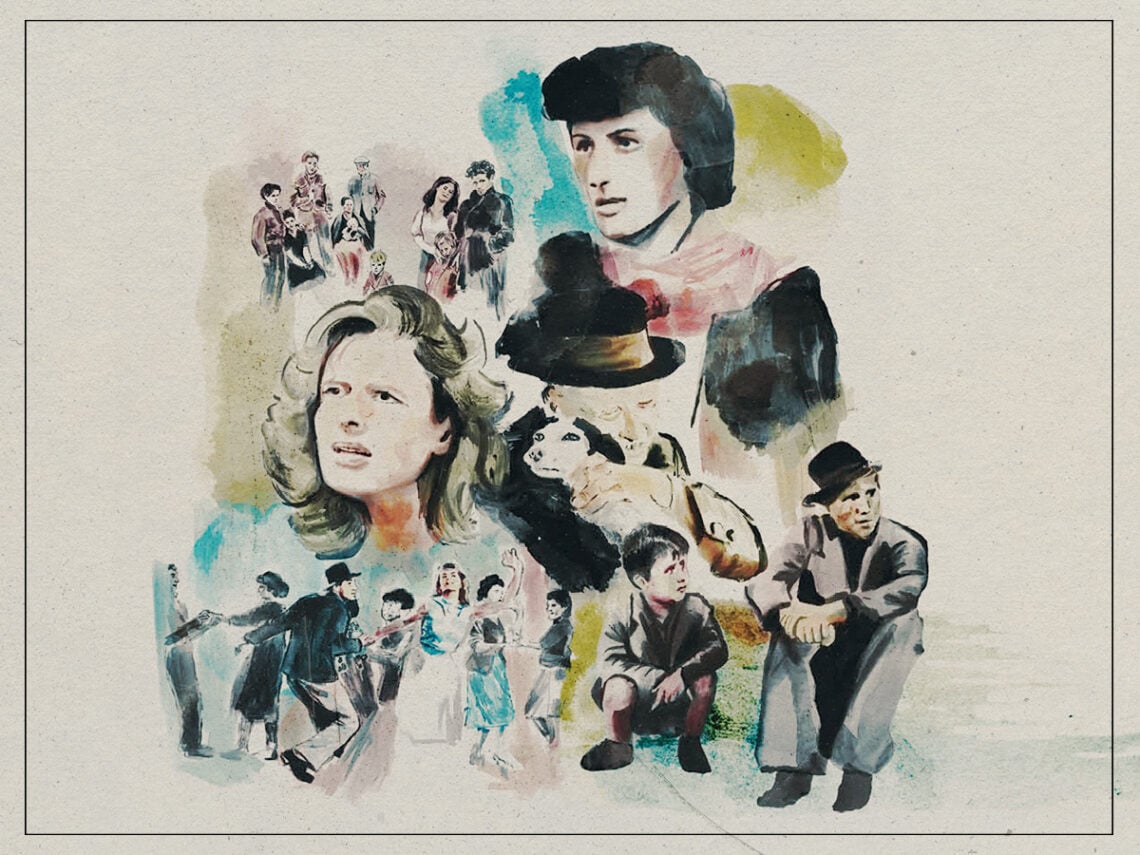
A cinematic protest: Where to begin with Italian neorealism?

Irreparably altering the texture and mood of Europe in the late 20th century, the Second World War forced introspection across the continent, with the six-year conflict resulting in an immediate period of sobering reflection. Such is reflected in the cinema that emerged across Europe, too, with Germany churning out comedies in attempts to raise the spirits of the nation, while Italy served up neorealism, one of cinema history’s most revolutionary art movements.
Born out of years of repression during the Fascist rule of Benito Mussolini, who served as Prime Minister from 1922-1925 before seizing power as a dictator from 1925-1943, the neorealism movement recentred the focus of cinema back to the people after being used as a vehicle for propaganda for decades. Such movies were coined White Telephone movies (Telefoni Bianchi), pictures that promoted the prosperity of the country, subsequently ignoring the pervasive troubles.
The name referred to the fact that white telephones during the era correlated with wealth, while black phones were cheaper and, therefore, more popular with the majority of working-class Italians. As a result, the cinematic power was shifted as a socio-political protest against the previous era of rule, with neorealism movies being emotional and intense with a distinct focus on the normal folk of everyday Italy.
Addressing the country’s economic difficulties following the events of WWII head-on, neorealism was an expressive dedication to social change, with the troubled morals of the country becoming a central theme throughout each and every release.

What typifies an Italian neorealism film?
Focusing on working-class Italians, films of the neorealism movement were simple and low-key, preferring to focus on the troubles of their central characters rather than making epic cinematic statements. Often filmed on location with non-professional actors, these films were tight and intimate, delving into the subconscious of a country to create a new language with which to represent the people.
Speaking about the era, the iconic Italian filmmaker behind such classics as 1960’s La Dolce Vita and 1973’s Amarcord, Federico Fellini told Film Quarterly: “Italy, during Fascism, was a closed country, a nation that was imprisoned in absolute falsity. The horrid Fascist lie made us believe for twenty years that we were the most beautiful and perfect people in the world. When the dictatorship was overthrown, we discovered our own country… We could look freely around us now, and the reality appeared so extraordinary that we couldn’t resist watching it and photographing it with astonished and virgin eyes”.
A form of newfound artistic expression, the movement worked to reflect the true diversity of the country for what felt like the very first time in the history of Italian cinema. Feeling familiar and communal, these films were proudly anti-fascist, telling stories about everyday individuals to rebuild a sense of national identity.

Who were the best Italian neorealism directors?
The finest filmmakers of the Italian neorealism era include Vittorio De Sica, Roberto Rossellini, Federico Fellini, Pier Paolo Pasolini and Michelangelo Antonioni. Rossellini was one of the earliest pioneers of the art styles, inspired by foreign filmmakers such as Frenchman Jean Renoir and the Japanese creative Yasujirō Ozu to create such early successes as 1941’s The White Strip and 1945’s Rome, Open City.
Arguably, however, none of these filmmakers would have been as successful as they were without the work of the film critics Giuseppe De Santis and Luchino Visconti. Being some of the earliest and most vocal critics of the White Telephone movies of Fascist Italy, these journalists turned to filmmaking in protest, with the directors making such respective classics as 1943’s Ossessione and 1949’s Bitter Rice.
While determining the ‘best’ director of the era will depend on subjective taste, Federico Fellini is often considered the master of neorealism, despite some believing that his style was simply inspired by tradition. Yet, his films perfectly define that which neorealism was born, telling stories of virtuous, complex characters scarred by the country’s Fascist identity and part to play in WWII.

What are the best Italian neorealism movies?
Helmed by the greatest directors of the Italian neorealism movement, some of the best titles of the era include Rossellini’s 1946 movie Paisan, De Sica’s Bicycle Thieves from 1948, Fellini’s 1954 La Strada and 1949’s Bitter Rice by Giuseppe De Santis. The best movie of the era has long been fiercely debated, with Rossellini’s Paisan gaining contemporary appreciation thanks to a personal recommendation from Martin Scorsese.
A story told in six parts, Paisan follows members of the American military who interact with the Italian locals as they push through the country. “I was experiencing the power of cinema itself,” Scorsese said of his first experience watching the film, “made far beyond Hollywood, under extremely tough conditions and with inferior equipment… it’s like seeing reality itself unfolding before your eyes”.
Another Italian movie that is considered a masterpiece by several celebrated filmmakers is The Battle of Algiers by Gillo Pontecorvo. An Italian-Algerian movie which tells the story of the violence that escalated in Algiers during the 1950s as the people fought for independence from the French government, the film was born from neorealism styles using hand-held cinematography and real-life archive news footage to elevate the authenticity of the picture.

The Bicycle Thieves: the best introduction to Italian neorealism
Though the Italian neorealism movement boasts a wealth of cinematic quality, the best place to enter into its world without feeling entirely alienated is, no doubt, Vittorio De Sica’s Bicycle Thieves. With an accessible narrative about a working-class man who sets out across the city with his son to find his stolen bicycle that is crucial for his everyday job, De Sica’s film is more narratively driven than the often dense documentary style of other films of the movement.
One of cinema’s great fables, De Sica’s film was based on the novel of the same name by Luigi Bartolini, with the tale being an excavation into the lives of everyday people in post-war Italy. An extremely simple tale on the surface, Bicycle Thieves becomes a grand sociological statement by the end, asking the audience about the significance of the individual and the importance of moral dignity above all else.
A favourite of countless contemporary directors, The Bicycle Thieves won an honorary Oscar thanks to its contributions to foreign-language film, even though the movie itself was banned in America at the time of release due to its depiction of a brothel. An influential piece of cinema and a genuinely inspiring human tale, The Bicycle Thieves is the most accomplished piece of Italian neorealism, defining its impact in one masterful parable.
