


‘Before the Devil Knows You’re Dead’: Sidney Lumet’s final classic

By 2007, Sidney Lumet‘s run of truly classic films seemed very far away indeed. The versatile director of genre-defining works like 1957’s 12 Angry Men, 1973’s Serpico, 1975’s Dog Day Afternoon, 1976’s Network, and 1982’s The Verdict had continued working into his 80s, but hadn’t made anything that even approached the unimpeachable levels of these films in decades.
Then, at 83 years old, Lumet delivered one of the most intense, harrowing, technically pioneering movies he’d ever made, blowing critics and audiences away. Before the Devil Knows You’re Dead, whose eerie title was derived from the Irish folk proverb, “May you be in heaven a full half-hour before the devil knows you’re dead,” seemed like the work of an angry young buck trying to make his mark in Hollywood, not a veteran of 45 pictures who had been making films for five decades.
It was an incredible turnaround for Lumet, whose best work most people assumed was already well behind him. He knew this wasn’t the case, though, and when he got his hands on playwright Kelly Masterson’s nihilistic screenplay about two desperate brothers who concoct a scheme to rob their parents’ jewellery store, he saw its potential.
He felt the movie could function almost like a Greek tragedy or melodrama, and the story of “terrible people” making bad decisions that compound their mistakes and invite more tragedy spoke to his, shall we say, less than optimistic outlook on the future of America. “I think we’re at a terrible point in our history, and I hope we can turn it around,” he told Sight and Sound. “It’s not just politics, but I think people themselves are changing.”
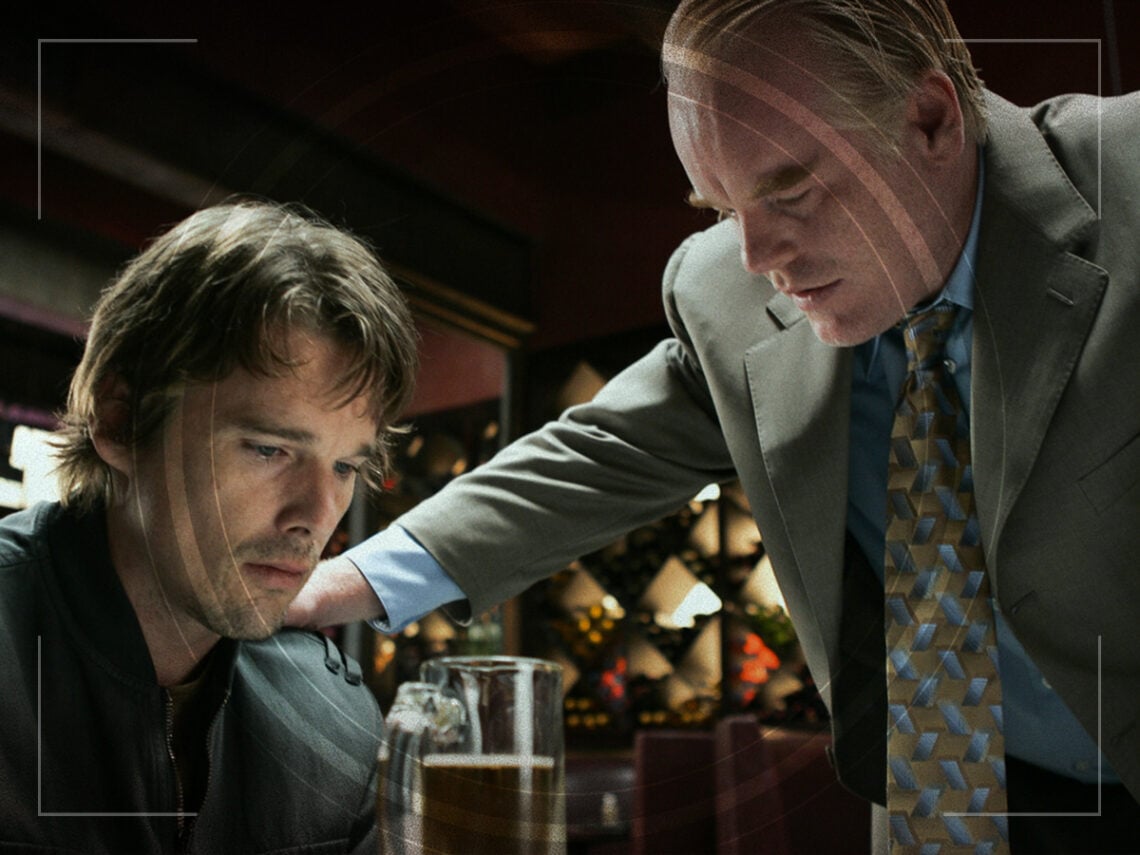
However, in order for the movie to work, Lumet needed two truly brilliant actors to star as brothers Andy and Hank Hanson. Thankfully, he managed to hire two of the best actors of their generation in Philip Seymour Hoffman and Ethan Hawke, both of whom grew up worshipping at the altar of his “old-school, gritty New York” films.

Indeed, at the time, Hoffman had just won the ‘Best Actor’ Oscar for Capote, and he was instrumental in getting the film greenlit with Lumet at the helm. Considering both Hoffman and Lumet had passed away within seven years of Before the Devil Knows You’re Dead’s release, the movie ended up feeling like a particularly harrowing gift from the movie Gods.
While Before the Devil Knows You’re Dead undoubtedly takes a dim view of human nature, and Lumet classed it as a melodrama, the way he tells the story with grainy digital cameras and a nonlinear narrative somehow makes it seem entirely plausible, too.
Andy and Hank set in motion a chain of events that they believe will never touch their parents in a significant way. After all, they’re sure that the only person in the store when they stage their robbery – complete with a toy gun – will be elderly employee Doris, and the subsequent insurance claim will make their parents whole in the aftermath. Instead, everything goes horribly wrong, and their mother is killed in the botched robbery, which destroys their father and sets him on an investigative path that eventually leads to his sons.
“For all its craziness and intensity, this story is actually very believable,” Hoffman acknowledged in 2007. “From what I read in the news and witness in the world, there are crazy families everywhere, pitting brother against brother, and father against son. Tragic, but it happens a lot”. Albert Finney, who played the bereaved father Charles, added, “It’s like the turning of a page. Everything can change in a second. In life (and in melodrama), the only thing we don’t know is what’s going to happen next.”
Overall, Before the Devil Knows You’re Dead is a tribute to the creative fire that can still exist in a director like Lumet, even after most people have written them off. In most careers, directors tend to taper off in their later years, making movies that aren’t a patch on the more acclaimed efforts they made in their youth. Hell, it’s the very reason Quentin Tarantino is so obsessed with retiring after his tenth film, because he is terrified of losing his directorial vitality and making subpar pictures as he ages.
However, Lumet proved it is possible for a director to sign off with one of their very best works, and that, as Roger Ebert noted in his four-star review, should be celebrated. “It’s wonderful when a director like Lumet wins a Lifetime Achievement Oscar at 80,” Ebert wrote, “And three years later, makes one of his greatest achievements”.
