


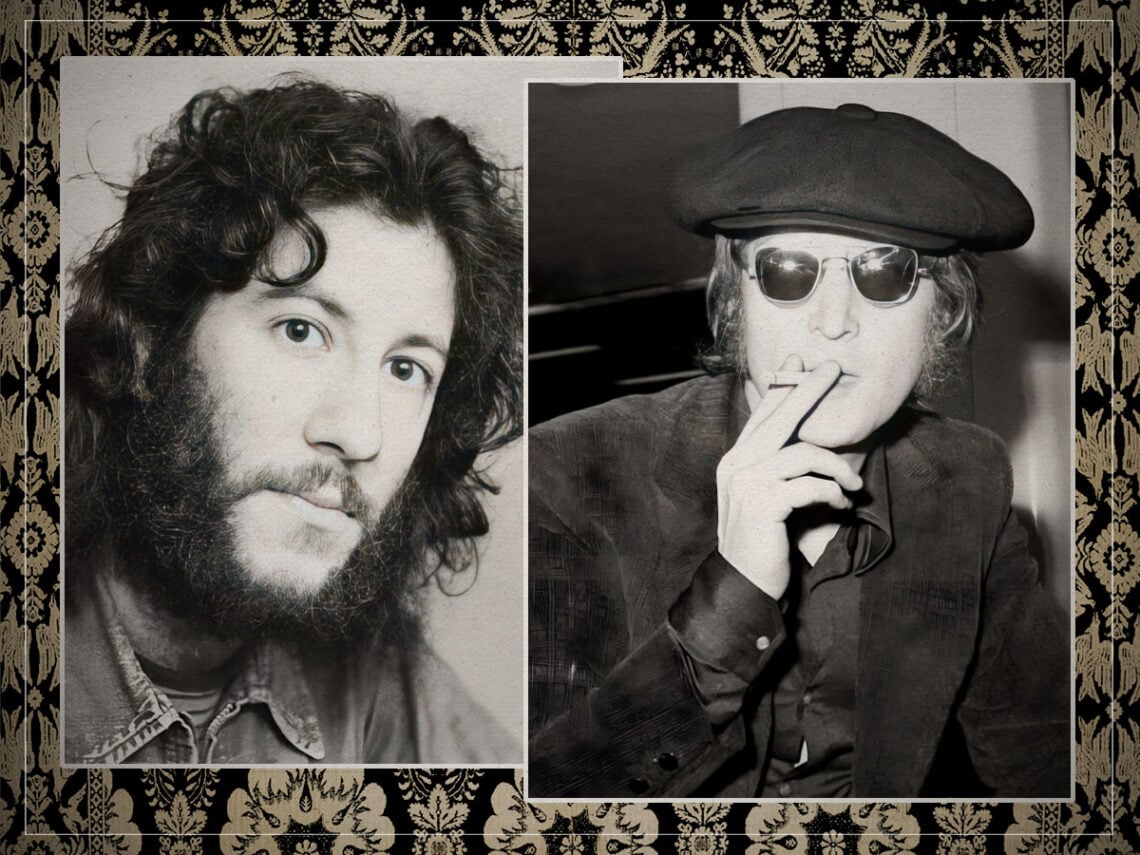
How Fleetwood Mac inspired one of John Lennon’s most overlooked Beatles songs

The Beatles are indisputably one of the most influential rock bands in history. While their catalogue may not boast as many songs as some of their contemporaries, their discography less extensive, and their active years far fewer, the Fab Four undeniably served as the foundational influence for countless artists, including many of your favourite bands today.
Tracing the numerous influences that have shaped music today, it’s challenging to find many artists who don’t have some connection to the legendary lads from Liverpool. However, assuming they were the absolute origin of that inspiration would also be inaccurate. Even The Beatles drew from others, a fact George Harrison openly acknowledged in 1987.
Many people have pointed to Eastern classical music as a point of inspiration for the Fab Four and while it is clear the group drew from wide-ranging influences they also, on rare occasions, looked towards the pop charts too. Whether it’s pinching the vibe of Bob Dylan or paying attention to The Beach Boys and the miracle work Brian Wilson was providing, sometimes the inspiration for their songs came from their contemporaries.
As the group’s time began to draw to a close, their influence had already bedded in, and the changing face of popular music seemed to add a new feature every day. As the 1960s drew to a close, there were more artists worth listening to, and The Beatles, being music lovers before they were ever music makers, made sure they paid attention.
The same can certainly be said of one song featured on the band’s 1969 album Abbey Road, the often-overlooked ‘Sun King’. While in 1980, Lennon may have eloquently referred to the song as “a piece of garbage I had around,” it has become a cult favourite.

Originally titled ‘Here Comes The Sun King’ but changed to avoid confusion with Harrison’s ‘Here Comes The Sun’, the track acts as a refreshing moment during the record. Fading in from the harbour sounds of ‘You Never Give Me Your Money’, the track ends with a unique drum fill from Ringo Starr. But between those moments is some genuine joy, if not a little silliness.
The second side of Abbey Road is imbued with a certain degree of revelry. The songs are slightly humourous or at least rendered with joviality, maybe in reaction to the seriousness of the Let It Be sessions that had come before it. But this allowed the band to improvise the final three lines of the song and mix a range of faux Romance languages.
“We just started joking, you know, singing ‘quando para mucho’,” recalls Lennon in 1969. “So we just made up… Paul knew a few Spanish words from school, you know. So we just strung any Spanish words that sounded vaguely like something. And, of course, we got ‘chicka ferdy’ in. That’s a Liverpool expression. Just like sort of— it doesn’t mean anything to me but (childish taunting) ‘na-na, na-na-na!’ ‘Cake and eat it’ is another nice line too, because they have that in Spanish— ‘Que’ or something can eat it. One we missed – we could have had ‘para noya’, but we forgot all about it.”
The song may well have been a creation of John Lennon’s brain, but in 1987, George Harrison confirmed that its inspiration had a completely different starting point: “At the time, ‘Albatross’ (by Fleetwood Mac) was out, with all the reverb on guitar.”
The song, a bonafide commercial-making iconic piece of music, is an instrumental guitar piece which put Fleetwood Mac—at this point without their legendary line-up including Stevie Nicks—in the driving seat for a new style of music. Far from the pulsating R&B of old, now Mac had changed the game and added a welcomed haze to their sound. It had clearly made an impression on The Beatles.
“So we said, ‘Let’s be Fleetwood Mac doing Albatross, just to get going.’ It never really sounded like Fleetwood Mac… but that was the point of origin.” The first notes of ‘Sun King’ are most certainly a similar motif and the imagery created with the Fab Four’s music is equally as enticing.
Eventually, the band took it into more familiar territory, using their three-part harmonies and tight musical ears to create a more welcoming psyche experience. In perhaps classic fashion, Lennon would eventually turn his back on the track, labelling it “garbage”.
“I never liked that sort of pop opera on the other side, I think it’s junk,” he told Rolling Stone of the more experimental side of Abbey Road. “It was just bits of song thrown together,” he added.
“None of the songs had anything to do with each other, no thread at all,” he said, “Only the fact that we stuck them together.” However, over the years, ‘Sun King’ has found favour with a crop of listeners who believe the track speaks more intently to the whimsy at the heart of The Beatles and, quite possibly, Fleetwood Mac too.

Never Miss A Beat
The Far Out Beatles Newsletter
All the latest stories about The Beatles from the independent voice of culture.
Straight to your inbox.