


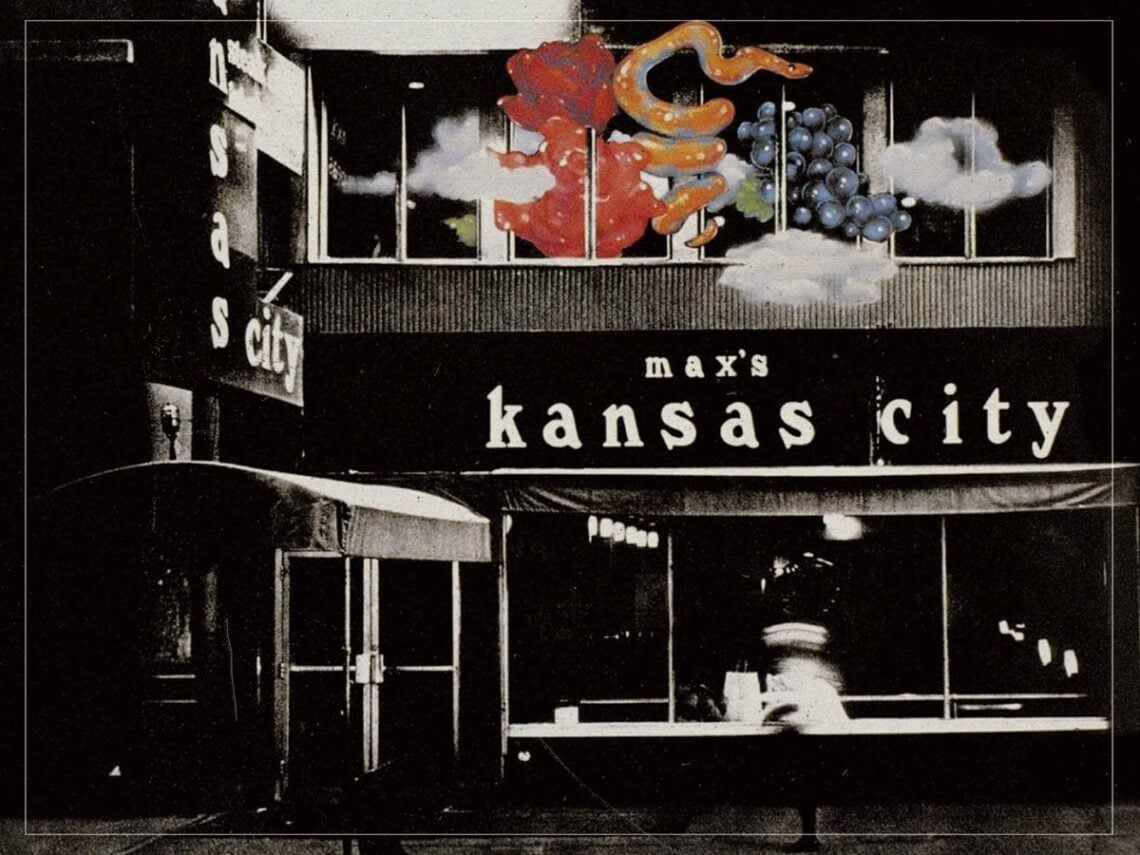
Beastie Boys and Bad Brains: Max’s Kansas City’s final night alive

Whenever the musical tapestry of 1970s New York City is explored, East Village’s CBGB venue is typically at the centre of the punk explosion. However, Max’s Kansas City on nearby Park Avenue South was punk’s second home and, depending on who you asked, trumped the acclaimed dive bar with its vibrant reputation for a more artistic, cross-cultural melting pot of social and creative innovators.
“There was a lot of competition between Max’s and CBGB’s,” Electric Chairs frontwoman and first openly transgender person in rock Jayne County told Rolling Stone in 2017. “More of the gay community hung out at Max’s, but it wasn’t a gay place: It was a place for artists and was accepting of all types of people.”
Originally opened as a nightclub and restaurant in 1965 specialising in “steak lobster chick peas” as its exterior sign proudly advertised, within a few short years it became the premier alternative hangout, William Burroughs, Andy Warhol, Iggy Pop, and Jim Morrison all passing through its famous double doors. Lou Reed even played his final shows fronting The Velvet Underground in 1970.
Following its renovation and reopening under the management of Tommy Dean Mills and Laura Dean in ’75 initially intended to capitalise on disco, Max’s soon became a dual nucleus along with CBGB’s burgeoning punk wave. With Peter Crowley’s promotional assistance, The Cramps, Blondie, Ramones, Misfits, and Suicide all played the decadent hotspot, and David Bowie himself introduced Ohio synthpunks as the “band of the future”. “When Peter started booking, they had the weirdest shit you’ve ever heard,” Lydia Lunch told The Guardian last year, who was fronting Teenage Jesus and the Jerks during Max’s heyday. “Stuff that was just so out there – it was pretty special.”
As the venue became engulfed in debt, and Mills was later jailed for counterfeiting $100 bills in its basement, Max’s announced its final gig on December 11th, 1981. Seeing out Max’s final curtain was DC hardcore pioneers Bad Brains, featuring support from a little-known punk foursome called Beastie Boys.
Initially forming over a love of jazz, Bad Brains’ original singer Sid McCray introduced the group to punk, and taking inspiration from the Ramones’ ’78 song, renamed themselves from Mind Power and charged headfirst into the volatile world of hardcore, uniquely countered with an immersion in reggae dub exploring their emerging Rastafari values. Jumping to lead vocals following McCray’s departure, frontman HR’s feral energy fuelled by DR Know’s furious guitar attack whipped the crowd into such a frenzy most of their hometown refused to book them, hence their classic ‘Banned in DC’.
While Bad Brains were jumping ship to New York, Beastie Boys were blasting through their own variant of high-velocity punk with original drummer Kate Schellenbach. Long before Def Jam’s Rick Rubin was pushing the gang to a path of hip-hop, Beastie Boys cut the early hardcore EP Polly Wog Stew in ’82 and played with the likes of Dead Kennedys and Reagan Youth. A throwaway semi-joke ‘Cooky Puss’ ushered their forway into rap, Rubin DJing for them and guiding them toward stardom.
Bad Brains and Beastie Boys would both go on to release key albums with I Against I and License to Ill, respectively, and the Max’s site was passed through several hands til its current existence as a Deli. Max’s legacy lives on with the Max’s Kansas City Project, helping upcoming artists with grants and funding to support budding musicians navigating an economic climate vastly different to the one the original punks traversed way back before gentrification’s death grip.
While their faux-Jamaican ‘Beastie Boys Revolution’ dub parody from the Cooky Puss EP hasn’t aged well, Beastie Boys’ veneration for Bad Brains ran deep. “Those guys are really of a different calibre in terms of their songwriting and musicianship,” Adam ‘MCA’ Yauch told Billboard. “We always used to throw songs together and play a little bit, but they were really intense musicians.”
