


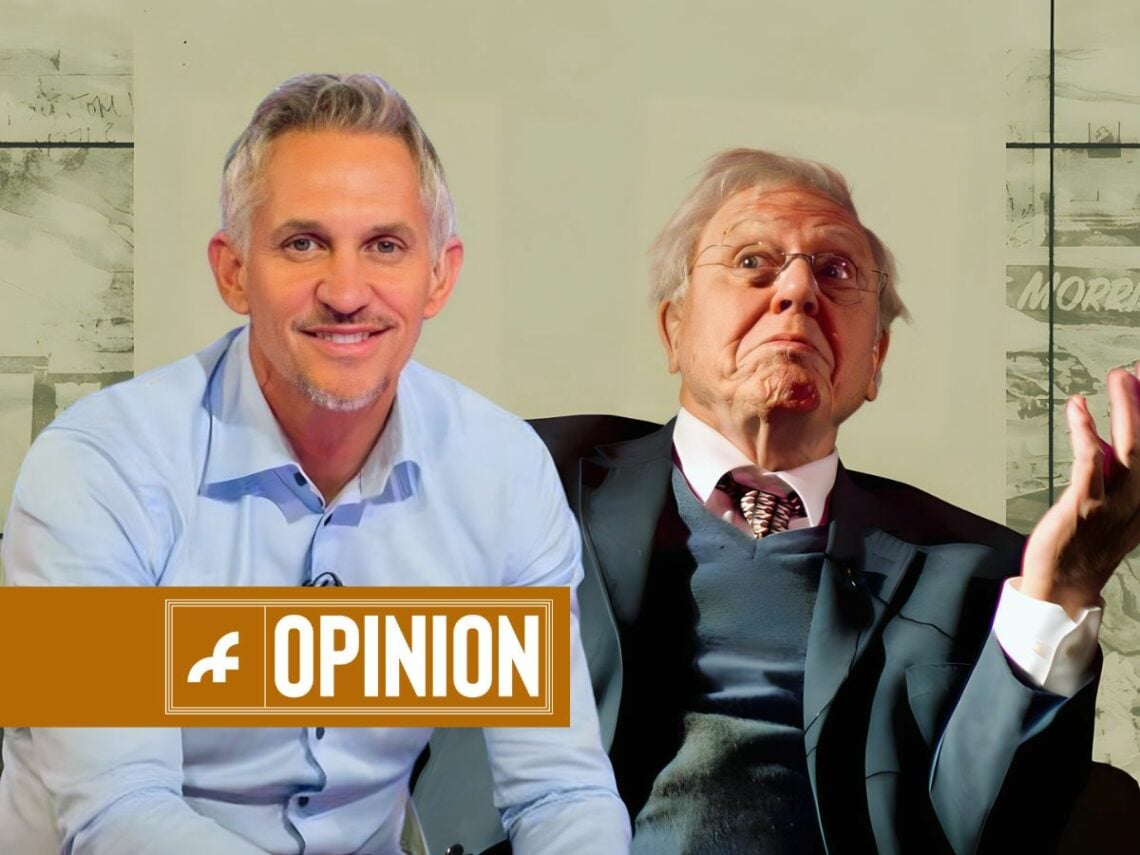
After David Attenborough and Gary Lineker controversies, the BBC has blatantly exposed its political bias

The institution of the BBC is hard to imagine without the iconic work of the influential nature documentarian David Attenborough. Having helped kept the corporation afloat in the 21st century with such revolutionary TV projects as Planet Earth, Life and Africa, Attenborough’s work has long given legitimacy to the BBC’s otherwise uninspiring slate of TV listings, giving generations of people from across the globe a reason to embrace the beauty of the natural world.
Due to celebrate his 97th birthday in 2023, the documentarian remarkably still remains a bastion of environmental protection and climate change action, with his latest series Wild Isles set to celebrate the beauty of the British Isles whilst critically analysing how we can preserve it for many decades to come. Much of this analysis has been funnelled into the sixth episode of the show, which is thought to look into the staggering loss of nature in the UK whilst also exploring the possibility of rewilding the countryside, a concept that has caused significant controversy in areas of rightwing politics.
The inoffensive concept describes the practice of restoring an area of land to its natural state, preventing any substantial human interference whilst reintroducing species of animals that have been driven out from that specific site in the past. Having already been implemented in the Scottish Highlands as part of a 30-year project to restore the highlands, even the mention of the practice in Attenborough’s latest documentary has been enough for the ‘impartial’ BBC to essentially censor it from broadcasting.
Whilst five of the episodes of Wild Isles will be broadcast on BBC one, the final instalment will be relegated to the iPlayer service, with senior sources at the station being vocal in their dislike of the decision. Speaking to The Guardian, an anonymous source stated that the BBC has bowed to the pressure of “lobbying groups that are desperately hanging on to their dinosaurian ways,” with farming industries thought to “kick off” if they saw the show to have a political message.
Continuing, the source added: “Frankly, this idea that you sort of put it in a separate programme to almost parcel it to one side is disingenuous. Why don’t they integrate those stories into all of them at the time?”.
Whilst the BBC deny these claims that they have bowed to the pressures of right-wing organisations, stating, “This is totally inaccurate, there is no ‘sixth episode’. Wild Isles is – and always was – a five-part series and does not shy away from environmental content,” the timing of the incident, together with their decision to pull presenter Gary Lineker from Match of the Day for his innocuous political tweets, couldn’t be worse.
He may not carry the same level of national majesty as Attenborough, but there’s no doubt that Lineker holds a significant level of importance for the BBC; he was, after all, the corporation’s highest-paid presenter as of July 2022. As two trusted presenters of British television, the BBC’s decision to dull their potent integrity merely reflects how truly spineless the broadcast station has become.
Shown to be used as a poker of the right-wing media to stoke the raging fires of the culture wars, such recent examples expose the political bias beneath the BBC’s supposed impartiality. On one hand, they have chosen to abandon their duty to the public to voice the truth of the climate emergency, censoring the opinion of one of the most trusted environmentalists, and on the other, they have failed to stand in solidarity with Lineker, feebly asking him to essentially ‘stop telling the truth’ about the chaotic state of the Tory government.
With that, of course, it seems impossible to ignore that while the BBC has chosen the hard line of ‘impartiality’ in its decision to censor both Attenborough and Lineker, those in charge have opted to turn a blind eye to Andrew Neil, arguably the most high profile political correspondent for the BBC who, alongside his work with the British corporation, also acts as the chairman for the right-wing publication The Spectator and regularly spouts his right-wing sentiments on Twitter. The BBC has also ignored the views of its own chairman, Richard Sharp, a person who donated £400,000 to the Conservative party while also aiding former Tory prime minister, Boris Johnson, to secure loan of monumental proportions. The list is endless; former communications officer for Theresa May, Robbie Gibb, is now holding down a place on the BBC board. Tim Davie, meanwhile, the current BBC director general, previously stood as a councillor for the Conservative Party in Hammersmith. Davie, for Christ’s sake, previously acted as the deputy chairman of the Hammersmith and Fulham Conservative party. Was impartiality an issue in any of these cases? Of course not. With so many in positions of power in the BBC holding ties to the Conservative party, why was Gary Lineker silenced for a tweet criticising the current government? I mean, the BBC had no issues with Lineker’s political views in December when he opened the BBC coverage of the Qatar World Cup with a monologue detailing the human rights issues in the Arab country. Impartiality, it would seem, is only relevant when criticising the shortcomings and controversial policies of the Conservative party.
Putting Lineker’s tweeting to one side, if it is really the job of the BBC to report on world news without bias, then surely it is their obligation to call out the atrocities of the Conservative government when they are in the wrong. “Putting over 1,700 pieces of environmental legislation at risk, setting an air pollution target which is a decade too late, and neglecting the scandal of our sewage-filled waterways,” according to Caroline Lucas, the Green party MP for Brighton Pavilion, the damage the Tory government has caused to UK wildlife is unprecedented in modern history.
As such, it should be the duty of the BBC to inform the public of the damage the government has caused, yet, by preventing that content from being broadcast, they are limiting the number of people who will see the content, therefore playing into the hands of right-wing organisations. Choosing neutrality in times of crisis and instability is inherently politically biased; it’s time for the BBC to take a critical stance.
