


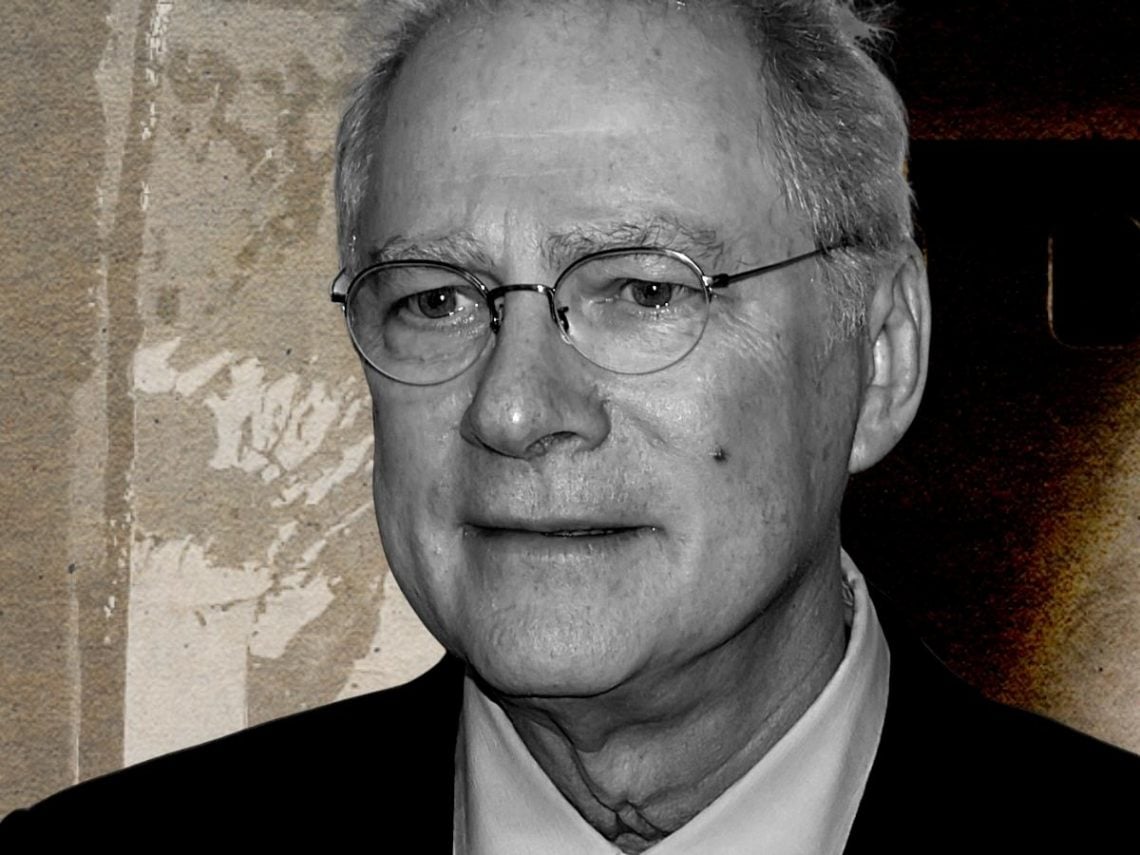
Barry Levinson names his 10 favourite arthouse films

Barry Levinson is an American filmmaker, comedian and actor. Film fans will recognise him through his comedy-drama films released throughout the 1980s and ’90s, efforts that include classics such as Diner, The Natural, Good Morning, Vietnam, Bugsy, and Wag the Dog.
Levinson’s film accolades include the Academy Award for Best Director for Rain Man, which he won in 1989. Furthermore, he also received nominations for And Justice for All, Diner, Avalon and Bugsy. He is also the recipient of three Golden Globe Awards for Best Director nominations for Rain Man, Avalon, and Bugsy.
In addition, he has earned plaudits in the television industry, such as eleven Primetime Emmy Award nominations for his work on The Carol Burnett Show and Homicide: Life on the Street. Throughout his career, Levinson has worked alongside some of Hollywood’s finest. These include Dustin Hoffman in both Rain Man and Wag the Dog, which also featured Robert De Niro. He also directed Robert Redford in The Natural; possibly his most popular leading man was beloved and dearly missed Robin Williams in Good Morning Vietnam.
Given his credentials, the director decided to share his own personal taste in the realm of cinema, specifically those of the arthouse genre. While speaking to The Criterion Collection in 2018, Levinson picked out his favourite arthouse films, including some classic and profound titles directed by some of the masters of cinema. See his full selections below.
Barry Levinson’s 10 favourite arthouse films:
Amarcord (Federico Fellini, 1973)
This Italian comedy-drama was directed by the great Federico Fellini and received the Academy Away for Best Foreign Language film in 1974. Its award-nominated plot explores the life of the adolescent Titta, who frequently gets into trouble with his friends and observes his local surroundings and events in between absurd behaviour.
Speaking on Fellini’s work, Levinson shared: “I always liked Fellini because he created a reality that was an invention. That’s what always intrigued me about his work.” He then ties this in with his own viewing of the 1973 film: “In Amarcord, he conveyed a view of life under the Fascist regime, and only he could tell that story that way.”
Oliver Twist (David Lean, 1948)
Lean’s adaptation of Charles Dickens’s classic novel shows the orphan Oliver Twist getting caught up in a run-in with Fagin’s criminal band. This causes conflict in his journey to find familial love and a home.
“David Lean is always known for his big productions. Lawrence of Arabia, The Bridge on the River Kwai,” Levinson shares as a foundation for the director’s work. However, he reveals: “I’m particularly fond of some of his smaller, black-and-white films. And Oliver Twist is an extraordinary piece of work.”
The Third Man (Carol Reed, 1949)
In this British noir film starring Orson Welles, a man’s investigation of a friend’s death leads him to discover the corruption hiding beneath the surface of post-World War II Vienna.
Levinson displays an appreciation for Reed’s attention to detail in her direction: “Carol Reed magnificently evoked the specificities of time and place in post–World War II Vienna.” He specifies how she masters “the mood, the sound, the camera work”. Furthermore, he praises the talented cast, adding: “Orson Welles at the top of his acting game. Joseph Cotten might be one of the greatest underrated actors of all time.”
Spartacus (Stanley Kubrick, 1960)
Thracian Spartacus, a slave, rises up to fight against the inhuman acts his owners inflict upon him. However, his life changes when he is sold to gladiator trainer Batiatus.
Levinson draws on the director’s own outlook on the film when discussing his own, “supposedly Kubrick hated it, but I’ve always loved it.” He shows acknowledgement that “some might consider it too commercial. But sometimes you can make a commercial film, and it’s still great work.” For Levinson, “Kubrick was king”, and he appreciates Spartacus because “the ending knocks me out every time.”
Salesman (David Maysles, Albert Maysles & Charlotte Zwerin, 1969)
This documentary follows four salesmen as they travel across New England and southeast Florida, trying to sell Bibles door-to-door in low-income neighbourhoods.
Levinson’s understanding of this film is one of realism and authentic experiences. He advises audiences that “if you want to look into the life and the job of an average man” to watch Salesman. When referencing its genre, he cites it as “high art in the documentary world.”
I vitelloni (Federico Fellini, 1953)
The second Fellini classic to feature on Levinson’s list shows the lives of five young Italian men as they undergo crucial turning points in their small town.
“I used to tell Mel Brooks stories about the guys I knew hanging around a diner, and he mentioned Fellini’s I vitelloni as something I should see,” Levinson shares. He also connects watching this film to his own creative journey in film and its effects: “Back in those days, it was very hard to find a film like that. So I wrote Diner and eventually saw I vitelloni. In retrospect, I’m glad I didn’t see it before making Diner. If I did, I think it might have made me too intimidated to write about my own friends.”
The filmography of John Cassavetes
Seventh place is a tie between these Cassavetes classics – Shadows/ Faces/A Woman Under the Influence/The Killing of a Chinese Bookie/Opening Night. These films include stories of race relations, a woman whose unusual behaviour leads to conflict with her blue-collar husband and family, a proprietor with a gambling problem, and an actress whose a recovering alcoholic.
Levinson explains the difficulty in choosing just one using a call for observing Cassavetes’ filmography as a whole. “For me, personally, I am not sure there is a great Cassavetes film. But the body of work is profound and inspiring. And it endures, which is the ultimate achievement.”
Levinson then reveals how the director’s actions and methods stand out to him: “He allowed actors to create spontaneity and sometimes an inarticulate dialogue that added to the heartbreak and humour of his characters.” Levinson’s summary of Cassavetes as a filmmaker is that “He’s a man who had the courage to tell stories in his own way. And that is his great legacy.”
Ace in the Hole (Billy Wilder, 1951)
This American noir film stars Kirk Douglas as a cynical, disgraced reporter who stops at nothing to try to regain a job in a major newspaper. He thinks he’s got lucky when he catches wind of a treasure hunter trapped in a mineshaft and takes the opportunity to create a media sensation.
Levinson describes Wilder’s work as “a truly cynical film, way ahead of its time.” In Levinson’s opinion, “very few cynical films make it in America. This one didn’t, initially. But time has been its friend. But then, time has always been a friend of Billy Wilder.”
Breathless (Jean-Luc Godard, 1960)
This staple in French New Wave cinema introduces audiences to Michel, a petty thief who steals a car and impulsively murders a policeman. This leads to an escape plan to hide away in Italy, where he attempts to persuade his love interest Patricia, a student, to come along with him.
Levinson situates his initial viewing of Godard’s work against his then understanding and experience with filmmaking as an art form. “When I first saw it, I had never seen anything like it. I knew nothing about filmmaking.” However, he caught on to Godard’s vision for the film and how filmmaking as a whole could progress following it: “But I knew that the guy with that French name had made a film that was changing the rules.”
Sweet Smell of Success (Alexander Mackendrick, 1957)
Mackendrick tells the story of a powerful and sleazy newspaper columnist J.J. Hunsecker who exploits his connections all to ruin his sister’s relationship with a man he decides isn’t worthy of her.
“I was a young kid when it came out, and I sat in the dark and listened to dialogue that was at a level I had never heard before,” Levinson reveals. He shares the effects this had on him in how he watches films: “I think that’s when I began to pay attention to dialogue in movies.”
Levinson was then prompted to learn and acknowledge those who create the foundation of films to be made into a visual work: “I didn’t know about screenwriters, and I waited to see the credits. Who wrote this? And from that day on, I paid attention to who the writer was for every movie I saw.”
