


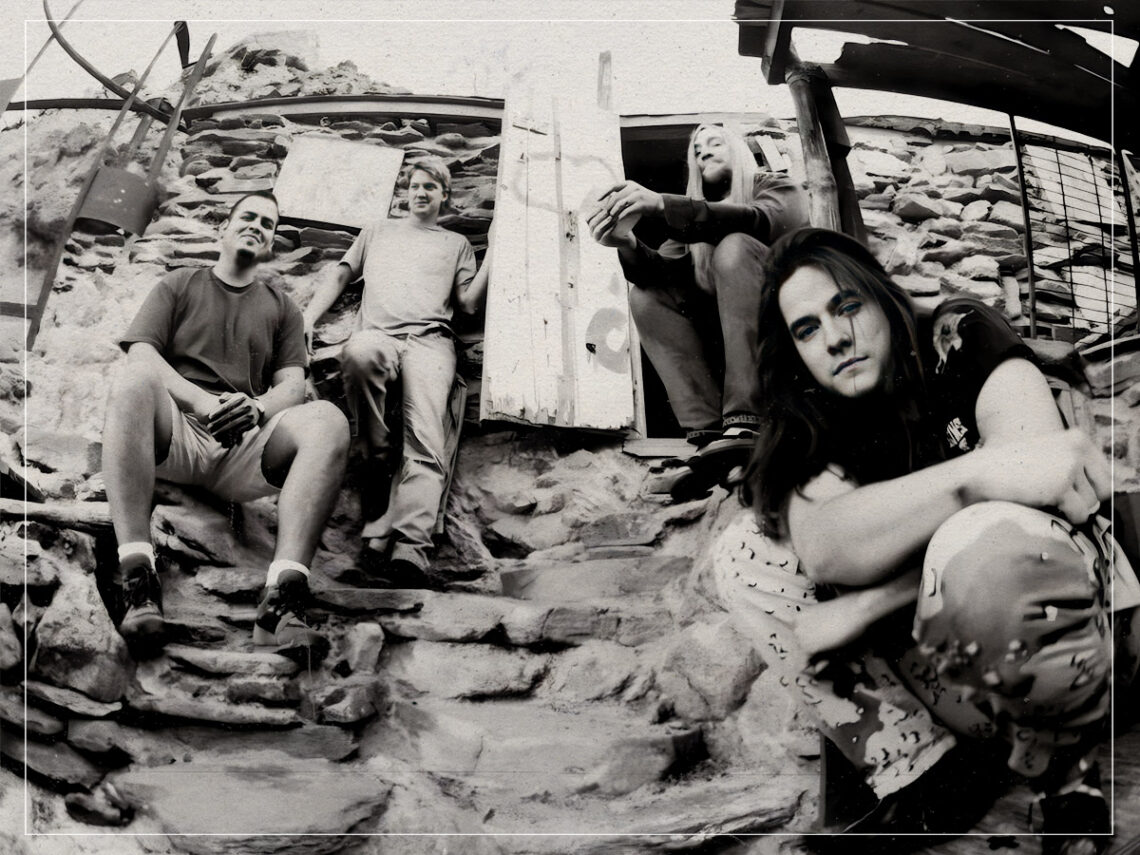
The origins of Kyuss: the bands Brant Bjork calls “low desert punk”

The desert rock scene that exploded in California’s Palm Desert in the early 1990s overwhelmingly centred on the stoner metal group Kyuss. Formed in 1987 by drummer Brant Bjork along with future Queens of the Stone Age frontman Josh Homme, singer John Garcia, plus a revolving door of bassists including The Trolls’ Nick Oliveri, their psych-soaked heavy dusk took from Black Sabbath’s ‘Sweet Leaf’ and spiked a beefy dose of West Coast punk to their heady hard rock brew, reaching their apex on 1994’s Welcome to Sky Valley.
Due to a clash of egos and growing creative differences, Bjork parted ways with the band he co-founded and formed Fu Manchu, plus a slew of solo records. “Josh and I were the creative force of Kyuss. We had a very deep understanding of the need for each other in getting the band to exist musically,” Bjork told Rolling Stone in 2012. “At the time of …Sky Valley, I was young, probably about 19 or 20, and I certainly had a lot of artistic vision for Kyuss. I exercised that with Blues for the Red Sun, but when it came time for …Sky Valley, there was a conflict in direction between Josh and I. That never really happened before, and I didn’t know how to handle it.”
The lysergic jams of the 1960s hovered all over Kyuss’ body of work, Bjork’s evocative songwriting fuelled by his penchant for Mexican dirt weed and Colorado Plateau’s finest mescaline. A natural and creative affinity with the hippies of yesteryear was sparked early: “As much as I love my roots in hardcore and punk rock, I was equally as fascinated by Jimi Hendrix and the Grateful Dead! That’s what I refer to when I say ‘low desert punk’. The punk rockers in the desert didn’t have the Wattie [Buchan, Exploited vocalist] mohawks; we loved that stuff, but we dug the Dead too.”
Jerry Garcia’s improvisational outfit Grateful Dead aren’t obvious contenders for “low desert punk” but their cult aversion to the mainstream and psychedelic eclectism cast them firmly as the 1960s’ most celebrated outsiders. It’s easy to forget too how thunderously raucous The Jimi Hendrix Experience could be, ‘Voodoo Child (Slight Return)’s distorted licks deeply abrasive for the peace and love generation.
“The desert scene almost reminds me more of Hawkwind, Pink Fairies and stuff like that. I was always the hippie in Kyuss, though, philosophically.” Bridging the gap between prog and punk, Hawkwind were the hard-nosed, street-level antidote to Yes’ fantasy buffoonery, conjuring acid-fried space rock that was both cosmic and dangerous, featuring a pre-Motörhead Lemmy and trippy woodwind from Nik Turner.
Pink Fairies too were possessed with anarchic energy, similarly organising impromptu gigs and playing 1971’s Glastonbury Fayre, the Mick Farren-fronted proto-punk group were forged from the same Ladbroke Grove happening as Hawkwind.
The 1960s “low desert punk” also inspired Kyuss’ legendary DIY parties. He concluded: “You’d drag out a generator, bands would play, and people would park their cars and hang out. Some nights, people would dance; some nights, people would fight. It could be cool, a mess or anything in between. It was like Altamont every weekend.”
