


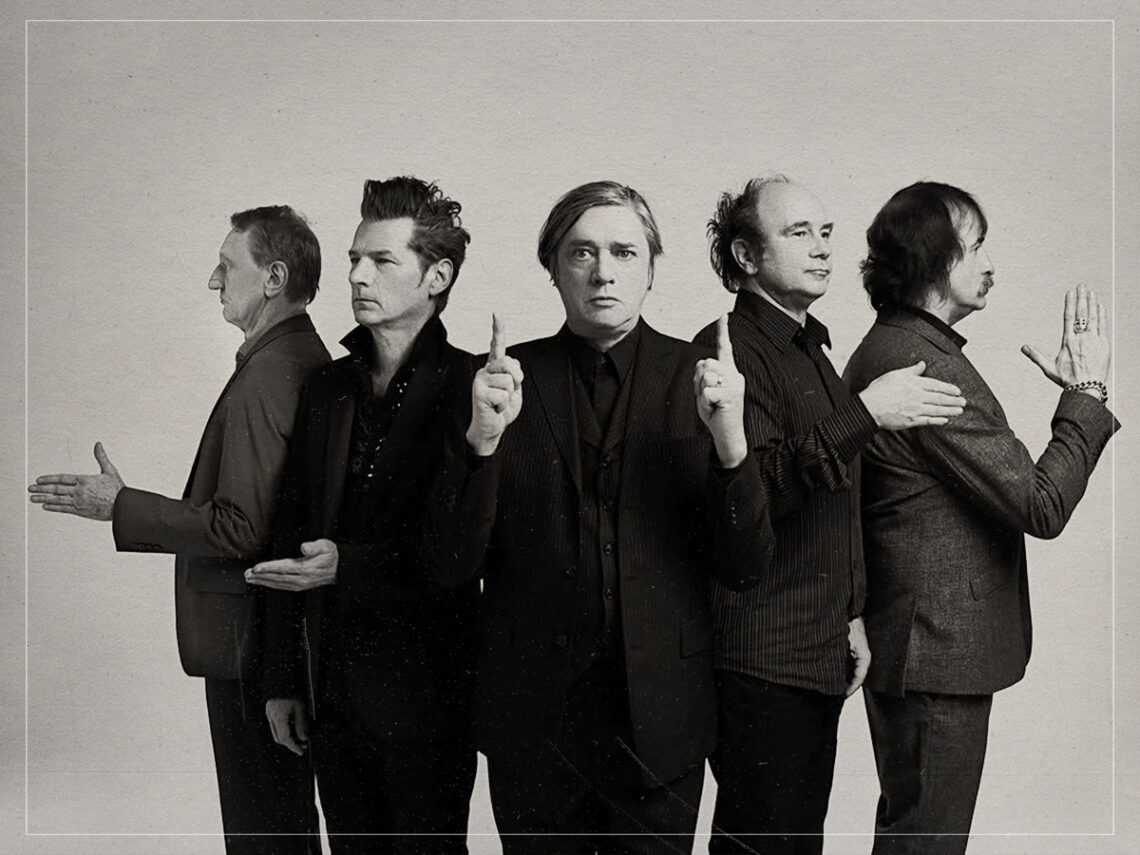
The bands, artists and writers who shaped Einstürzende Neubauten

When boiling down industrial’s archetypal artist, Germany’s Einstürzende Neubauten stands as the movement’s foundational totem.
Throbbing Gristle coined the term and similarly sought to score the urban fetor as they saw it, but rather than delve into their electronic unease, Einstürzende Neubauten would take the aural soundscapes of West Berlin and craft a pummelling din that illustrated industrial to its clanging, corrugated essence.
Scraping pipes, metallic resonance, and weighty crumpling of junkyard detritus would weld key sonic templates and instrumentation of their early chaotic live shows—indeed, founding member NU Unruh to this day crafts custom-built percussion for a sonic assault that bellow with alien dimension beyond the conventional drum kit.
Einstürzende Neubauten would soon become shrouded in legend, from their infamous appearance at the ICA’s 1984 The Concerto for Voices and Machinery show, cut short due to the band digging through the stage with drills and jackhammers, to U2 booting the group off their Zoo TV Tour for lobbing an iron bar into a booing crowd. Yet, the punishing cacophony that blistered all over 1981’s Kollaps debut would soon ebb in favour of a sturdy, coiled-sprig romanticism, casting their primarily German lyricism with heady excavations across history, philosophy, and the eroding ruination that lies in their home city as well as the human condition.
As the years passed, Einstürzende Neubauten thrust their industrial sonic wrestle into cerebral and ambient realms, last year’s Rampen (apm: alien pop music) teeming with subtle, electrolyte fizz that harnessed their metallic bite into deeper depths of aural alchemy. The evolving sound across their 45-year existence has been dextrously handled by their unflappable frontman, Blixa Bargeld. Later to join Nick Cave and the Bad Seeds before departing in 2003, Bargeld could wield his inhuman voice like a hazardous tool, conjuring demonic wails, weathered croons, or stolid yet hypnotic Sprechgesang vocal attack, a grate of rusted turmoil forever caught in his throat, no matter the apocalyptic discord or serene disquiet he’s fronting.
Growing up in West Berlin’s capitalist exclave in the shadow of the Iron Curtain, the krautrock sounds that scored the 1970s’ student campuses and countercultural dwellings across the heady years of student riots made their way to a young Bargeld, specifically mentioning the likes of Can, Neu!, and Kraftwerk when discussing his influences to Magnet in 2007, highlighting the lesser-known Ton Steine Scherbe as “…the only true German rock band. They sang in German and not English, like most German bands of the time”.
Bargeld divulged further to Magnet his creative heroes, Fluxus provocateur Joseph Beuys and Jackson Pollack’s abstract expressionism is namechecked, as well as the junge wilde cohort of radicals who sought to challenge even the tenets of modern avant-gardism with their shock colours and aggressive geometrics.
The Iron Curtain would fall, and West Berlin’s eerily captivating energy that brought David Bowie to the politically charged city would vanish, no longer the urban terrain they grew up in. Yet, Einstürzende Neubauten’s artistic antenna would never die with it, their steely, Teutonic eye still spotting an idea or entity strangely profound that few bands can hope to glean with such tread plate clarity and mysticism.
