


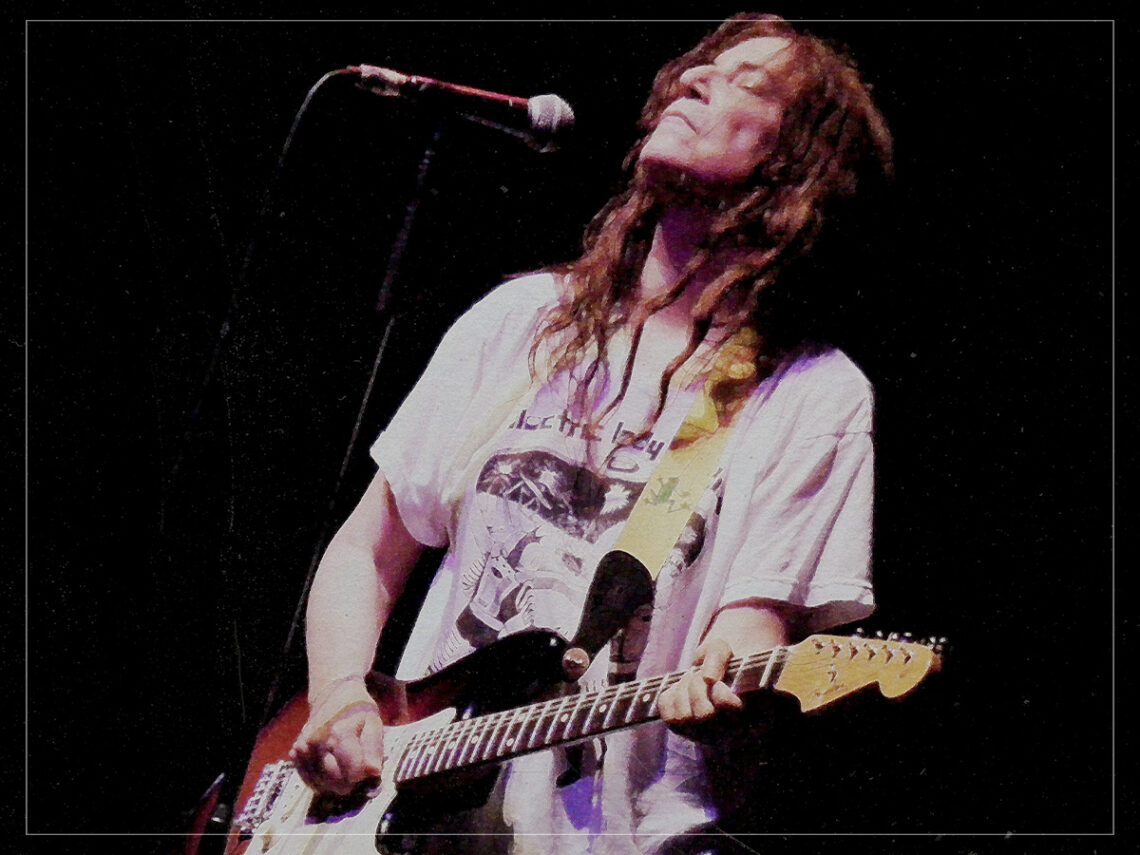
How the Sex Pistols exposed Patti Smith to the revolutionary power of punk: “Very liberating”

Where would we be without the trailblazing tones of Patti Smith? For starters, the attitude and energy of punk rock would sound very different were it not for Smith’s early days in New York City back in the 1970s.
Punk rock is one of those genres with an endlessly disputed origin story. Depending on who you ask, the roots of that endearingly abrasive style could be traced back to everybody from Iggy Pop to the harbingers of the Beat Generation, and even 1950s rockers like Link Wray or Screamin’ Jay Hawkins. Nevertheless, the fact that Patti Smith played a key role in the blossoming punk scene of 1970s New York can certainly not be disputed.
It was in 1974 that The Patti Smith group unveiled their beautifully subversive version of the Hendrix-popularised standard ‘Hey Joe’, the group’s debut single. That single marked one of the very first ‘punk’ releases, although the scene was already bubbling away in the underground scene of Alphabet City. A year later, Horses captured the revolutionary spirit of that scene in an expansive format, often cited as the first proper punk album to achieve a widespread release.
Despite these various accolades, though, Smith herself didn’t always seem to fit in within the punk scene of the time. In contrast to her CBGB comrades, the songwriter didn’t don bondage trousers or stick safety pins through her nose; her attitude spoke for itself, so the fashion that punk was quickly reduced to was fairly superfluous in the case of Patti Smith. When groups like the Ramones, Richard Hell and the Voidoids, and Dead Boys began to emerge onto the punk scene, they didn’t share a whole lot in common with the songwriting stylings of Smith.
Still, Smith was very much involved in the movement, but it wasn’t until she went to see a group from the other side of the Atlantic, calling themselves the Sex Pistols, that she experienced a kind of punk awakening. “They had that attitude where they didn’t give a shit, and that was very liberating,” she recalled decades later, per Classic Rock. In the wake of that life-altering gig, Smith changed her outlook entirely, adopting the punk fashion and cutting her dyed-black hair into a suitably anarchic style.
“That alone separated you off from the rest of society,” she remembered. “It wasn’t necessarily not done as a political act, but it did get a reaction”.
“People thought punks were disgusting, a threat to society.”
Patti Smith
In the modern age, when everybody from bank managers to boy bands has dyed, spiky hair and ripped clothing, it is difficult to imagine the ostracisation of those early punks, but Smith’s move towards an all-encompassing subversion of popular society was essential in her development and attitude as an artist.
Unfortunately, Smith’s adoration of the Sex Pistols has not always gone both ways. Frontman John Lydon has criticised the songwriter on a few occasions, most notably during an interview with The Sun (which, in and of itself, should tell you all you need to know about Lydon’s punk credentials these days), he refused to accept the importance of Smith’s work in influencing the punk scene.
“T Rex, David Bowie, Slade, Mott The Hoople, The Alex Harvey Band — their influence was enormous. And they try to write that all off and wrap it around Patti Smith. It’s so wrong,” he declared.
Even still, Smith’s appreciation of the Sex Pistols and their inspirational punk quality has never really wavered. They might not have been the greatest outfit of the early years, but Malcolm McLaren’s band played a key role in spreading the gospel of punk far and wide across the globe, from Manchester to Manhattan.

Never Miss A Beat
The Far Out Punk Newsletter
All the latest Punk content from the independent voice of culture.
Straight to your inbox.