


The band David Bowie saw as the new leaders in 1979: “The future of fucking music”

It is often difficult to find the unequivocal source of a given object or occurrence.
Just as hydrologists argue over the true source of large rivers fed by vast basins, musicologists dispute the starting point of revolutionary genres, especially in the punk, metal and electronic fields. Did DJ Shadow, as he has claimed, invented trip-hop? Or was it the Bristol pioneers Massive Attack. Did Ramones create punk, or had Iggy Pop and The Stooges stumbled upon this anarchic territory several years prior.
Some people like to answer such questions, “Shut up and enjoy the music.” Regardless of where you stand, it is difficult to deny that, when it comes to glam-rock, David Bowie can be considered a true originator alongside T Rex’s Marc Bolan.
After a shaky start to his career in the mid-to-late 1960s, the Brixton-born beatnik found his footing with the hit single, ‘Space Oddity’, which was timed perfectly with the Apollo 11 moon landing in 1969, giving a flavour of things to come in the early 1970s as Bowie honed his musical identity in the popular albums Hunky Dory and The Rise and Fall of Ziggy Stardust and the Spiders From Mars. The former, with its nods to Bob Dylan and Andy Warhol, showed the musician’s zany sensibilities, while the latter established the glam era’s interstellar aura and his most iconic alter-ego.
Having re-energised popular rock music on both sides of the Atlantic, Bowie began to diversify his output in the mid-70s with, first, a foray into soul music and subsequently his more esoteric, yet critically acclaimed Berlin-era with Brian Eno on board. As Bowie shook a troubling cocaine addiction and embraced his fourth decade on Earth, his work was all but done; whether asking the eye-shadowed post-punks of Bauhaus’s ilk or the more colourful of Duran Duran’s, one would be hard pressed to find a popular musician in the 1980s who wouldn’t name Bowie as an influence, directly, indirectly, yearningly or otherwise.
Among the early fanatics to grasp the nettle and join the circus was Glenn Gregory, the frontman of Sheffield synth-pop act Heaven 17. Like many contemporaries, including Gary Numan, Simon Le Bon, Phil Oakey and Dave Gahan, Gregory had idolised Bowie as a teenager and found the obsession just as bewitching in adulthood.
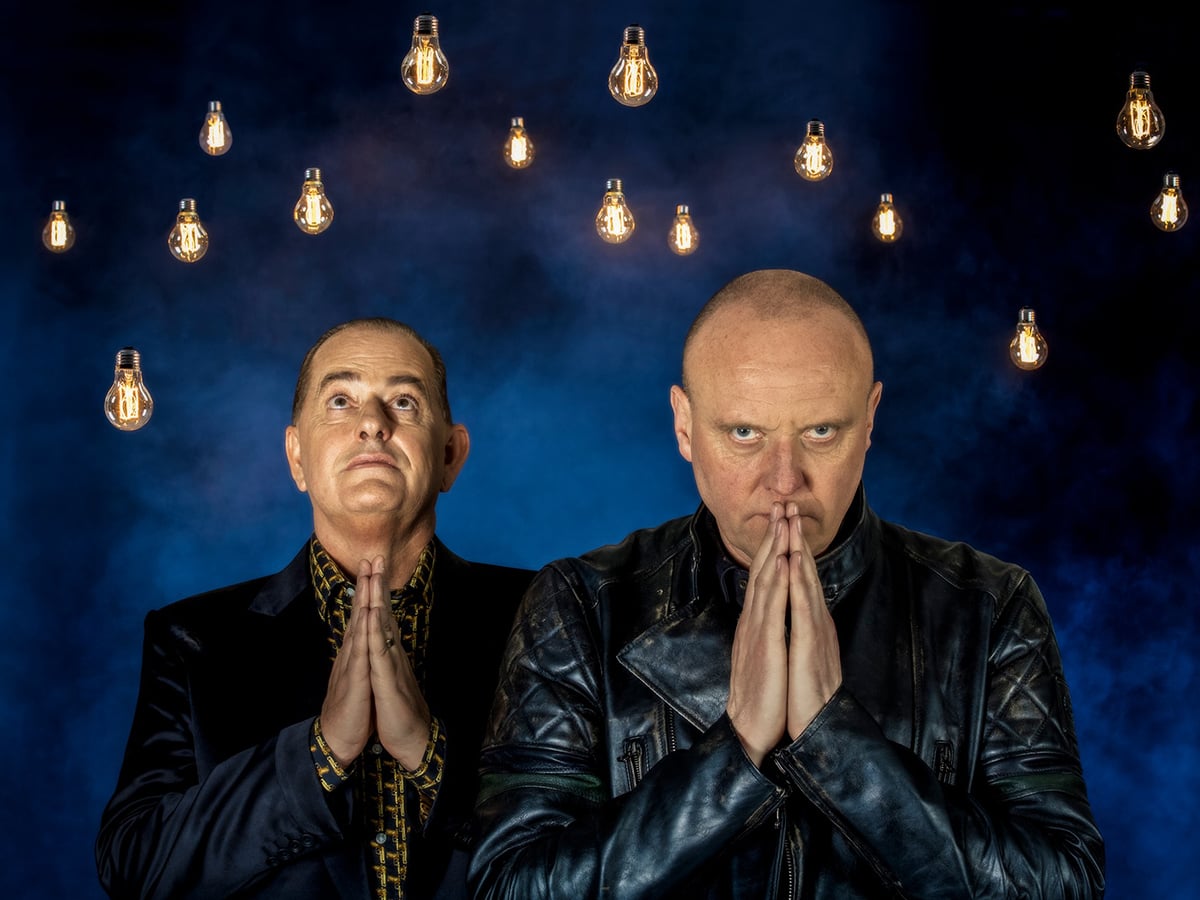
Fast-forward another 40 years, and he found himself fronting Holy Holy, a Bowie tribute act featuring former Spiders from Mars drummer Woody Woodmansey and longtime Bowie producer and collaborator Tony Visconti. In the midst of the 2022 ‘Best of Bowie’ tour, I had the chance to speak to Gregory about his lifelong fascination with the Starman, revealing his favourite era to be a toss-up between those of Young Americans and Aladdin Sane. On the latter, while 1972’s iconic Ziggy Stardust attracts most of the floating voters, Gregory always preferred the beguiling depth of its unhinged successor, not least for pianist Mike Garson’s contributions to ‘Lady Grinning Soul’.
Elsewhere during the conversation, Gregory remembered having crossed paths with the Starman on a couple of occasions, with one of these experiences far outshining the others. In February 1979, not long before Martyn Ware and Ian Craig Marsh both left to form Heaven 17 with Gregory, The Human League paid a visit to The Nashville in London. During the now-legendary performance, there had been a “weird buzz going around the crowd”, as Gregory, who was part of the Sheffield band’s entourage, recalled. The audience started whispering, “David Bowie’s here!” to which Glenn remembered demurring internally, “Don’t be daft, what would Bowie be doing here?”
At the time, The Human League had yet to enter their most commercial chapter, launched by the 1981 album Dare. The Nashville was a relatively small venue, and the likes of Bowie were seldom found on stage here, let alone among the rabble. Towards the end of the gig, Gregory headed backstage, where he waited alone for his pals to return from the stage. “Just before the set finished, the door flung open and in came David Bowie with this big guy behind him, and he just grabbed me by the shoulders, and he started shaking my shoulders, beaming all over his face,” Gregory recalled.
As the young aspirant struggled to remain conscious, let alone formulate some sort of response, the musician justified his supercharged emotions: “They’re fucking brilliant, they are the future of fucking music”. Gregory recalled this brief yet energising encounter as a watershed moment in his early career. While Bowie’s approval helped fulfil his prophecy, this moment proved that a group of young guns from the North could beguile the cream of the capital and shine bright at the vanguard of popular music. In ten short months, the 1980s began, an era dominated by synth-pop, a healthy portion of it flavoured by Bowie’s legacy.
As for Gregory, he rose to popularity in 1981 with Heaven 17’s debut single, ‘(We Don’t Need This) Fascist Groove Thang’, a song inspired by Bowie on two counts: first, in its ironic fixation on fascism and second, as the singer told me, for its use of William S Burroughs’ ‘cut-up technique’, which Bowie famously used to create much of his oeuvre.
Listen to ‘Being Boiled’ by The Human League below, the 1978 single that was a pioneering track, pivotal in the development of the band’s sound and the wider synth-pop school.
