


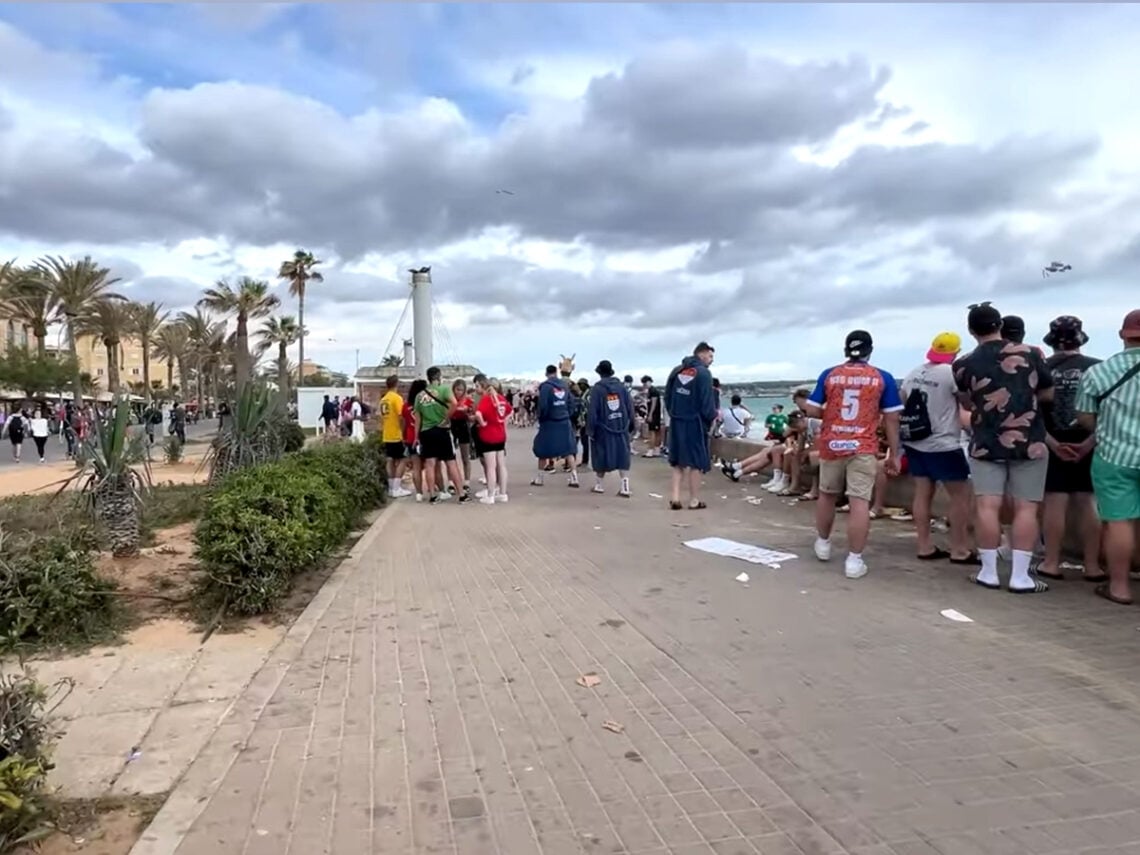
Balearic Islands to clamp down on over-tourism issue

Travellers to Spain‘s Balearic Islands might have to consider additional charges next year as the government vows to introduce higher tourist tax as part of the country’s ongoing efforts to control over-tourism.
The Balearic Islands, which includes Majorca, Menorca, Ibiza, and Formentera, is a hotspot for tourists across Europe. To counteract the number of visitors, the tax increase is expected to inflate during specific times and seasons after President Marga Prohens said the measures were a strategic “tool” to aid the “regulation of tourist flows.” This means that additional fees could be applied during warmer months but lowered during autumn and winter.
This follows a series of conversations about the over-tourism issue across the Mediterranean islands. Over-tourism is said to be degrading the quality of the location and impacting various aspects of society and culture, including housing prices, the healthcare system, and behaviour that residents deem disrespectful or antisocial.
As a result of the ongoing difficulties faced by civilians, a series of protests recently emerged across the Balearic Islands as residents urged the government to assess a more viable and sustainable tourism model to better control the increasing destruction of their home.
On social media, Prohens explained that it is “time to talk about containment and measures to transform our model,” adding, “We propose increasing the Tourist Tax in the high season months and lowering it in the months of December, January and February, with a tax deduction to return its cost to residents.”
While the exact rates are yet to be confirmed, numbers deduced by Majorca Daily Bulletin suggest the rise will likely consist of a handful of euros per day, depending on the hotel and time period.
Over-tourism across the world
Last year, the Balearic Islands attracted a staggering 14 million tourists, with the implications for the economy speaking for themselves. However, despite the benefits, the government continues to share the same sentiments as other leaders regarding the complications of overtourism and how it negatively impacts the country’s inhabitants.
Other popular locations across Majorca and elsewhere, including Croatia, Greece, and Montenegro, are also beginning to issue more warnings against tourism behaviour, like walking around indecently and neglecting to cover up in public.
Last year, Croatia warned visitors they could be fined up to £3,400 for walking around shirtless or drinking in public places. By contrast, Greece is attempting to control their over-tourism situation by banning the construction on the island of Santorini due to concerns that the massive influx of tourists relative to the local population will cause increasing levels of damage to the area’s natural surroundings and historical landscape.
Dubrovnik took this a step further by forbidding tourists from carrying wheeled suitcases due to the noise disruption, urging them to leave luggage at airports or hotels instead of taking them into towns or historic areas.
Although these issues have been surfacing for several years, governments are now taking action to make sure their residents continue to enjoy their homes while reminding tourists of the appropriate demeanour when visiting somewhere on vacation.
