


Reflecting on ‘Autobahn’ in the words of Kraftwerk

In November 1974, German electro-pioneers Kraftwerk released their landmark fourth studio album, Autobahn. Having set out in 1970 seeking the synth-age response to classical music, Düsseldorf based masterminds Ralf Hütter and Florian Schneider decided to drive their sonic experiments in a more pop-orientated direction.
Hütter and Schneider shared a rare gift for audiovisual artistic expression. If one was looking for a pair of musicians to convey a concept without the use of lyrics, the search could be called to a comfortable halt at their feet. Having named their project “Kraftwerk,” which translates to “power station” in English, their overarching concept was one of post-industrial living and fuel for the future. The band sought to power a new generation with a German injection of both musical and visual art.
Talented composers as they were, Hütter and Schneider knew they would need to broaden their scope to welcome lyrics if they were to break into the mainstream. Autobahn marked the project’s early transformation to commercial viability and welcomed Klaus Röder on guitar and flute and Wolfgang Flür on percussion.
The introduction of sci-fi lyrics and a refreshed visual facade for the band came with a firm nudge from the artistic collaborator, painter and poet Emil Schult. Adding an industrial edge to the contemporary works of Michael Oldfield and fellow German project, Tangerine Dream, Kraftwerk set about recording a progressive and conceptually stimulating record. Their central focus this time would be the highway, or “autobahn”.
In a 1975 interview, Hütter told Uncut that the band got the initial idea for the album when driving on the Autobahn, stating it was an “exciting experience that makes you run through a huge variety of feelings. We tried to convey through music what it felt like.”
The immediate difference in sound between Autobahn and its predecessors is the all-important purchase of the Minimoog and EMS Synthi AKS synthesisers, which allowed a level of electronic production and manipulation previously inaccessible. Alongside drum machines and doctored vocals, Kraftwerk could now reimagine the pulsating, electric sound of the German highways.
The album consists of just five tracks, with the eponymous opener coming as the indisputable main course, clocking in at just under 23 minutes. The epic explores the open road with modulated frequencies depicting the sounds of cars approaching, passing, and then speeding away to eternity.
With such progressive sounds and lengthy compositions, it would be inaccurate to label Autobahn as an obvious lunge for the limelight, but its pop leanings sufficed to help Kraftwerk break into the global arena. Thanks to the unprecedented electro sounds and the accessible melodies throughout the album, it reached a highly respectable number four on the UK Albums Chart and five on the US Billboard chart.
Thanks to its winning combination of novelty and exposure, it became easily one of the most important albums of the decade and has since been cited by the likes of David Bowie, Brian Eno and countless proponents of the 1980s synth wave as the Holy Grail of synthesised music. When lost in the almost danceable synth of ‘Kometenmelodie 2’, it is important to remember that you’re in 1974, not a Gary Numan concert some ten years later.
Discussing the unique Autobahn experience, Flür once described the five tracks as a journey from Düsseldorf to Hamburg and said the route included musical simulations of the industrial Ruhr valley, mining towns like Bottrop and Castrop-Rauxel, and the rural Münster region, which is symbolised by the inclusion of flute melodies.
Other familiar yet intriguingly posed sounds were folded into the production. Hütter told Uncut in 2004 that they recorded “car sounds, horns, basic melodies and tuning motors. Adjusting the suspension and tyre pressure, rolling on the asphalt, that gliding sound—phhhwwtphhhwwt—when the wheels go onto those painted stripes.”
“It’s sound poetry,” he added with pride. “And also very dynamic.”
Elaborating on the sparse lyrical treatment throughout, Hütter explained that they intended the feeling to transcend language barriers despite being mostly in German. “Part of our music is derived from the feeling of our language… our method of speaking is interrupted, hard-edged if you want; a lot of consonants and noises.”
He then clarified that their use of language was more for the phonetic value than any poetic derivation, “We are not singers in the sense of Rod Stewart, we use our voices as another instrument. Language is just another pattern of rhythm, it is one part of our unified sound.”
The language used throughout the album was kept notably frank and succinct, with statements like “We drive on the Autobahn”. The impartial and emotionless nature of the lyrics seemed to further the band’s concept of post-industrial technology.
In a 1991 conversation with NME, Hütter explained how their friends thought they had mislaid their marbles when they first played Autobahn. “We played it to our friends, and a few of them said, ‘Fahren auf der Autobahn!? [we drive on the Autobahn] You’ve gone crazy!’” He laughed, “We just put records out and see what happens. Otherwise, we’d end up over-calculating this or that.”
Accompanying ‘Autobahn’ are songs that continue to juxtapose the quotidian with science fiction. ‘Kometenmelodie’ gives a melody inspired by Comet Kohoutek, which passed by Earth in 1973; meanwhile, ‘Morgenspaziergang’ (translated to ‘Morning Walk’) was influenced by the atmosphere the band would encounter during their early morning walk from the studio following late-night sessions.
As Kraftwerk continued over the 1970s, they realised the full scope of their audiovisual ideas and channelled them into an ever-commercialised product.
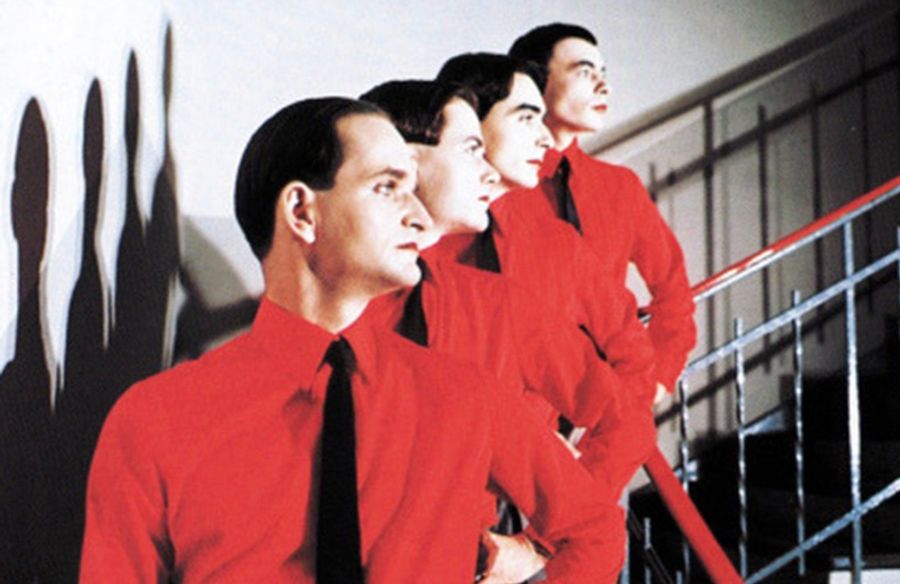
In 1978, they released the highly influential The Man Machine, where they finally admitted, “we are the robots,” and debuted their most iconic uniform. The emotionless droids in red shirts and black ties handed the baton to the synth-pop musicians of the 1980s who would morph into the rave scene of the 1990s and set the foundations for pop music as we know it today.
Listen to the timeless ‘Autobahn’ below.
