


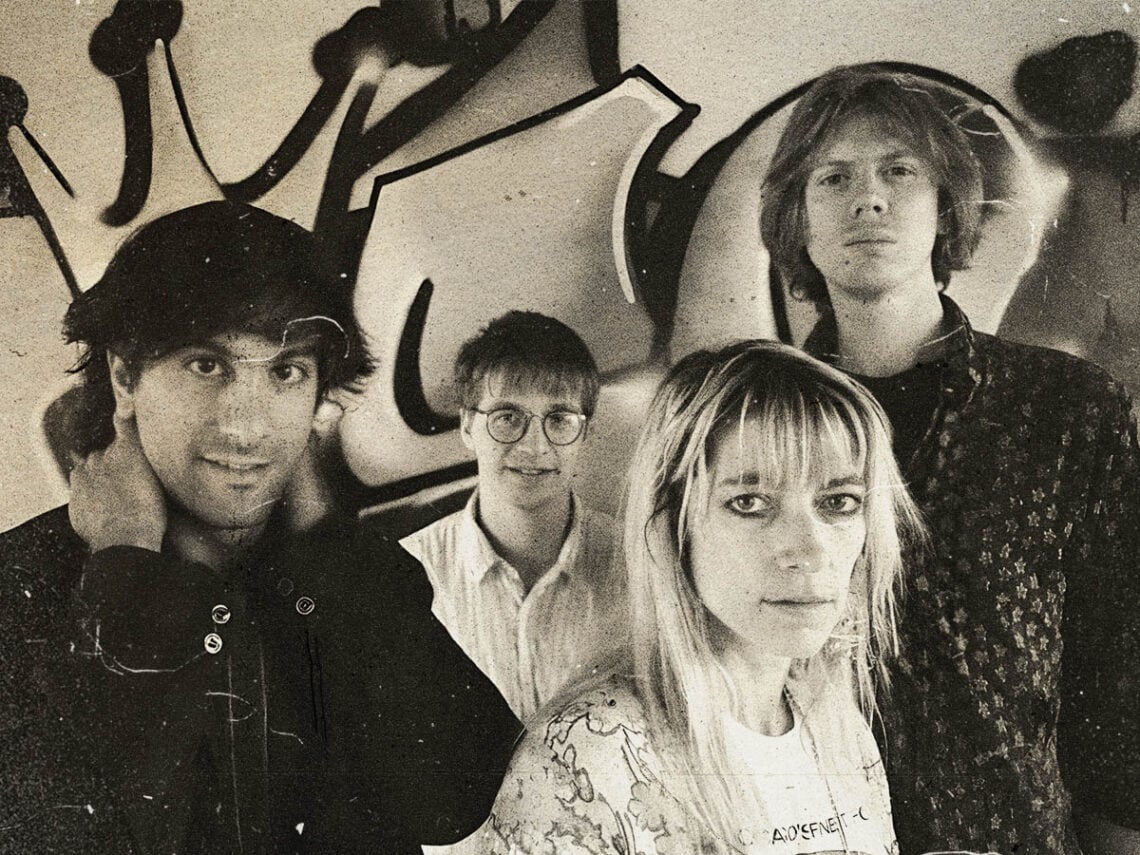
The author that inspired Sonic Youth’s ‘Sister’

In the late 1970s and early 1980s, the no-wave scene dominated New York’s underground. While the movement incorporated cinema and art, the most prominent aspect of no-wave was music. Bands experimented with unconventional tunings, sounds and song structures, creating an alternative to genres such as punk and new wave.
Sonic Youth emerged from the no-wave scene alongside musicians such as Swans and Glenn Branca. These artists proved particularly influential to the development of the burgeoning noise rock genre, taking inspiration from the abrasive guitars pioneered by The Velvet Underground in the 1960s.
The band’s early work, including the albums Confusion is Sex and Bad Moon Rising, fall into the no-wave genre, complete with nihilistic lyricism and screeching, dissonant instruments. However, by 1986, Sonic Youth had moved away from the no-wave sound. While the band retained their experimentalism and caustic guitars, they slowly began to make their music slightly more accessible to the average alternative rock fan with the release of EVOL.
As Sonic Youth have evolved, they have found a way to blend harsh, noisy instrumentation with melody – never abandoning their roots while striving for musical progression. After EVOL, the band released Sister, which paved the way for one of the band’s most acclaimed albums, Daydream Nation. Yet, Sister isn’t far off the heights reached on the subsequent record, with songs such as ‘Schizophrenia’ and ‘Catholic Block’ remaining firm fan favourites.
The record marks a progression in the band’s sound towards greater accessibility, with ‘Schizophrenia’ following a rather conventional structure, departing from chaotic, frenetic instrumentation for most of the track. It was inspired by bassist and vocalist Kim Gordon’s brother, who was diagnosed with paranoid schizophrenia. In the song, the person with the condition is a sister figure, with Moore singing, “She keeps coming closer saying, ‘I can feel it in my bones/ Schizophrenia is taking me home.’” Gordon assumes the role of the sister in the second half, adding, “My future is static/ It’s already had it.”
Alongside Gordon’s brother, the band were inspired by the author Philip K. Dick, best known for writing Do Androids Dream of Electric Sheep?, The Man in the High Castle and A Scanner Darkly. The writer had a twin sister, yet she died shortly after they were born. This fact never left Dick’s mind, and in the 1970s, he increasingly found himself experiencing episodes of psychosis.
He told Charles Platt in 1979, “I experienced an invasion of my mind by a transcendentally rational mind, as if I had been insane all my life and suddenly I had become sane.”
Dick’s life fascinated the band, and they included references to him throughout the album. Gordon explained how Dick came to inspire the recording of Sister. She said during an interview with Radical Reads, “In 1987, Thurston and I were both reading Philip K. Dick, whose writing has more in common with philosophy than science fiction, and whose descriptions of schizophrenia were better than those of any medical journal.”
Gordon added, “Philip Dick had a twin sister who died shortly after she was born and whose memory plagued him his whole life — which is maybe how and why our new album ended up being called Sister.”
