


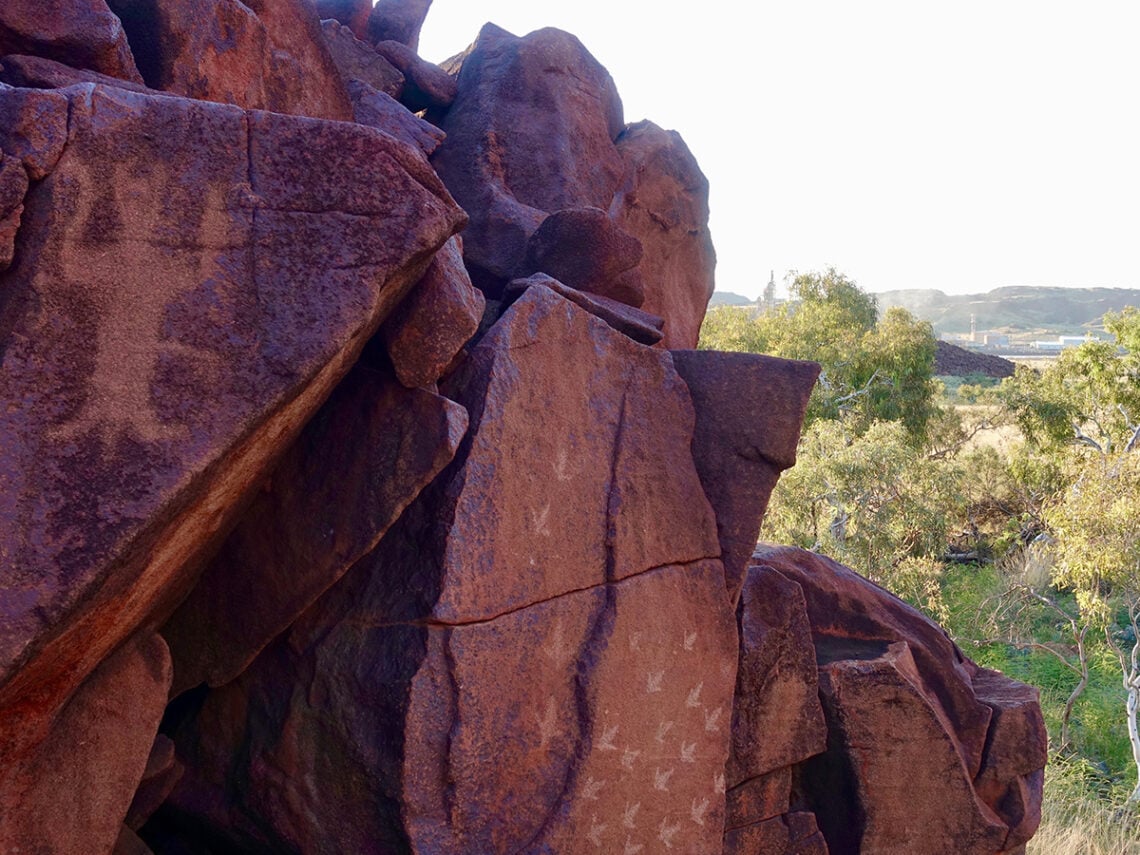
Murujuga rock art granted UNESCO World Heritage status

UNESCO has granted World Heritage status to the Murujuga rock art in Australia. The honour comes at a particularly fitting moment for the monument after locals feared it was becoming vulnerable due to a nearby gas works plant.
The landmark, located in the Pilbara region of Western Australia, is of major ancient Aboriginal significance as it features rock art created before other similar heritage sites, including the Pyramids of Giza and Stonehenge.
Most notably, it features the oldest depiction of a human face in art history, dated at over 50,000 years old, in addition to over one million petroglyphs – otherwise known as distinct rock carvings.
The land on which the Murujuga rock art sits is owned by five different groups, including Aboriginals and the Ngarda-Ngarli people. To this end, Aboriginal people had been campaigning for in excess of two decades for the site to be granted World Heritage status.
Raelene Cooper, an owner of the site in Pilbara and a Mardudhunera woman, told ABC News: “This is a momentous day for our old people and our future generations to have Murujuga’s outstanding universal heritage values recognised by the world.”
She added: “Our rock art tells the stories of our people, and maintains our songlines and bloodline connection to our ngurra.”
The campaigners have only just won their case now, two years on from when the Murujuga rock was first nominated for the status by the Australian government in 2023.
The new World Heritage status for the site will come as a welcome relief to those who were fighting to preserve the legacy of the Murujuga rock art, after the Karratha Gas Plant, which sits opposite it and is operated by Woodside Energy, had drafted plans to expand its area.
The Australian government did conditionally grant this up to 2070, but criticism and scrutiny has been placed with the company over the environmental impact this will create.
