


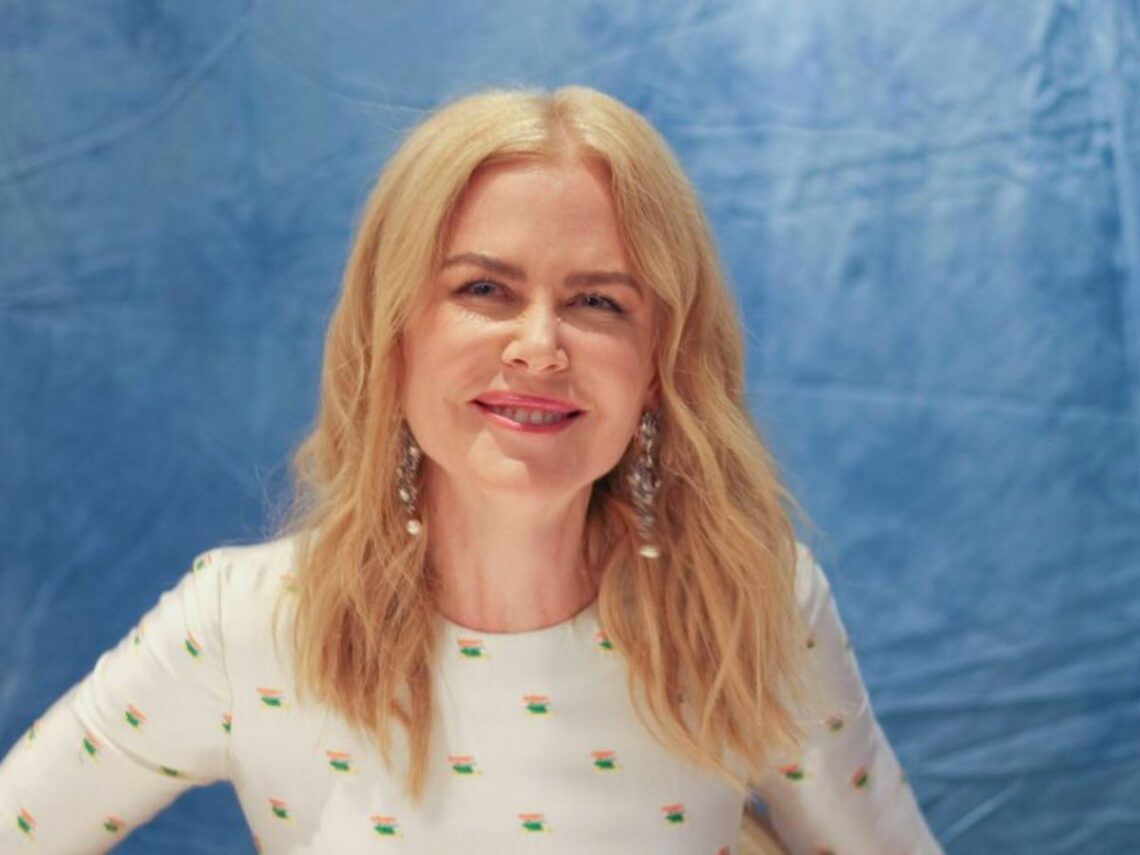
‘Australia’: The defining movie that Nicole Kidman failed

On paper, a big-name director uniting with two A-list superstars for a $130million wartime epic rooted in history that all three were intensely keen to do justice sounds like a ready-made awards season contender that would be in the running for virtually every major trophy, but Australia didn’t quite turn out as planned.
The worst-reviewed movie of Baz Luhrmann’s career at the time, the sweeping blockbuster set against the backdrop of the titular nation’s involvement in World War II between 1939 and 1942 also became his lowest-grossing release at the box office in the United States, with a solitary Academy Award nomination for ‘Best Costume Design’ the sum of its recognition from the industry.
Star Nicole Kidman – one half of the central pairing opposite Hugh Jackman – was the most scathing, savaging her own performance in an interview with radio station 2dayFM: “I can’t look at this movie and be proud of what I’ve done. I sat there and looked at Keith [Urban] and went, ‘Am I any good in this movie?’ I don’t usually see my films, but because of Baz, I had to see it. I saw Moulin Rouge. I’ve really only seen that and this in my whole career. It gets worse as I get older.”
Even though her representatives contacted the Sydney Morning Herald shortly afterwards to claim that “it is quite ridiculous for anyone to believe the reports” despite those being the words that came out of her mouth verbatim, wide-ranging reports of behind-the-scenes interference also became so prevalent that the head of 20th Century Fox was forced to publicly shoot them down.
Talking to the Los Angeles Times, studio boss Tom Rothman sought to clear the air following tales of disastrous test screenings: “Everything in that story was patently nonsensical. It’s all too typical of the way the world works today that everybody picked up an unsourced, anonymous quote-filled story in a tabloid from Sydney, and nobody ever bothered to check to see if it was accurate,” he said. “The facts are, Baz is a final-cut director, and we never pressured him in any way, shape or form. He wrote the movie, shot it and cut it all himself without any interference from us at all.”
Even at that, Luhrmann returning to Australia a decade and a half after the fact to re-edit and extend the already-bloated 165-minute feature into a 225-minute six-part streaming series Faraway Downs certainly indicates that he wasn’t entirely enamoured with his work on the first time around. Admitting to Variety that “I have never faced the level of relentless obstacles I did on this one” helps explain the unwieldy theatrical release, but the director remained adamant he wasn’t trying to improve the film, only extend it.
Harking back to the epics of old, he put forth his initial mission statement – which largely went unfulfilled – to The Wrap: “When I made that film, I was trying to make a sort of twist, taking an old form – that would be the sweeping epic melodrama, something like Lawrence of Arabia or Gone with the Wind – and turn it on its head.”
It didn’t work out as he’d envisioned, considering the Elvis director dubbed Australia as “probably my least-loved movie in the US,” something that was reflected in its lukewarm reviews and disappointing ticket sales. Kidman’s misjudged performance that leaned too hard into the melodrama of it all hardly tanked the entire thing, but it was one of many notable shortcomings that saw what should have been the defining movie of Luhrmann’s career turn out to be his most disappointing.
