


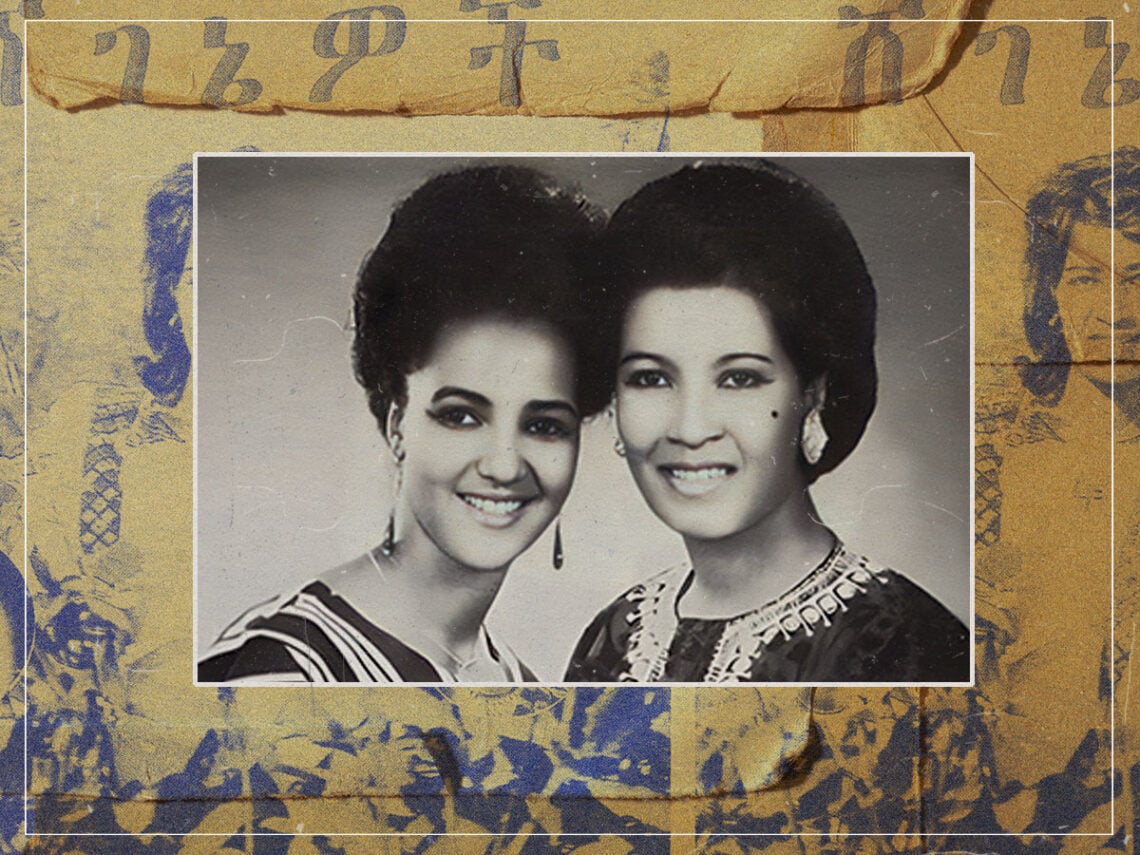
Aselefech Ashine and Getenesh Kebret: when the stars of Ethiopia’s Golden Age collided

Collaborations between prominent musical artists are famously hit-or-miss. While you might end up with the brilliance of The Velvet Underground and Nico, you could just as easily be faced with the terrifying reality of ‘Dancing In the Street’ by Mick Jagger and David Bowie. Fortunately, this was not a concern that plagued Aselefech Ashine and Getenesh Kebret, two of the finest singers to ever hail from Ethiopia, upon their seminal collaboration in 1976.
Ethiopia is not usually noted for its musical output, with the vast majority of discourse surrounding the incredibly broad landscape of ‘African music’ centring around West African nations such as Nigeria or Ghana. However, with one of the largest populations across the continent, the incredible range of art produced by the country is almost an inevitability. The ‘Golden Age’ of Ethiopian music occurred in the period between the 1960s and 1970s, witnessing the rise of countless incredible artists, usually focusing on folk styles and traditional Ethiopian rhythms, with some Western influences too.
Of that vibrant Golden Age, the unforgettable tones of vocalists Aselefech Ashine and Getenesh Kebret are undoubtedly one of the greatest exports. Both were raised in the capital city of Addis Ababa, and they first encountered each other at the Hager Fikr Theatre, a beacon for art and culture in the East African nation. The pair were trained together in theatre and traditional vocal performance. In 1976, the pair embarked upon a collaborative album that would go down in history as one of the great Ethiopian albums of all time.
With an Amharic title translating to Beauties, the album was a tour-de-force, selling out its initial run on Kaifa Records. The pair soon became icons of the Ethiopian music scene. Featuring ten stunning tracks, backed by The Army Band – who previously worked with the likes of Tlahoun Gesesse and Mahmoud Ahmed – Beauties affirms the beautiful vocal talent of the two women, with the pulchritude of their voices complimenting each other perfectly.
Although Beauties was a certified hit, the pair never got the chance to follow up on their newfound fame. After all, the 1970s was a fairly tumultuous time in Ethiopian politics, with the rise of the Derg regime having an ever-tightening grip on the country. The Derg was a Soviet-backed military junta that ruled over Ethiopia from 1974, but as the years went by, they became increasingly authoritarian.
Shortly after the release of Aselefech Ashine and Getenesh Kebret’s stunning collaborative effort, The Derg imposed crackdowns on artists and musicians – seen as allies of the deposed leader Emperor Haile Selassie.
This crackdown meant that the pair would have to keep a low profile, preventing them from building upon their success with Beauties. Nevertheless, the album remains something of a holy grail among record collectors and aficionados of Ethiopian music, with the reputation of the album boosted by a recent Mississippi Records reissue. Despite being released nearly five decades ago, Ashine is still confident in the quality of her work, saying, “I have full confidence that this album will be popular and a hit when it is released again now.”
