


Rob Pruitt’s ‘Cocaine Buffet’: The artwork that got people snorting coke and questioning capitalism

Uttering the name of the artist Rob Pruitt will conjure a face of disgust or fascination, depending on who you’re talking to. Pruitt, a New York artist active in the late 1980s and ’90s, was wildly controversial and unpopular, but it was his genius that gained him this exact reputation. He didn’t work in a specific medium or style but was mostly identified with post-conceptual art that challenged capitalism and consumerism.
So why was he so unpopular? Sure, his fountain made of Evian water and his weed-themed galas definitely caused some fluster, but it was his most provocative work, Cocaine Buffet, that was the cherry on the cake.
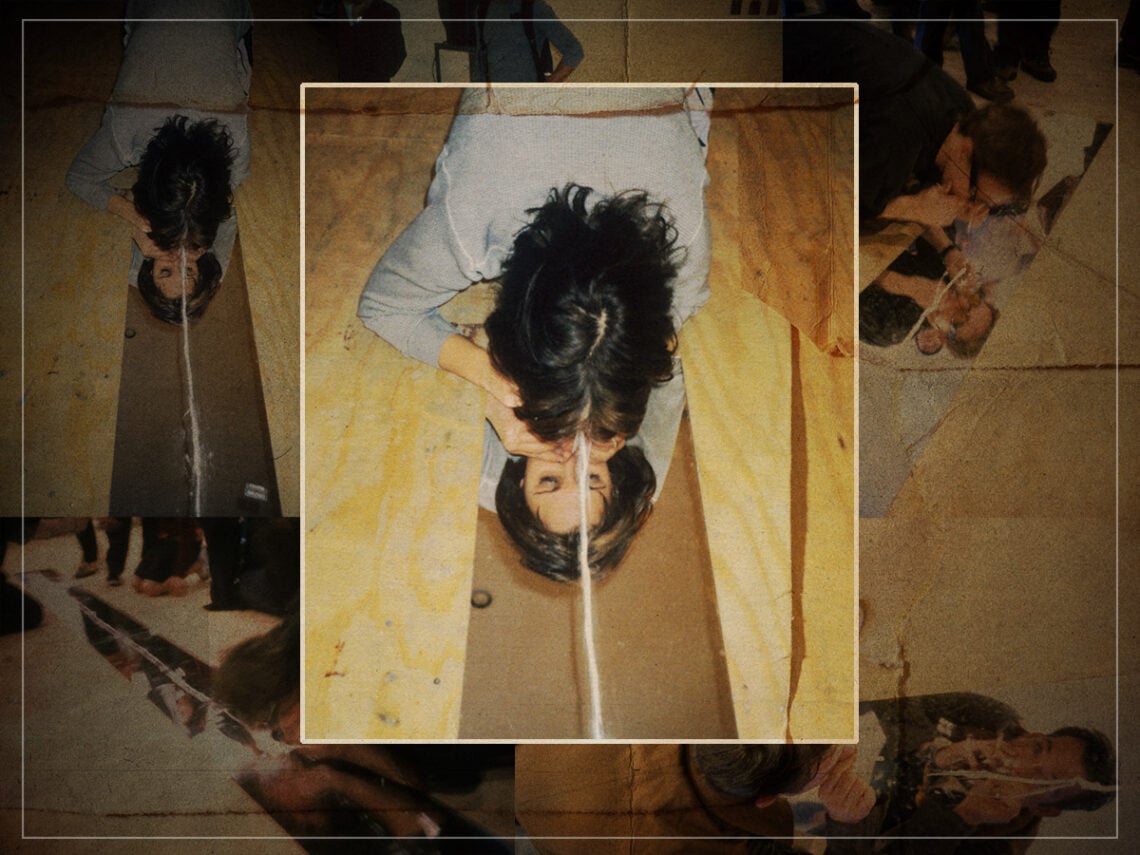
In 1998, he exhibited as part of a group of artists at The Fifth International, Chivas Clem’s artists-run space in New York. The star of the show—his 16-foot mirror with a perfect line of dazzling cocaine running down its length. Initially, visitors didn’t pay too much attention to it, thinking that the powder present was just baby powder or another substance meant to resemble cocaine. Everyone meekly admired the work without realising there was more than just admiring that could be done with it.
Out of nowhere, someone in the crowd got on their knees and tried the powder, discovering, to their surprise, that it was, in fact, cocaine. “Then there were three brave souls, they broke the ice, and then it became just like a free-for-all,” recalled Pruitt.
The seemingly docile artwork became a full-on powder room where any visitor was welcome to participate. Within ten minutes, the cocaine was gone, leaving a smudged mirror and, thus, a completely different piece. This artwork-turned-event sent shockwaves throughout the city and beyond. Pruitt admitted that it had been a publicity stunt to get back into the spotlight after his various scandalous exhibitions, but later realised that this was the best piece he’d ever produced.
Many viewed the work as crass and vulgar, as images show people sprawled on the floor, snorting the stuff amidst a crowd of awkward, mingling art geeks. Others applauded Pruitt for the piece that held a mirror, quite literally, to the greed and glamour of the art world. If no one was doing cocaine right then and there in the exhibition, it was just because they had done it discreetly a few minutes before getting there.
However, instead of outright critiquing modern culture, he instead reflected it by getting participants to spontaneously partake in the drug-taking. This kind of practice came to be known as relational aesthetics, a genre of art that aimed to produce social relations and real-life collective encounters as a community rather than an individual, material piece of art. In this case, the art itself is no longer the mirror-lined with cocaine but the communal experience of visitors discovering it and partaking in its use. Through Cocaine Buffet, Pruitt insisted on a model of art that provokes use rather than contemplation.
Overall, Pruitt’s work encourages us to look beyond the immediate, abandon stereotypes and view his piece as an artistic site that can both reflect and intervene in capitalism, a society we have constructed for ourselves but must remember to continuously criticise for its flaws and betterment.
