


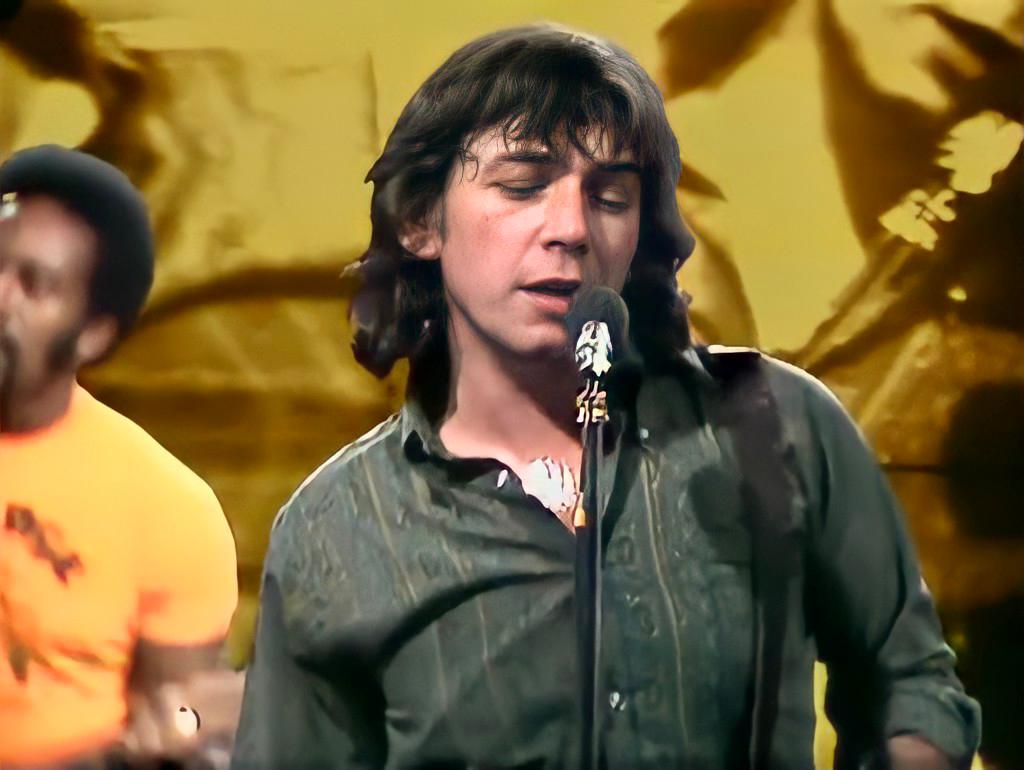
The artist who continued Bob Dylan’s legacy, according to Eric Burdon

As much as they were undeniably a commanding force, it seems an injustice in some respects that The Beatles alone became the presiding faces of the British Invasion. While they may have led the charge, there was a whole troop of equally blazing rock stars who followed behind them into battle – and not least the Animals, fronted by Eric Burdon, who gave the entire campaign a new, dynamic edge.
Of course, despite being at the forefront of the cause, Burdon and the rest of the Animals embodied a markedly different musical position to those dominating the realm, deriving much more directly from the blues and, in that specific moment, being drawn much more to the notion of experimentation than many of the others. Over time, this is perhaps what gave Burdon a stronger sonic kinship to artists who also walked to the beat of their own drum, both within his own contemporaries and those who followed in the scene afterwards.
The natural American counterpart to that swinging 1960s era in which Burdon made his name could only have been Bob Dylan – and as the Animals themselves began to explore more folkish tones in the likes of ‘House of the Rising Sun’, it was clear the frontman was set on forming his own transatlantic alliance with New York’s lyrical master.
He did that because not only has Burdon worshipped Dylan ever since, but he is also credited with turning the rocker down the electric avenue through the influence of the aforementioned tune. Yet, with an artistic legacy as blazing as Dylan’s, it’s difficult to see who could come next and fulfil his heights of rapture. For Burdon, there was only one man who answered the call.
In a previous interview, when asked what influence he bore on the polar opposite ends of the rock spectrum between Iggy Pop and Bruce Springsteen, Burdon said: “I like them both. But I can’t rank Iggy’s music with Bruce’s recording history. Springsteen is a great songwriter and visionary. He kind of continued Dylan’s move into the electronic rock world. I suppose I see myself in the middle somewhere.”
Evidently, the Boss is the only fitting bearer of the torch in Burdon’s eyes, but it’s for good reason. Although breaking on to the scene some ten years after the Animals’ and Dylan’s own first forays, Springsteen was a refreshing tonic of striking sonic resemblance to the tunes of the everyman that the likes of the latter artist had become so esteemed for. Coupled with his unapologetic electric style, the Jersey boy was reinvigorating the whole notion of rock and roll to a new generation – and he’s earned his place among the gods all the more for it.
The British invasion obviously struck artists and fans alike across the pond with a hurricane force, but it is interesting to think about how that one era in time transcended musical moments to continue impacting future generations, even to this day. Springsteen and Dylan may not see themselves as a direct lineage, but as Burdon points out, they were at the helm of an evolution to continue electrifying rock to the masses.

Never Miss A Tale
The Far Out Bob Dylan Newsletter
All the latest stories about Bob Dylan from the independent voice of culture.
Straight to your inbox.