


The one artist who missed out on joining The Traveling Wilburys: “I would have easily been an accepted Wilbury”

The music world is a weird place. But, even in a world where the strangest things can happen all at once, sometimes, the Traveling Wilburys seem like a fever dream.
If you took a blow to the head and started telling your friend about a band that consisted of Bob Dylan, George Harrison, Jeff Lynne, Roy Orbison and Tom Petty, and they told you such a fantasy never existed, you’d surely believe them. It’s the contemporary equivalent of Mozart, Beethoven, Vivaldi, Bach and Chopin getting together and belting out a couple of classics at the Georgian equivalent of a barbecue.
While the very existence of the band is maddening, everything else about them was decidedly lowkey. In essence, their formation was akin to George Harrison making a group text with his musical mates. Fated did the rest. As Tom Petty once opined, “None of this would’ve happened without [George Harrison]. It was George’s band—it was always George’s band, and it was a dream he had for a long time.” When it comes to Petty’s involvement, that held even more truth, to begin with, Petty was out of the picture.
However, when the four initial members went to Dylan’s home studio to record the B-side to their planned debut single ‘This is Love’, Harrison suddenly realised he had left a beloved guitar at Petty’s house nearby. The two had incidentally become friends while Petty and The Heartbreakers were on tour in Europe with Dylan himself in 1987.
When Harrison arrived at Petty’s house, he asked him if he’d like to attend the session. After all, it would be rude not to—it would be even ruder for Petty to say no, given the talent in attendance. Thus, with that, Petty was on his way to the studio. Thereafter, he almost immediately slipped right into place, and the Traveling Wilburys, as we know them, were born.
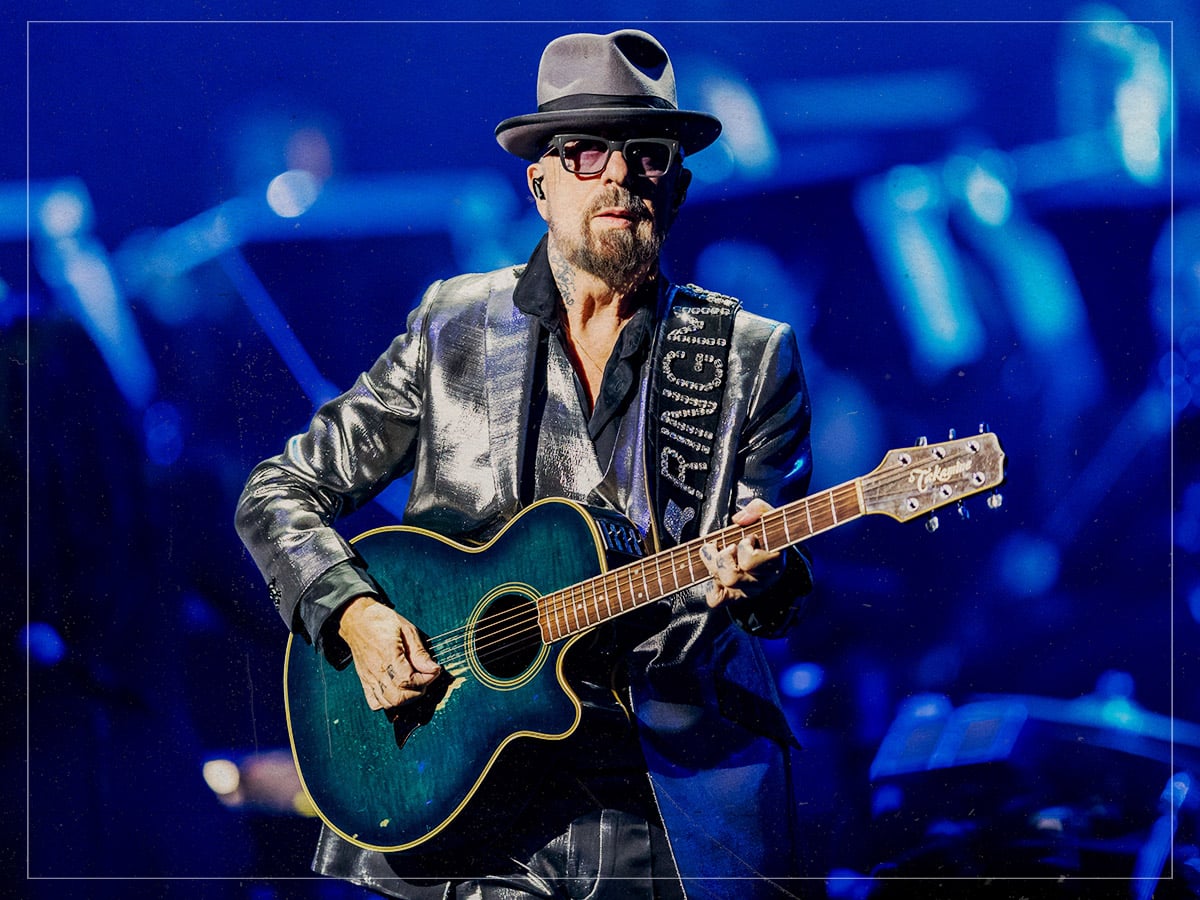
Sadly, fate and timing weren’t quite as fair to Dave Stewart. The Eurythmics man was right in among the whole thing at the time. After working with Petty on a few classic tracks – including ‘Free Fallin” – the pair became good friends. “Through that, a lot of things happened,” Stewart told Songfacts. Around the time of the Wilburys, he began “filming Dylan stuff and then George Harrison was living at my house”.
This led to a surreal life for the young man from Sunderland. He was a shade younger than the peers now swinging by his secluded condo, watching his heroes go about casual domesticities in his own home. “Bob was talking about how he never had a backing band like The Band that really was amazing, and I said the only one I can think of is The Heartbreakers,” he recalled.
“My back garden was this mad meeting place. It would be George playing a Beatles song on acoustic guitar in the garden to Tom,” he mindbogglingly remembered. “They’d be singing harmonies, and then Jeff Lynne joins in, then the next thing I know, I’m looking out the window and there’s Bob, Tom, Jeff Lynne, George, and Roy Orbison all under this tree with Gretsch guitars”.
Stewart could’ve been the sixth string to their bow—the master producer to put an extra cherry on top. However, he wasn’t quite as established, despite his great reverence, as those gathered at the foot of his garden and still had commitments to attend to. So, sadly, he explains: “I couldn’t because I was making an Eurythmics album and then doing a world tour with Annie when they were right in the middle of it”.
Adding credence to how casual the whole Wilburys world was, he adds: “They only had I think two weeks to make the album, which they did in my garden studio, using my kitchen. Jim Keltner used the refrigerator. I would have loved to, and I would have easily been an accepted Wilbury, but it was right at the period of Eurythmics making We Too Are One and touring it”.
What the group would have sounded like had Stewart been enrolled in the group is hard to figure out. It’s difficult to imagine him bringing much more heavyweight rock tradition than the band members already could, so chances are he would have been a modern influence. His forward-thinking production might have seen some synth introductions and perhaps, dread to think, even a few unwanted music videos.
In the end, some things work out the way they do for good reason. Stewart’s position as the confidant of half the band is likely enough to satisfy his craving for stardom and enough stories to tell the grandkids to make it feel like he was actually in the group anyway. And, this way, we don;t have to have the awkward moment Dylan had to sit across from Annie Lennox and feign interest in anything but her singing voice.
