


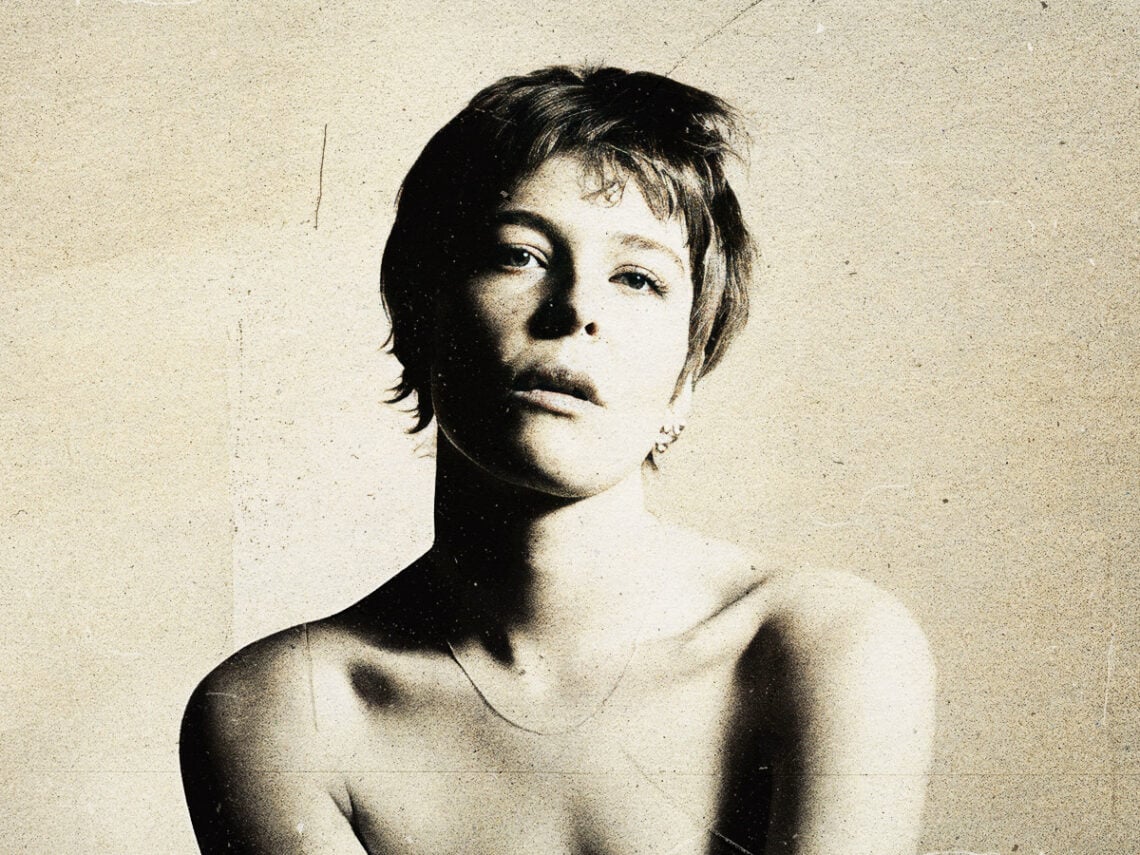
Björk: The artist Maggie Rogers called “essential” to her career

The music of Maggie Rogers has always been about making beautiful contradictions. Despite having some of the most tuneful melodies in the world, her work’s main draw has been combining some of the best elements of electronic music into a traditional songwriter format. Although the ambience plays a big role in nearly every one of Rogers’ projects, her start began in the world of folk.
From an early age, Rogers always talked about getting much of her musical knowledge from her parents. As opposed to the normal sounds of the 2000s, Rogers found her main draw in folk music, recalling to Lines of Best Fit, “They’re just songs communicated simply, whether it was Nick Drake or Joni Mitchell, these people taught me how to tell stories.”
Even as far back as her earliest songs, Rogers was mining the same musical songbooks as people like Mitchell, seeing her music as a neverending tapestry of different sounds. Although she eventually gravitated towards artists like Outkast, it wasn’t until she heard a song by Björk that her focus shifted.
Having been one of the biggest art-rockers of the ’90s, Björk’s success with her sophomore release Post gave way to even more sonic experiments, culminating in the styles heard on Homogenic. While most of her third record is stellar from cover to cover, ‘Jóga’ made Rogers pay attention to what could be done with electronics.
Upon first hearing it, Rogers was shell-shocked, saying, “Björk is essential for me. She’s the reason I moved from writing just folk or rock music and becoming more interested in electronic sounds.” While there is an electronic heartbeat throughout the song, it’s easy to pick out the humanity in Björk’s voice, making the sound of her voice on the chorus sound like she’s rising from the depths of the ocean.
Besides the song structure, Rogers paid special attention to the tune’s arrangement as well, noting, “On ‘Jóga’, the string arrangements are so lush and classical, but it also has an industrial beat and her melody over the top is broken but so emotional.” The broken quality that Rogers talks about is also essential to how the song works. Given that it’s in an odd time signature, the listener never feels quite at home as the song revolves around, always returning to the beat unsteadily.
Where most pop stations would have been put off by something this strange, Rogers saw where her future might go, remembering, “It was the first song that made me realise that I could combine all the things I love – whether it’s pop or classical or electronic music – and those elements could find a happy medium but still feel natural, intrinsic and comfortable.”
Rogers also kept her word, putting together different elements of her musical upbringing into a pristine package, marrying together lavish string arrangements with various stuttering beats and lyrics that feel like a wayward folk singer could have written them. Though there might be a standard for what music is “supposed to” be like, Björk’s influence on Maggie Rogers is the ultimate example of what can happen when you break all the rules.
