


“Enormous”: Iggy Pop on Bo Diddley’s huge impact on 1960s rock

It’s one thing to want to hear your favourite records again for the first time; it’s quite another to be there to listen to the most influential music ever at the time of its release. After over half a century of popular music being influenced by its past, we’ll never truly experience what it was like to hear the likes of the Wu-Tang Clan, Sonic Youth, Donna Summer and Iggy Pop without decades of their influence preceding them. The further back you go, the more you’ll find that listening to the most influential records of those times can feel a little underwhelming.
Think of it this way. Imagine your friend comes to you having just watched In A Violent Nature or Scream and wants to watch more slasher films. If you set them on a sacred text like Psycho, don’t expect it to have the effect that the more recent films did. They were made, after all, on a bedrock laid by Hitchcock’s masterpiece. Conversely, if the first hip-hop record someone ever loved was Wolf, and you tell them to listen to 36 Chambers, the Wu-Tang masterpiece might not hit as deep, at least on first listen.
If that sounds like sacrilege, you may want to spare a thought for a man whose music is so ubiquitous that it goes far beyond genre and straight into the very rhythm that powers all music. Bo Diddley can claim to be one of the most influential musicians in rock history simply because one of the most commonly used rhythms in pop music is literally called the ‘Bo Diddley beat’.
George Michael’s ‘Faith’? ‘Bo Diddley beat’. The Who’s ‘Magic Bus’? There it is again. ‘How Soon Is Now’? ‘Water Fountain’? ‘Black Horse and the Cherry Tree?’ You guessed it. Hell, the Bluey theme music is based around the ‘Bo Diddley beat’, now that’s true immortality. Yet, because of that inescapability, if one goes back and listens to Bo Diddley’s records, they sound like any other record influenced by the ‘Bo Diddley beat’.
This is a tragedy because the records themselves are so absurdly good they more than justify his place in the fabric of music history. Hypnotic, kinetic and utterly beguiling, one can only imagine what it must have been like to catch a performance of ‘Bo Diddley’, ‘You Can’t Judge a Book by its Cover’ or ‘Who Do You Love?’ in the 1950s.
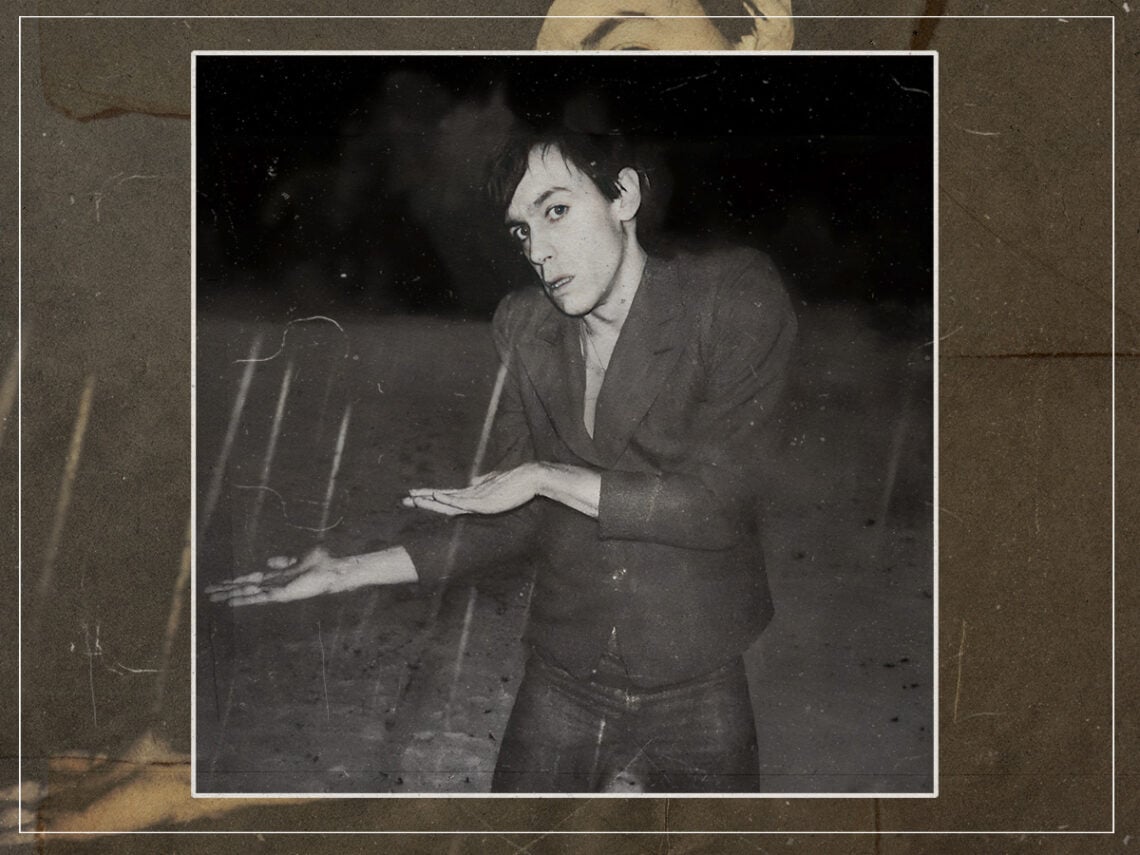
Now, someone who could do that was the eccentric Iggy Pop, someone who’s familiar with defining a whole genre of music for generations to come. When Rolling Stone listed Bo Diddley at number 20 on their list of the greatest artists in rock history, they got the man born James Osterberg, AKA Iggy, to write a treatise on his love for the guitar legend.
In it, he said, “Bo Diddley’s music is enormous… People listen to Bo Diddley recordings and think, ‘Oh, you can just go bonk-de-bonk-bonk, de-bonk-bonk, and you got a Bo Diddley beat.’ But it isn’t that easy. He played really simple things but with incredible authority.”
Pop then went on to talk about that first wave of bands influenced by Bo Diddley, his own efforts included. He said, “Bo Diddley had a huge impact on ’60s rock. The Stones covered Bo Diddley, and the Yardbirds did ‘I’m a Man’, and the Pretty Things did his song ‘Pretty Thing’. My band in high school, the Iguanas, did a few of his songs, including ‘Road Runner’, and you can hear a bit of him in the Stooges.”
This shows just how much my hand-wringing about not being able to hear these records in their original context is beside the point. When you hear a record’s influence in another song, you’re hearing that record in a whole new, even more exciting context than before. One that is even more exciting than just hearing a random song that sounds new to you on the radio. You’re hearing the very evolution of rock, something to which Bo Diddley himself contributed more than possibly anyone else.
