


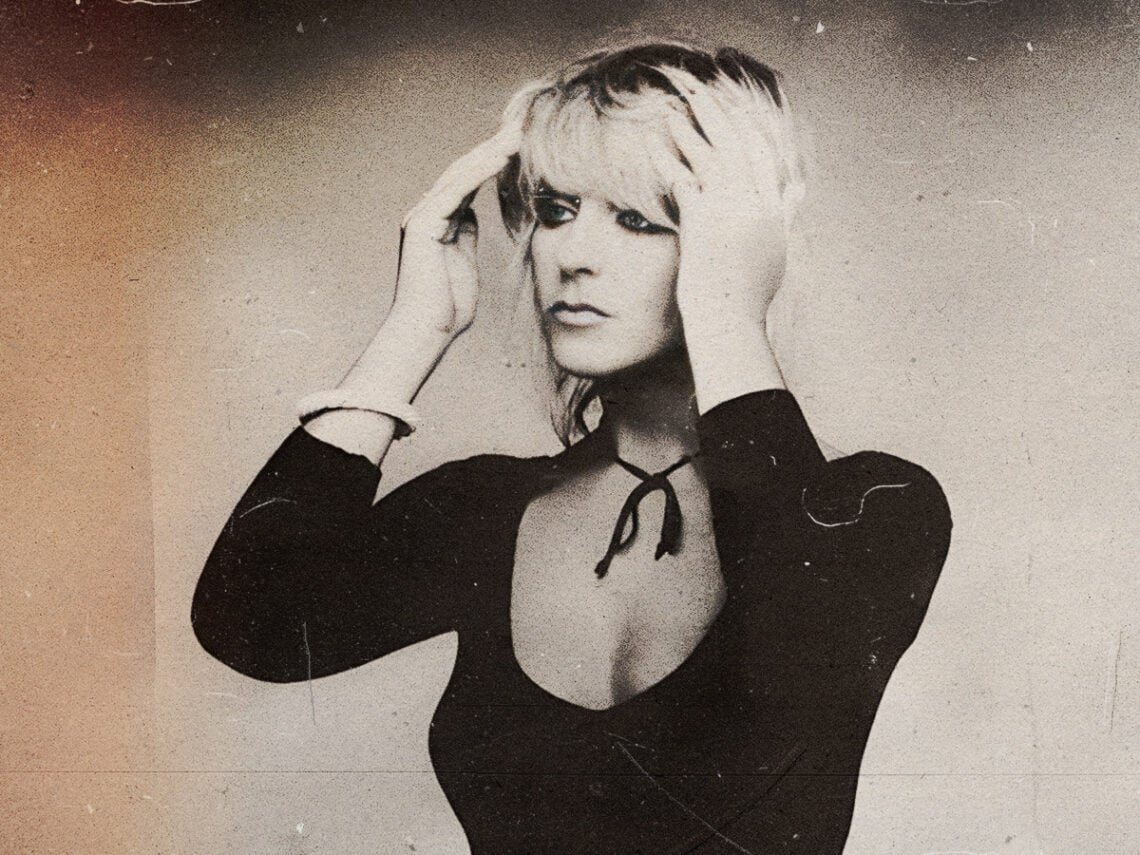
“Rooted in the blues”: The rock ‘n’ roller that made Christine McVie write music

What compelled Christine McVie to write music? That’s almost like one of life’s greatest questions, really, because it’s undeniable that the fabric of song was forever altered by her indelible impact. But back in the quiet Lancashire village of her childhood, the height and allure of Fleetwood Mac were still but a distant pipe dream. It took one special musician to truly set her on the path for the rest of her prolific life.
Of course, McVie’s early life was fuelled by a sense of intrinsic creativity – she grew up playing the piano, before going to study sculpture at art school in Birmingham for five years, with the intention of becoming a teacher. It was only natural, even though she was sidetracked away from her first chosen career path, that she felt a draw to the arts, with the lure of the scene enacting its first, tightest grip on her at only the age of 11.
“My brother, who was four years older than me, was into jazz. He had a saxophone at an early age. I had piano lessons. Well, I was playing piano one day and I looked in the piano stool and there was a music book of Fats Domino,” she recalled to Mojo in 2017. All in an instant, McVie’s life had been completely – but at this point unknowingly – changed, with Domino’s blasting rhythms striking an invigorating chord in her heart.
The future rock keyboardist reflected on this further by adding, “Because I could sight-read, I started playing the boogie bass. I got hooked on it, then I just got hooked on the blues. Even today, the songs I write use that left hand; it’s rooted in the blues.” Musicians often talk about their calling like an addiction, but in McVie’s case, hearing Domino for the first time was akin to a drug taking control of her entire system, and one that would never leave her until her dying day.
It’s evident that the imprint Domino left in his wake was significant, not just on artists like Elvis Presley and Paul McCartney who would take the force of the industry in the immediate interim, but also on McVie as she continued to take her place in the world. Leaving behind her art teacher ambitions when she met guitarist Stan Webb and bassist Andy Silvester while studying, the trio soon formed the blues outfit Chicken Shack and made their first forays into the music sphere.
Garnering a relative hit with a cover of Ellington Jordan’s classic blues standard ‘I’d Rather Go Blind’, in which McVie took lead vocals, the musician’s sights immediately expanded into a much larger, and invariably more hedonistic, world. Marrying John McVie a short time later and thus joining up in the ranks of Fleetwood Mac, it would seem to an outsider that Chicken Shack was left in the dust – but to everyone else, it was clear the impact of the blues never left her spirit, ebbing and flowing out through every note she ever played.
As much as Fleetwood Mac were a pretty dysfunctional mob, they would have been nothing without their idiosyncrasies and individual interests. McVie’s origins in the blues, of course, lined up with much of the band’s original sonics from the 1960s, and as such, she was a perfect addition to see them into their most successful, critical period of rock and roll the following decade. But it is strange to think that none of the biggest heights of 1970s rock may have happened without Fats Domino coming first.
