


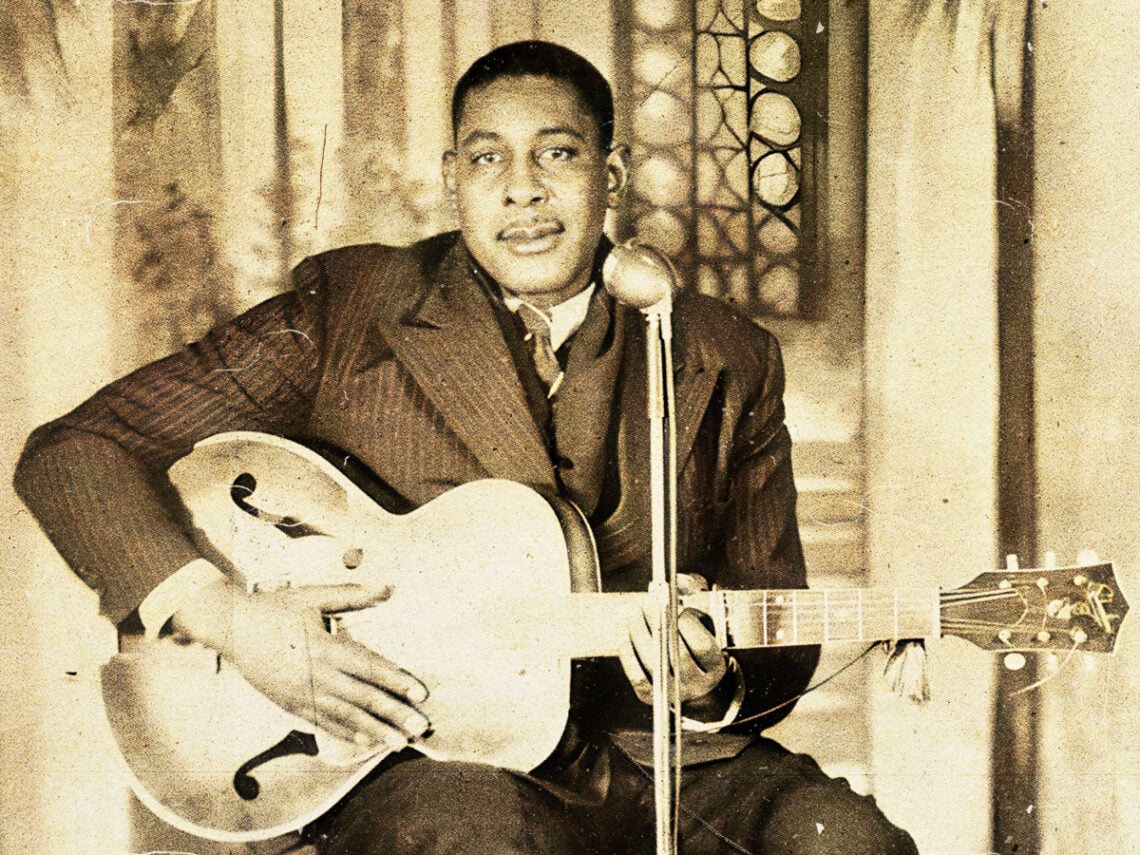
Arthur Crudup: the forgotten legacy of the ‘Father of Rock and Roll’

In conversations about the biggest makers of rock ‘n’ roll history, there are a handful of names that never fail to come up. From Elvis Presley to Little Richard, countless revolutionaries catapulted the genre to mainstream popularity. But to define its origin, we’d have to dig a little deeper.
While rock and roll as we recognise it today didn’t exist as a term until much later, there exists one era that sparked the beginnings of the movement with its fusion of rhythm and blues, country, and gospel music – the 1920s.
In 1926, Mississippi was home to a burgeoning blues movement. Across the state, there was a hotbed of blues activity during this time, and the music was deeply rooted in the Black communities. During this time, the blues was primarily a rural, folk-based genre, and it served as a means for them to express their struggles, joys, and emotions in the face of hardship and discrimination. Musicians would often perform at local gatherings, juke joints, house parties, and other social events, creating an intimate and communal experience for both performers and audiences.
It was at this time that Mississippi-born Arthur Crudup sang a lot of gospel music and started having lessons with a local bluesman called Papa Harvey. There were already a number of exceptional blues talents during this time, including Bessie Smith, Ma Rainey, Blind Lemon Jefferson, Ida Cox, and Lonnie Johnson. Crudup was taking inspiration from these major players, but he only decided to take the first step in taking a music career seriously when he moved to Chicago in 1940. It was common at the time for people in states like Mississippi to move to Chicago for a better life, and Crudup did with every intention of making it.
At first, however, he struggled to make ends meet, working as a labourer while performing music in local pubs and bars. Yet, it was during this time that he really honed his craft as a blues singer and guitarist, developing a unique and soulful style. Then, a record producer, Lesley Melrose of RCA Victor, discovered him while he was living in a packing crate. After introducing him to Tampa Red and signing him with RCA Victor’s Bluebird label, Crudup went on to record a number of songs that became hits within the blues canon, like ‘Mean Old’ Frisco Blues’, Who’s Been Foolin’ You’, and of course, ‘That’s All Right’.
It was at this time that Crudup became more widely credited for his unique and influential singing style and his distinctive guitar playing. He was known for his powerful voice and emotive delivery, which garnered him the nickname ‘Big Boy’. He often performed solo with just his guitar, using a slide to create soulful and expressive melodies. Despite his contributions to revolutionising the genre, however, Crudup did not achieve the same level of commercial success and fame as some of his contemporaries.
His song ‘That’s All Right’ only reached mainstream popularity when it became one of Elvis Presley’s earliest hits in 1954. Many say that he is guilty of appropriating earlier blues music and exploiting the work of the pioneering Black artists that came before him, but it’s also important to recognise that he brought a new level of recognition to Crudup’s work. Presley’s version of ‘That’s All Right’ helped to introduce Crudup’s songs to a broader audience and subsequently led to the increased popularity of him as a respected artist in the years to come.
Presley was also candid in Crudup’s influence on not only his artistry but the rock ‘n’ roll genre as a whole: “If I had any ambition,” he says, “It was to be as good as Arthur Crudup”. Historian Joseph Burns actually considers ‘That’s All Right’ to be the first ever rock and roll song, adding that “the song could contain the first ever guitar solo break”. It’s simply groundbreaking how Crudup arguably birthed the entire genre no less than two decades before it became widely recognised commercially.
But Black artists establishing sounds years before they accrue global popularity is not an alien concept. “Crudup became known as ‘The Father of Rock and Roll’ after Elvis Presley recorded three of his songs”, the Blues Hall of Fame said. “Crudup was a classic victim of music industry exploitation, and despite the commercial success of his music, was never able to even support his family from his music.”
Crudup’s music, though profoundly influential, encountered formidable barriers in attaining mainstream success during his time. While subsequent artists, including Presley, may have drawn inspiration (or copied) from his work and gained commercial success, it remains uncertain whether he would have achieved the same level of fame without Presley’s association.
Regardless, Crudup blazed a trail that would inspire countless artists to come, forever etching his name as the Father of rock ‘n’ roll.
