


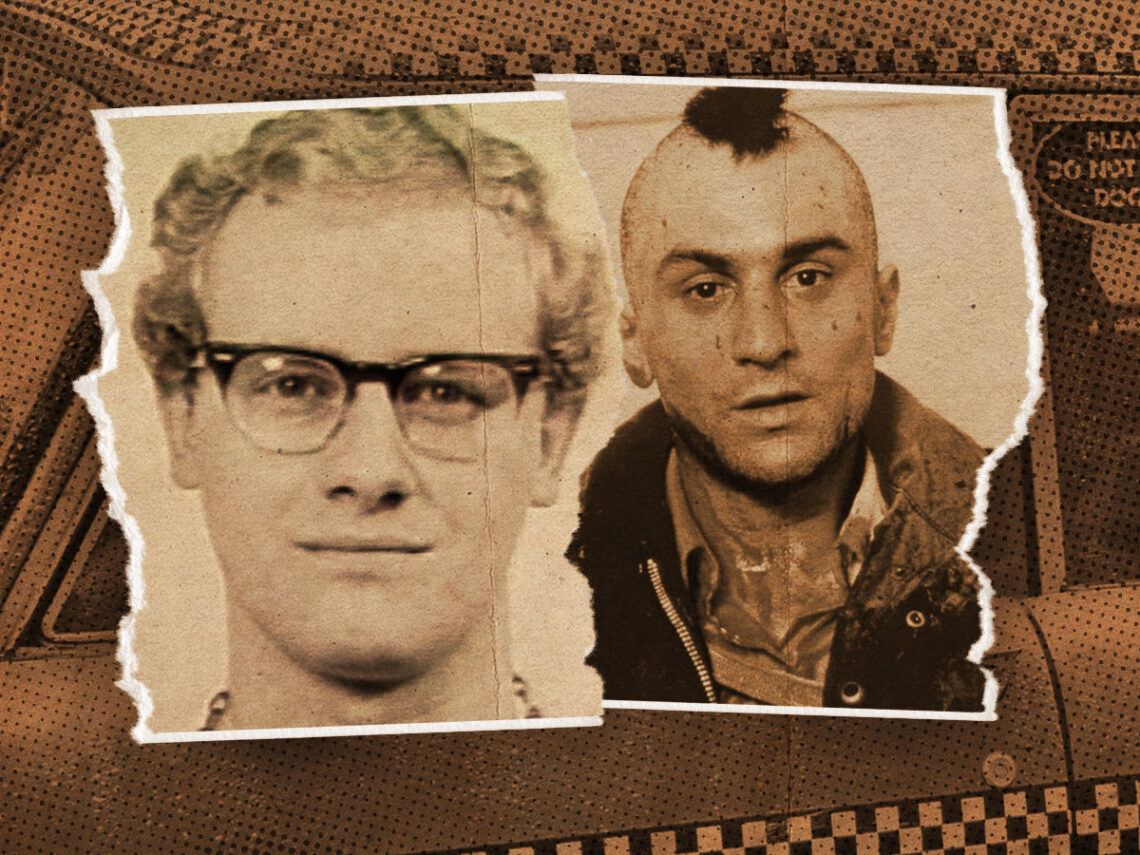
Arthur Bremer: The would-be assassin who inspired ‘Taxi Driver’ character Travis Bickle

Martin Scorsese’s Taxi Driver is a brilliant piece of conceptual filmmaking. It is an exterior examination of a seedy New York City and an interior insight into the fractured human psyche, set against a socio-political backdrop of the Vietnam war. The suspenseful and stylised drama follows Travis Bickle, played by Hollywood royalty Robert De Niro, a veteran who takes a job as a taxi driver to combat his insomnia. In the process, he is exposed to the woes of an increasingly dystopian society.
With a gritty colour palette and intense camerawork, Taxi Driver poses the question of what constitutes a hero or a villain or what happens when an individual exists within the grey area. Bickle is recruited as the vessel for such philosophical exposition and debate. He becomes obsessed with cleansing his city of all its moral bankruptcy, including saving a sexually exploited child, played by Jodie Foster.
It’s not just film style and thematic messaging in Paul Schrader’s writing that elevates Taxi Driver as an essential example of American filmmaking; the historical context of real-life events also plays a part. This reality only compounds the grime.
The story of Travis Bickle was inspired by a significant political event that took place four years before the film’s release. Arthur Bremer was an isolated individual with a previous arrest for carrying a weapon and was released after a citing of being mentally unstable. After quitting several jobs and being unemployed, he became fixated on taking down political figures.
In May 1972, the ex-janitor made a public attempt on Democrat George Wallace’s life during the political figure’s campaign for the Democratic presidential nomination, concealing himself under the image of a Wallace supporter. Wallace, the southern segregationist candidate, was left partially paralysed by the attempted assassination. Brenner’s attempt to assassinate a political figure was familiar and shocking to a nation that, in a contemporary context, has adopted politically-motivated killings as a tradition.
This event parallels Taxi Driver’s examination of the extreme conditions major political events place individuals in. A further crossover is the exposition factor of diaries, a motif Scorsese employs in his film to translate Bickle’s stream of consciousness to the audience as he reads his written entries in a voice-over narration.
Bickle talks to the audience through his outlook, intentions and overall emotions using the diaries. Bremer reportedly carried out this same practice with his journal. The final entry was written between him attending a Wallace rally and the attempt. Time reported that Brenner’s diary revealed he was not so motivated by politics as by an urge to kill. The journal shared that he had previously tried to kill President Nixon, stating: “It is my personal plan to assassinate by pistol either Richard Nixon or George Wallace. I intend to shoot one or the other while he attends a campaign rally for the Wisconsin Primary.”
However, he soon figured out it would be impossible to assassinate Nixon and decided that it was Wallace’s “fate” to be his victim and that he “wouldn’t be buried with the snobs in Washington.”
“On May 15th, Bremer turned up in Wheaton, Md., for a noon appearance by Wallace at a shopping centre rally,” Time reported on the incident. “Mrs Petrone says that when she saw Bremer, who was wearing a red, white and blue striped shirt and a WALLACE IN ’72 button, he said: ‘Hi, babes. How’s it going?'”
The report adds: “At 2:15 pm, William Taaffe, a reporter for the Washington Evening Star, saw Bremer at the Laurel rally 16 miles away. At 3:58 pm, Wallace was gunned down with a .38-cal revolver belonging to Arthur Bremer.”
Bremer’s diary was published a year later under An Assassin’s Diary. This text became a touchstone for De Niro as he tried to get inside his character’s mind. After 35 years of incarceration, Bremer was released from prison on November 9th, 2007.
